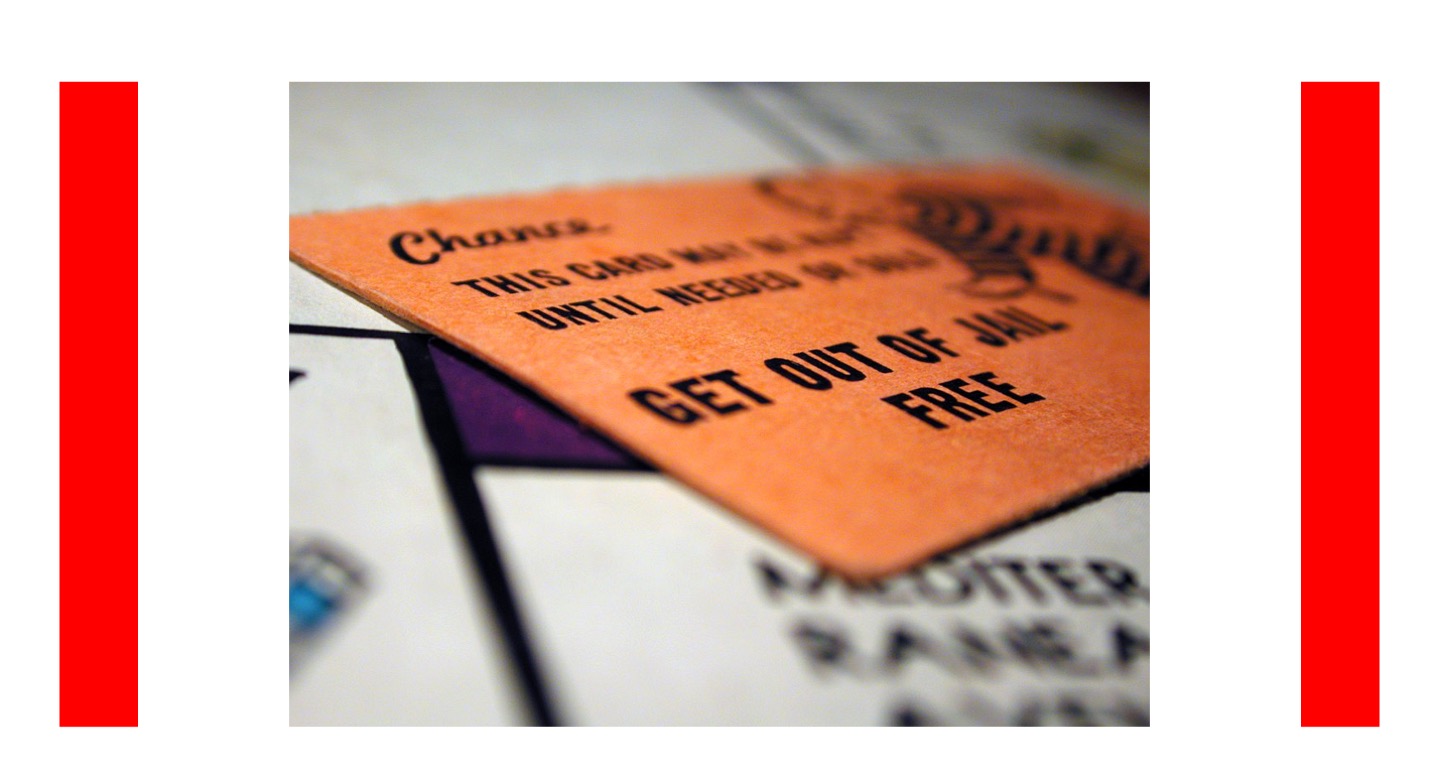
It is tempting for CEOs to try to appease their shareholders by reducing corporate overhead costs. It seems to be the corporate equivalent of a ‘Get Out of Jail Free card’ in Monopoly: it is free and can get a CEO out of a tricky situation.
The reason is that everyone loves the notion of lowering corporate overhead costs, and especially reducing the number of people in corporate roles.
Whereas the supervisory board occasionally might call for caution, you will never hear shareholders or analysts complain and Business Unit leaders usually love the perspective of lower corporate charges and more independence. Most often, corporate functions cannot count on a lot of sympathy from the rest of the workforce either. They are seen as overpaid ‘bureaucrats’, ‘paper pushers’, and ‘PowerPoint wizards’ in ‘back-office’ roles.
Reducing overhead is also not very difficult. Usually, there are plenty of young runners-up in large organizations dying to prove themselves to corporate leaders. If not, consulting firms are happy to line up for beauty parades to show off their capabilities in this area.
It is also not that hard – at least, I have never seen a corporate cost savings initiative not achieving its short-term financial objectives.
So eliminating or reducing these corporate functions is a great idea, right?
Unfortunately, it depends…
Eliminating or reducing corporate functions poses risks for CEOs in three areas:
- Compliance
- Shareholder activism
- Boardroom dynamics
Compliance
I once worked with a large international industrial company whose revenue depended for the largest part on contracts awarded by national governments. The company had a very complex dual structure. On the one hand, there was the power of the Business Units, on the other, there was a strong geographic (regional-national) structure.
After doing his ritual 100-day tour, the new CEO, who came from a different industry, thought he could make the company more effective by cutting away the geographic (regional – national) structure. After all, although there was no financial or operational need to do so, the new CEO could not understand the rationale for the dual structure, the Business Units did not like it, and it seemed to send a clear signal to the shareholders.
A couple of years later the company was almost acquired by a competitor due to the financial and reputational fall-out of a massive compliance issue. One of the reasons was that the elimination of the geographic structure had also led to the elimination of the checks and balances on a national and regional level, which enabled one of the Business Units to commit a massive fraud, undetected by anyone outside the BU concerned.
Shareholder activism
For all their sins (i.e. their costs), central functions often serve as the connecting tissue in corporations. They are the ones that try to implement common approaches and attempt to realize synergies between the different Business Unitsiness Units. Not that this increases their popularity with these Business Units. Business Units tend to relish their independence, both in terms of their operations as well as in facing the market (sales force, and sometimes even branding).
For instance, I recently heard the head of HR of a BU arguing that the HR activities in his Business Unit were completely different than another Business Unit, and that they, therefore, could not share resources with other Business Units on a national level. Another example are common IT systems, which often require compromises on a corporate level. ‘I could work with a Business Unit-specific system for USD 50k a year, instead I need to pay these lunatics in corporate a charge of USD 150k a year’.
The same is even more true for the market-facing activities. ‘Although we may sell to the same customers, we deliver completely different services and do so to different clients in this account. Believe me, I would be happy to agree to a joint sales force if that made sense, but it simply does not. Our accounts within the client organization are completely different people with completely different demands’. Alternatively: ‘ Our products wind up in completely different places in the outlets of our clients’.
However, this lack of cohesive tissue will not only be seen internally but it will also be recognized externally. After all, if the rationale and motivation to create synergies seem to be absent internally, why should external stakeholders, like analysts and activist shareholders believe in it? They know a conglomerate discount if they see one, and are likely to start advocating to release the value of the individual Business Units by breaking the company up. And rightly so: if the corporate center does not add value – it is likely decreasing it.
Talking about analysts, there is also a reason why they prefer value growth to cost reduction…

Boardroom dynamics
After removing the connective tissue, CEO’s find themselves backed up by smaller corporate functions. This means these will be able to offer less firepower (capacity to develop and implement corporate initiatives) to the CEO than before. As a result, the CEO might find him or herself confronted with 3-6 Business Unitsiness Unit heads, each of them mini CEO’s with their own P&L and staff departments, firmly in charge of ‘their’ units. Once they form an informal block or alliance in executive committees, the CEO might find him or herself to be a ‘lame duck’, especially if:
- They lack charisma, strong roots in the organization, ownership of critical client relationships, a near-exclusive relationship with the supervisory board, and/or a proven track record in the industry
- There are no, or very limited, dependencies between the different Business Units, e.g. in terms of supply chain, production processes, or technology
‘We bring in the revenue, and what do you do exactly?’
Conclusion
Of course, this topic deserves more attention than a provocative blog post of less than 1’000 words, and there is nothing against optimizing real-estate or rationalizing contracts. However, CEOs would do well to realize that ‘Get Out of Jail Free cards’ are a concept from a board game, not to be confused with the reality of everyday corporate life, and that what seems to be ‘free’, may actually come at a price…
‘You can’t shrink your way to greatness’ – Tom Peters
Picture credit: Mark Strozier, CC BY 2.0 Wikimedia Commons
Discover more from Dirk Verburg
Subscribe to get the latest posts sent to your email.
 Dirk Verburg