‘The real problem of humanity is the following: we have Paleolithic emotions, medieval institutions, and god-like technology’.
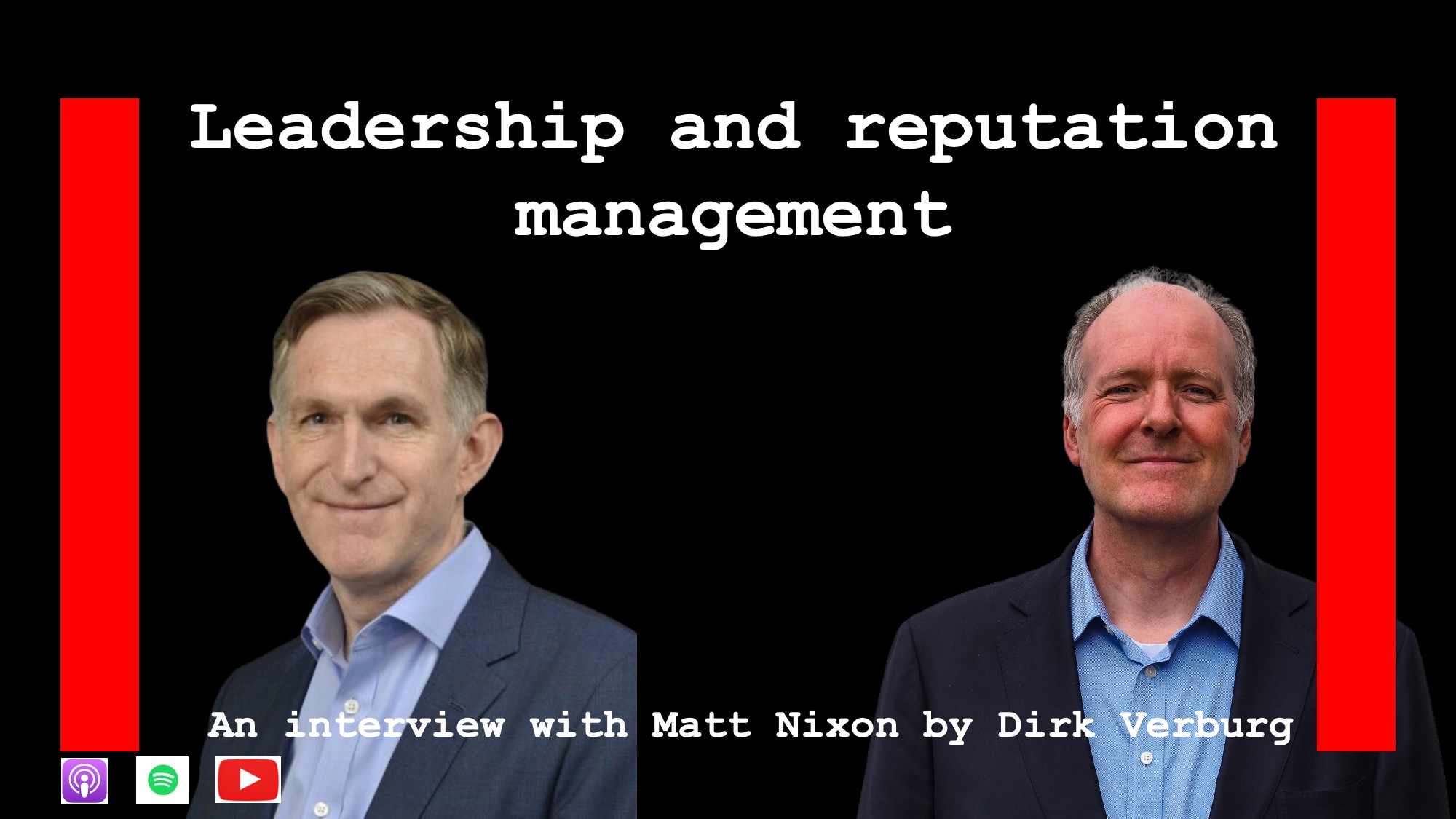
With this quote from Edward O. Wilson 1929 Matt Nixon answered my question if our requirements about leadership have changed in the last decades.
Matt Nixon has more than 30 years of experience as a management consultant and HR executive, working with CEOs and senior leaders around the world. An Oxford classics graduate, he was a partner in Towers Perrin in Chicago and London, and subsequently held the positions of Global Head of Organization Effectiveness for Royal Dutch Shell, and Managing Director, Group Head of Talent for Barclays, before returning to the consulting industry.
Nowadays Matt works as a partner in a specialized consulting boutique where he coaches and advises CEOs and other senior leaders during career transitions and other periods of change and transition.
Matt has written and taught extensively on hubris in executives.
During our conversation, Matt and I discussed the following topics:
- Have the demands on senior leaders changed in the past couple of decades?
- How can senior leaders stay relevant and deal with the changing nature of their roles?
- What makes a successful executive an effective supervisory board member?
- The reputational life-cycle Matt describes in his book ‘Pariahs – Hubris, Reputation and Organizational Crises’
- How top leaders could prevent their organization from landing in the Hubris state
- Should leaders who find themselves in the middle of a corporate scandal stay or go?
- Should companies take a stand on political issues (e.g. Human rights, Immigration, Ukraine)
- Should coaches proactively force issues on their senior clients?
If you are interested in this topic, you can watch or listen to our conversation on
► YouTube.
► No time to listen to podcast now? Here is a short summary of our conversation ⤵
Dirk Verburg: You’ve worked in leadership for decades. How have demands on leaders changed?
Matt Nixon: Things have changed due to technology, making communication immediate and democratizing access to information. News cycles are faster. Yet, the world is more complex, requiring deeper thought. Leaders must balance speed with thoughtfulness. They also need to manage their health, as demands intensify, and recognize physiological limitations.
Dirk Verburg: CEO lifecycles are shrinking, while demands are rising. How can CEOs stay relevant and extend their time in such roles?
Matt Nixon: CEOs must manage different timeframes, from immediate decisions to 50-year ramifications. They need a highly competent team to handle daily operations, freeing the CEO to look “up and out” at vast stakeholders like the press, regulators, and investors. A significant portion of time must also be dedicated to deep thinking and reading about disruptions (e.g., AI, geopolitical impacts) to stay strategically ahead.
Dirk Verburg: Many executives eventually transition to supervisory board roles. Do they need new skills or must they unlearn old ones? What do you recommend for this shift?
Matt Nixon: These are fundamentally different jobs. Supervisory roles are about oversight and fiduciary responsibility, not direct execution. Executives must unlearn the “just move over, let me drive” mindset. They need to acquire deeper knowledge on board-relevant topics like sustainability, diversity, and finance. Soft skills like persuasion and the ability to ask incisive questions are crucial. While operational experience is valued, boards seek individuals who can collaborate and avoid excessive ego.
Dirk Verburg: Your book ‘Pariahs’ describes a lifecycle of organizational scandals: Genesis, Hubris, Crisis, Nemesis, Metamorphosis. Could you explain this cycle?
Matt Nixon: Genesis involves conditions like rapid growth, strong brands (creating high promises/risk), and unchallenged success, often coupled with weak governance. Hubris is individual or collective arrogance, where leaders lose touch with reality, dismiss criticism, and are surrounded by yes-men. Crisis is when things go wrong, leading to public outcry and internal devastation. Nemesis is the payback: shame, trust betrayal, reputational loss, potentially organizational failure. Metamorphosis is the chance for genuine change and cleansing, but often companies opt for quick fixes (replacing leaders, rebranding) without addressing root issues, risking a repetitive cycle.
Dirk Verburg: If leaders see their growing companies heading towards ‘hubris’ and potential scandal, what mechanisms can they implement to prevent it?
Matt Nixon: First, acknowledge the risk. Assume it will happen. Boards with hyper-growth must manage growing risks, ensuring leaders can handle expansion. Strong purpose and values, if deeply embedded, help. Critically, foster a culture “unfriendly to hubris” by valuing all opinions, promoting inclusion, and enabling speaking up. Boards should assess leaders for personality risks, and coaching can challenge self-belief. Some even implement annual “hubris tests” in performance reviews to ensure leaders remain receptive and accountable.
Dirk Verburg: If leaders are at the center of a corporate scandal, when should they weather the storm, and when should they ensure an orderly transition?
Matt Nixon: The decision is usually out of their hands; it’s often a political reality that they must go, especially if the scandal is highly public. They’ll be involved in investigations. While they might be capable and knowledgeable enough to fix it, their reputational damage often makes their continued leadership untenable. Their best course is usually cooperation and preparing for a period of personal “metamorphosis”—a time for reflection and preparing for what’s next after the “caterpillar” phase.
Dirk Verburg: Companies and leaders are increasingly pressured to take positions on political issues. When should they engage or abstain, and what’s your advice for responding?
Matt Nixon: Wading into political issues is dangerous unless very sure of the “why.” Diplomacy is essential. Leaders must decide if taking a stance aligns with corporate values and stakeholder interests. Companies with global operations realize HQ’s view isn’t the only valid perspective. CEOs must thoughtfully consider why they are speaking out, avoiding the trap of narcissistically using their platform as a celebrity. Their job is to serve stakeholders effectively, not to express every personal opinion.
Dirk Verburg: As a coach, do you consciously bring up societal issues like climate change or AI in your coaching relationships, or do you keep them separate?
Matt Nixon: I discuss anything my coachees want; they drive the agenda. While some in the coaching community advocate forcing these “important” topics, I believe the conversation is for the coachee’s benefit. As a coach, I’m against imposing my agenda. As an advisor, I might offer feedback if I feel a CEO isn’t thinking broadly enough, but it’s crucial not to let personal biases dominate the discussion.
Dirk Verburg: Any final thoughts on leadership, or anything we haven’t covered in this podcast?
Matt Nixon: Working with powerful leaders, I believe we shouldn’t shy from criticism or expect more from them, but I’m concerned by the lack of compassion. These are incredibly difficult jobs, exposing leaders to immense, often ill-informed, abuse. We should remember they are human, doing their best, sometimes failing. It’s crucial to be wary of media narratives and practice care. A more constructive approach is to be helpful to leaders, rather than just beating them up, even if we disagree with their choices.
Discover more from Dirk Verburg
Subscribe to get the latest posts sent to your email.
 Dirk Verburg