
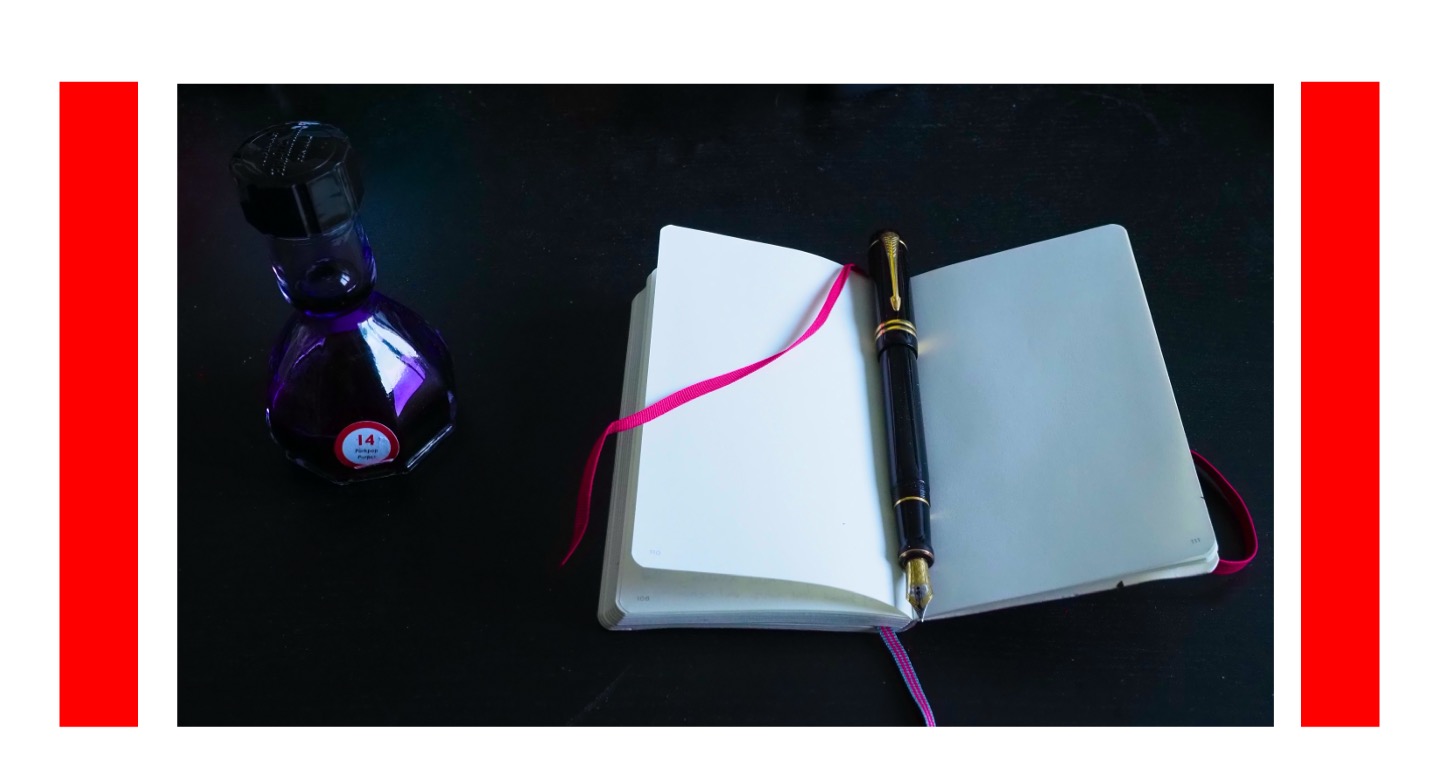
Over the years, I made multiple attempts to start journaling. All failed…until I radically changed my approach.
The benefits of journaling
It is well known that journaling can have a positive impact on multiple levels. According to Karen A. Baikie & Kay Wilhelm, ‘expressive writing’ has a number of positive mental and physical health outcomes, ranging from a better-functioning immune system, reduced blood pressure, and improved liver function, to improved working memory, better sporting performance, and a feeling of greater psychological well-being.
Some scientists even claim that the development of a drug that would result in medium effect sizes comparable to that of expressive writing ‘would be regarded as a major medical advance’.
The reasons why I wanted to start journaling were that I believe in the concept of solving issues and processing experiences through writing about them, and the fact that I enjoy writing.
Failed attempts
Despite periods of several months in my life where I consistently journaled, I did not stick with it. The reasons were twofold.
First of all, I did not enjoy the process of journaling. Sitting down at the end of the day to write down my experiences and feelings never became anything more than a chore. I realized I was forcing a format that did not suit me.
Secondly, I did not experience any benefits—neither during the writing process itself, nor when I reviewed my notes afterwards.
A new start
Despite my extensive fountain pen collection, for the past couple of years I have relied almost exclusively on my iPad, Apple Pencil, and Goodnotes for note-taking.
However, when I wanted to capture my emotions and reflections after an event that had a deep impact on me last year, I somehow felt that these digital tools would not do the trick. They felt—for lack of a better description—too clinical and professional, too much a part of my active (non-reflective) working life.
Therefore, I took out a brand-new small notebook from my cupboard and jotted down the date, along with the insights and perspectives I did not want to forget. This was not with the idea of starting journaling again, but simply with the idea to record them in an analog format.
Later that same week, when I had another insight, I jotted it down in the same notebook… and before I knew it, I had started journaling again—an activity and experience I now sincerely enjoy.
What has changed?
Compared to the last time I started journaling, I changed a number of things—changes that might work for you as well:
- Selective – I have become highly selective in what I record. I no longer have the urge to record what happened during the entire day; I only capture things I want to remember because they are important to me.
- Timing – I make my notes immediately after the event I want to record—I do not wait until the end of the day anymore. The advantages of this approach are that I do not need to ‘remember what I want to remember,’ and I do not have a separate task at the end of the day called ‘batch process insights and experiences.’
- Keywords – I do not strive for complete sentences or paragraphs; instead, I only write down the words necessary to remember the thoughts I want to capture.
- Analog – As I already mentioned, I started using an analog format. Having my notebook with me allows me to immediately record and retrieve my thoughts. By the way, as I am sure you already know, research suggests that writing things down by hand helps you remember information better than typing.
- Purpose – The most important change to my journaling process, however, is how I write. I journal almost always positively, or at least future-oriented. For instance, if I fail at doing something, I do not write ‘I failed to do X’; instead, I write ‘I need to find a better way to do X.’ Talking about powerful quotes, this is my favorite one in this context:
‘I never lose. I either win or learn’ — Nelson Mandela
What I write about and the benefits this delivers
Looking through the first physical notebook I just completed, I noticed that most of my notes fall into one of these four categories:
- Blessings – Things I am grateful for. This includes stimulating meetings, encouragement and appreciation from my clients, achievements, and my weekly hikes through nature.
- Insights – Specifically, concepts and best practices I discovered for my life and work—for instance, productivity hacks. Powerful quotes (a concept I never believed in previously) also fall into this category.
- Habits – When I do not stick to a habit I want to maintain (e.g., my fitness sessions on a Tuesday or Thursday), I record the circumstances—why I did not stick to the habit—to learn how to prevent it from happening next time.
- Aspirations – Things I want to work on, both personally and professionally.
Writing these down has resulted in the following benefits for me:
- Retention – Writing down and re-reading my insights has enabled me to internalize them faster and more effectively.
- Processing – Writing about negative experiences means ‘sharing’ them on paper. Despite the fact that paper obviously does not talk back, the experience delivers similar benefits to speaking with someone, albeit to a lesser degree.
- Perspective – Reading through my journal offers opportunities to (literally) count my blessings if my life is not developing the way I would like it to go.
My tools of choice
As the cover illustration shows, journaling also proved to be a great way for me to rediscover what my daughter calls my ‘taste for the finer things in life’: fountain pens (my Parker Duofold Classic Black GT Centennial is my default for journaling), high-quality notebooks (Leuchtturm1917 A6 softcover), and ink (Akkerman’s ‘Parkpop Purper’, ‘Voorhouts Violet’, and ‘Bekakt Haags’).
Will you start journaling in 2026?
What has stopped you from starting or sticking with journaling? The time commitment? Experiencing journaling as a chore? Not seeing the benefits?
Why not try jotting down at least one blessing, one insight, or one aspiration each day this week and see if you can get into the habit?
DM me your specific roadblock—I’m curious if the solutions that worked for me might help you too. Let’s see if you start journaling in 2026 as well!
Discover more from Dirk Verburg
Subscribe to get the latest posts sent to your email.
 Dirk Verburg
Thank you for sharing this, Dirk—such an insightful post! It resonated with me because I recently began journaling myself, in October 2025. I opted for a very simple approach: The 5-Minute Journal by Intelligent Change (http://www.intelligentchange.com).
What I appreciate most is that it’s designed for people who don’t typically journal. For years, I’ve been advised to write things down, but honestly—who has the time? This format makes it achievable: just five minutes in the morning and five minutes in the evening.
Each day, I note what I’m grateful for, what would make the day great, and a daily affirmation. In the evening, I reflect on the highlights and one key learning. These brief moments of mindfulness and reflection have become truly precious—especially in the fast-paced, often tumultuous environment we all navigate.
Would you like me to make it even more concise and impactful for a leadership audience (e.g., emphasizing benefits for well-being and performance), or keep this slightly personal tone?