The Last Acceptable Prejudice in Business…
Western societies face a problem:
As life expectancy increases and birth rates drop, governments try to push the retirement age back to keep retirement systems sustainable.
At the same time, however, the HR practices of most companies are aimed at pushing people out of the workforce after their mid-fifties (unless they are in the C-suite, that is)—and they certainly don’t hire applicants in that age bracket.
The fallout isn’t limited to the people who lose their jobs; it hits our society as a whole.
Paradoxically, a growing share of younger generations’ income has to be taxed to support healthy people with a longer life expectancy laid off in their fifties.
No wonder intergenerational friction is growing…
The decisions by companies to push older staff out of their workforce are driven by several assumptions about people in their mid-fifties. It is assumed they are:
- Unable or unwilling to adopt new technologies (conveniently forgetting the fact that this generation adapted to PCs, GUIs, and the internet in quick succession)
- Not willing to learn new skills
- Not prepared to step down to less senior positions
- Too expensive due to higher overall compensation, benefits, or pension costs and not prepared to take a pay cut
- Resistant to newer ways of working, such as flatter structures or reporting to younger managers
All of these are assumptions have never been tested, yet they dictate how HR organizations act when it comes to people in their mid-fifties.
Expiry Date Never
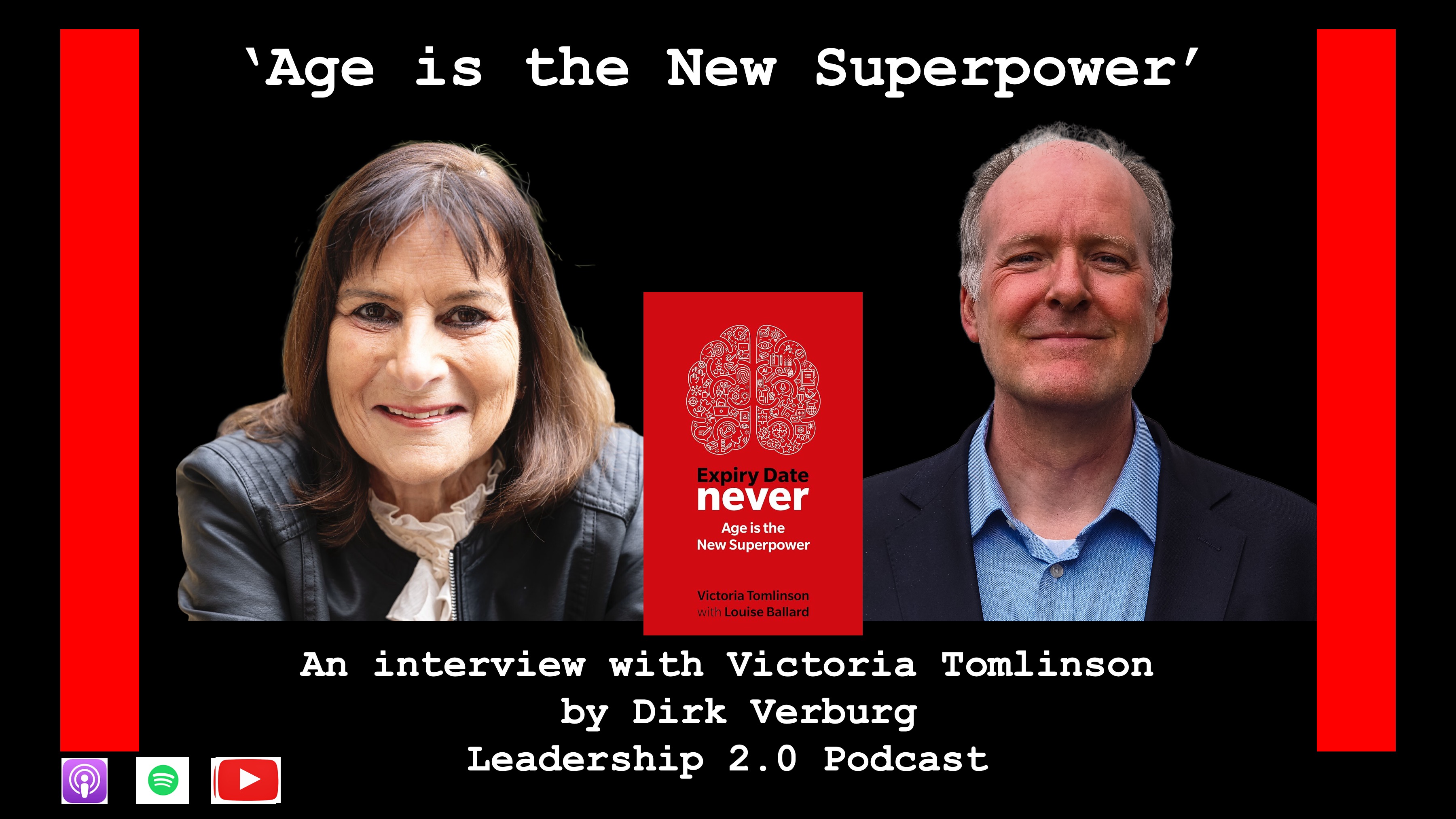
This comedy of errors inspired Victoria Tomlinson, together with Louise Ballard, to write ‘Expiry Date Never‘ .
This book clearly describes the impact ageism has on affected individuals as well as our society, and is also full of case studies and practical tips for organizations and individuals on how to deal with this issue.
I recently spoke with Victoria for my Leadership 2.0 podcast, and in our conversation we discussed the following topics:
- Why Victoria wrote this book
- How ageism manifests itself in organizations
- The root causes of ageism
- Self regulation versus Government intervention
- Best practices in organizations that combat ageism
- Tips for people in their mid-forties to become “future-proof”
- Tips for people in their mid-fifties to become “future-proof”
- Recommendations for companies that want to address ageism
- Tips for people in their mid-fifties who are unemployed
► You can watch or listen to a podcast with our conversation on:
► No time to watch or listen to the podcast now? Here is a short summary of the key points of our conversation:
Dirk Verburg: Victoria, thank you for being a guest. I loved Expiry Date Never and look forward to diving into this topic. What specific catalyst or moment made you want to write Expiry Date Never?
Victoria Tomlinson: Thank you, Dirk, for your kind words and for inviting me. It came out two months ago, and knowing people value it means the world. The catalyst built up over time. I have blogged for 20 years to help clients—first in communications and now with people approaching retirement. Our workshops for firm partners help them plan ahead, yet reinvention after 20 or 30 years in one organization requires mental shifts and practical steps like using LinkedIn. Through blogging, I realized I wanted to do more and push employers, governments, and society to stop assuming you are finished at 50. It grew out of all that.
Dirk Verburg: Ageism is sometimes called the last acceptable prejudice in business. How does ageism manifest subtly and subconsciously during hiring, promotion, and restructuring decisions?
Victoria Tomlinson: Very few organizations include age in their diversity pillars or measure it properly. Measuring age helps spot problems. Subtle bias is common. One interviewee at a big four bank turned 60 and hosted a celebration, yet colleagues asked when she was retiring despite her having a much younger spouse and never mentioning retirement. When I asked if appraisals still covered her 10-year goals or if training continued, she realized both stopped around 55. Research shows 91% of people over 50 remain ambitious and want to work, yet development often drops off after 40, except for senior leaders who may themselves be in their 50s or 60s.
Dirk Verburg: Do you think this is driven by corporate policy and HR metrics, or by decision-makers’ expectations shaped by cultural narratives about aging and productivity?
Victoria Tomlinson: It is a mix of factors, Dirk, and it goes largely unchallenged. At a roundtable with employment lawyers, an HR director proudly said he ignores CVs from people who stayed at one organization for 20 or 30 years. That is age discrimination, yet no one challenged him in the room or responded on LinkedIn. AI can also embed existing bias. In a court case involving Workday, hiring patterns over 20 years reflected past biases rather than objective merit. Many accept AI without questioning what it learns, and some companies even claim privacy reasons for not sharing age data while reporting other diversity metrics.
Dirk Verburg: Pushing experienced workers out of paid jobs creates predictable costs. Should governments use legislation or quotas, or rely on corporate self-regulation?
Victoria Tomlinson: As an entrepreneur, I dislike bureaucracy, yet measurement is necessary here. UK gender pay gap reporting has embarrassed companies into transparency and spurred action. Large organizations—perhaps those with over 200 employees—should report headcount by age decade from teens to 100-plus, alongside recruitment, retention, and redundancy by age. Sir David Attenborough is over 100 and still remarkable, and the oldest living person is 117. Leaving work at 50 reduces purpose and can increase Alzheimer’s risk, placing heavy pressure on care systems. Governments and policymakers must act rather than treating employer responsibility as an open question.
Dirk Verburg: How can progressive leaders redesign work models to retain mature talent, given assumptions that workers only want full-time roles, higher pay, and upward progression?
Victoria Tomlinson: B&Q in the UK hired experienced DIYers and saw profitability rise and theft drop. Rather than imposing one model, leaders should let teams work out practical arrangements together. Age also matters when serving customers of all ages, as seen when poorly designed instructions or outdated assumptions miss 50-plus consumers. Multigenerational teams improve performance and bring broader perspective. Individuals may also need to adjust expectations around pay or roles. Many people in their 60s do not want a top executive title; they want meaningful projects, mentoring, or coaching, especially where experienced specialists can ease bottlenecks.
Dirk Verburg: What three tips would you give leaders in their mid-40s who are starting to sense age headwinds as they approach 50?
Victoria Tomlinson: First, sort out your finances before leaving a paid job voluntarily, because you may not earn as much—or earn again—as easily as expected, such as after taking time off to care for elderly parents. Second, get involved in your company’s ESG initiatives, such as sustainability, diversity, or community work, to build visibility and expertise. Third, use LinkedIn strategically so recruiters find you—share insights, speak, and stay visible. Never say you do not do technology; keep your skills current, including with AI and digital tools, and stay relevant.
Dirk Verburg: For people in their mid-50s who are still employed, what recommendations do you have?
Victoria Tomlinson: The core advice is similar, though losing a job changes the dynamic. Focus on building connections, especially weak ties on the periphery of your network rather than only close contacts. Reconnect with people from school, university, early training, sports clubs, or faith groups, and have coffee conversations to see what is happening outside your current bubble. Identify skill gaps in the market, learn what is needed, and position yourself as someone teams want to bring in.
Dirk Verburg: If you were speaking directly to a CEO listening to this podcast, what is the single biggest change they should make to their talent architecture by tomorrow morning?
Victoria Tomlinson: Put age on the diversity agenda and start measuring it. Looking at the data can be eye-opening, and you cannot fix what you do not measure. Treat age like other diversity dimensions so your workforce reflects the broader world, and build multigenerational collaboration. Good management—setting clear expectations, trusting people, and letting capable teams deliver—goes a long way. Measure the numbers first, then adjust how you recruit, retain, and develop talent.
Dirk Verburg: Finally, what practical steps can support the well-being, fulfillment, and job search of people in their mid-50s who are currently unemployed?
Victoria Tomlinson: Purpose is vital, and as Robert Waldinger notes, you often build it through action rather than waiting to find it. Volunteering or helping others—such as young entrepreneurs who have technical skills but lack business or people experience—can restore structure, confidence, and purpose. Platforms like Eventbrite make it easy to find local startup or community events, show up, talk to people, and see how you can help. Silence and lack of replies can be discouraging, yet contributing your experience often leads to opportunities and sometimes paid work. Thank you, Dirk. I loved talking with you—you are inspiring yourself, so thank you very much.
► About Victoria Tomlinson
Victoria Tomlinson has spent her career challenging how work is done and who gets to do it. One of the few women in senior roles early in her career, she built a track record of “firsts,” from being the first female graduate trainee in a 20,000-employee engineering business to becoming one of the youngest leaders in EY’s London practice. She went on to found and run an award-winning communications agency while raising a family, later expanding internationally with an office in Dubai. In her 50s and 60s, Victoria became a BBC commentator, launching Next-Up to help the 50+ generation rethink their working lives and, more recently, building a tech platform piloted by a major bank to support longer, more flexible careers. Today, as CEO of Next-Up, she works with leading professional services firms and corporates to help them unlock the value of experienced talent.
Discover more from Dirk Verburg
Subscribe to get the latest posts sent to your email.

