‘Ensuring successful CEO transitions’ – Interview Ty Wiggins (‘The New CEO’)

Why do people want to become CEO in the first place?” That was one of the first questions I posed to Ty Wiggins during our interview for the Leadership 2.0 Podcast.

After all, the statistics are sobering:

Being a CEO comes with immense responsibility because the CEO is ultimately accountable for the company’s entire trajectory, from strategic wins like M&As to major setbacks like corporate scandals.

Every day, CEOs must make tough decisions on issues that can’t be resolved at lower levels. More often than not, these choices are a matter of picking the ‘least unattractive’ option. These decisions have a significant influence on the lives and financial well-being of all stakeholders. This broad group includes employees, investors (e.g., pension funds), consumers, suppliers, and government bodies.

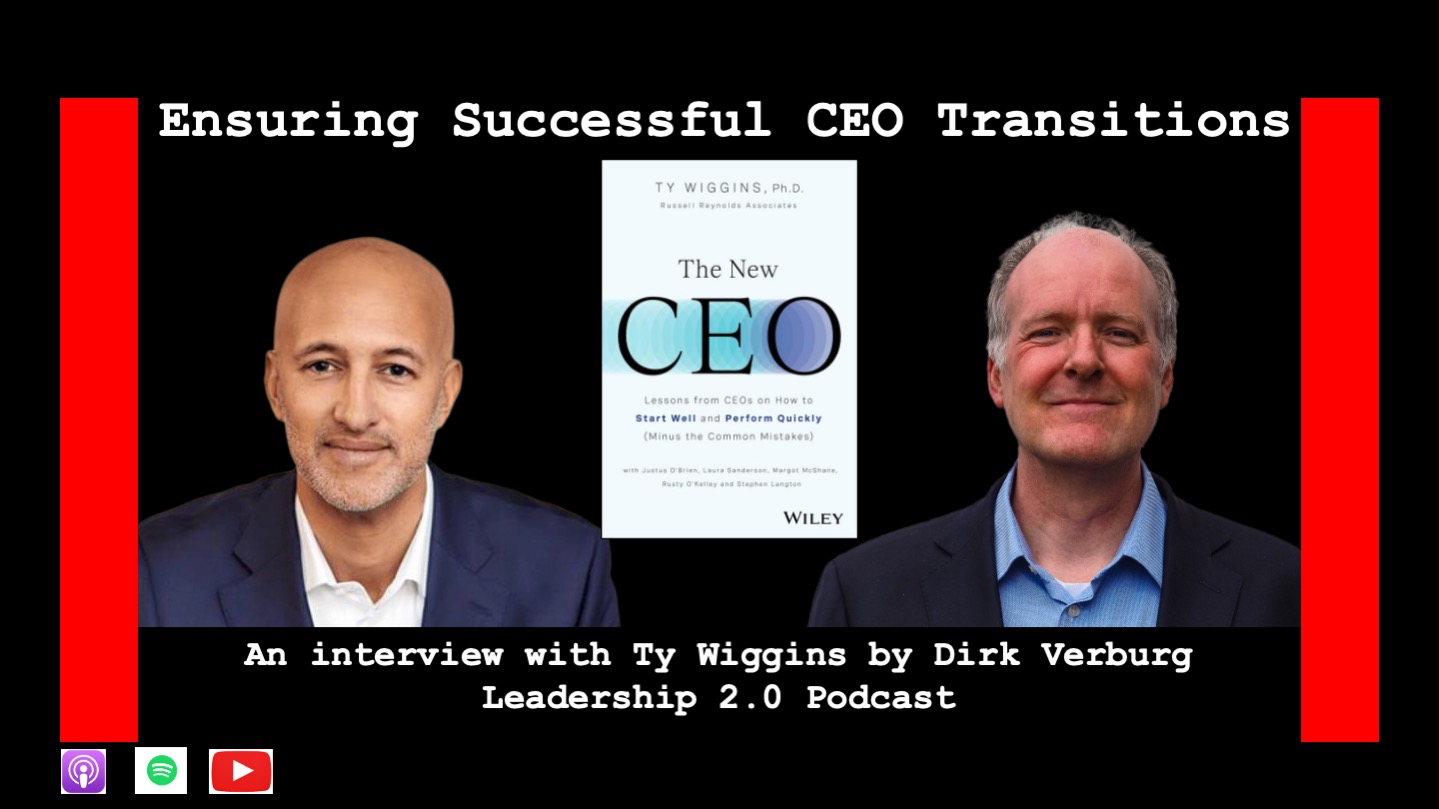
In the 32nd episode of the Leadership 2.0 podcast, I interview Ty Wiggins of Russell Reynolds about his book ‘The New CEO – Lessons from CEOs on How to Start Well and Perform Quickly (Minus the Common Mistakes)’.

During our conversation, we discussed the following topics:

Continue reading

Why reducing corporate overhead costs is not a ‘Get Out of Jail Free card’

It is tempting for CEOs to try to appease their shareholders by reducing corporate overhead costs. It seems to be the corporate equivalent of a ‘Get Out of Jail Free card’ in Monopoly: it is free and can get a CEO out of a tricky situation.

The reason is that everyone loves the notion of lowering corporate overhead costs, and especially reducing the number of people in corporate roles.

Whereas the supervisory board occasionally might call for caution, you will never hear shareholders or analysts complain and Business Unit leaders usually love the perspective of lower corporate charges and more independence. Most often, corporate functions cannot count on a lot of sympathy from the rest of the workforce either. They are seen as overpaid ‘bureaucrats’, ‘paper pushers’, and ‘PowerPoint wizards’ in ‘back-office’ roles.

Reducing overhead is also not very difficult. Usually, there are plenty of young runners-up in large organizations dying to prove themselves to corporate leaders. If not, consulting firms are happy to line up for beauty parades to show off their capabilities in this area.

It is also not that hard – at least, I have never seen a corporate cost savings initiative not achieving its short-term financial objectives.

So eliminating or reducing these corporate functions is a great idea, right?

Unfortunately, it depends…

Eliminating or reducing corporate functions poses risks for CEOs in three areas:

  • Compliance
  • Shareholder activism
  • Boardroom dynamics
Continue reading