Pump up the volume: why business books often are too voluminous!

Time-efficient alternatives for reading business books

During my years in college, one of the first rap songs that became extremely popular was ‘Paid in full’ from Eric B & Rakim in the Coldcut mix. Its signature ingredients contained the soundbite ‘Pump up the volume’. 

‘Pump up the volume’ also was the phrase that resounded in my head when I recently read ‘Rebel Talent – Why it Pays to Break the Rules at Work and in Life’, a bestseller written by Francesca Gino, a well-known Harvard Business School professor. The entire book is based on a single concept that could easily have been explained on one single page.

Instead, the author used more than 230 pages, which cost me the better part of a Sunday to read…

Why I like reading business books

I like reading business books for four reasons:

  1. To satisfy my intellectual curiosity
  2. To help me to make sense of what I personally observe about the way organizations ‘work’ (or not!)
  3. To enhance my skills 
  4. To keep me ‘current’

Why I am often disappointed after reading them

However, more often than not, I feel reading them is not the most efficient use of my time. The reason why is that (like the example mentioned at the beginning of this post), business books often try to expand ideas and concepts that could be explained in a couple of pages to the size of a book. This almost always means they need to cross the magical border of 200 pages.

I think this phenomenon is caused by the fact that business books mean ‘business’. Although it is not easy to gain insight into the market for business books, creatively extrapolating existing statistics indicate that each year more than tens of millions of business books are sold across the world. Therefore, the market for business books might be around one billion dollar. NB: This estimate excludes the sales of textbooks for higher education.

Continue reading

Corporate Social Responsibility starts with looking after your own employees

A couple of days ago my bible app opened with this verse of the day: ‘To do righteousness and justice is more acceptable to the LORD than sacrifice’ (Proverbs 21:3). 

This text reminded me of the way some companies deal with Corporate Social Responsibility (CSR). Rather than doing the right thing, they do the wrong thing and compensate for this by deploying CSR initiatives. There is even a special term describing this phenomenon: ‘Greenwashing’. In this context, it is no wonder that two professors from IMD (a leading Swiss Business School) published an article in 2018 with the provocative title: ‘Why nobody takes corporate social responsibility seriously’.

Continue reading

Dietrich Bonhoeffer: Walking the talk

I always felt a deep respect for people who take personal risks in daring to confront oppression in a peaceful manner. Names like Mahatma Gandhi, Vaclav Havel and Andrei Sakharov spring to mind.

This Easter I especially think of German Lutheran theologian Dietrich Bonhoeffer (1906-1945), who was executed 75 years ago because of his active resistance against the German Nazi regime at that time.

Congruence between ideals and personal life

Continue reading

The Negative Feedback Paradox

Let me start with a confession:I never liked receiving negative feedback, and have spent the largest part of my professional life ignoring it.

I found ignoring negative (or perhaps I should euphemistically say ‘corrective’) feedback to be quite easy. Depending on the situation, I either did not take the person who gave me feedback seriously (‘that is rich – from him?’), comforted myself that the feedback concerned only a minor issue in the grand scheme of my behavior (and that other aspects of my behavior would compensate this), or convinced myself that the person giving me feedback did not understand the context in which I acted the way I did or said the things I said.

It was not until I hit a serious roadblock in my career, that I started to see the fact that systematically ignoring feedback was not necessarily a great idea. 

Continue reading

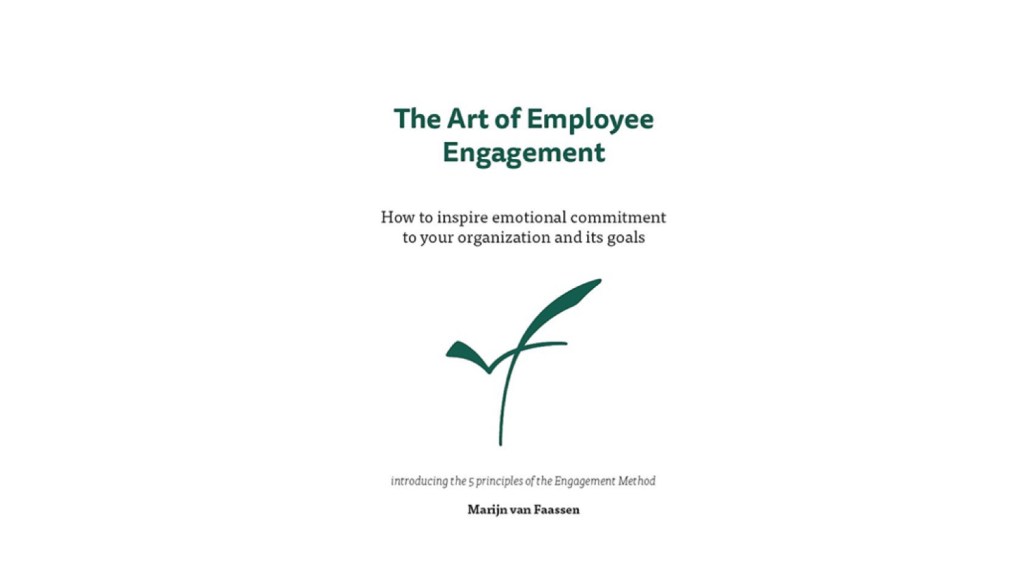
The Art of Employee Engagement (Book Review)

Employee engagement is a topic close to my heart. In the past two decades I have designed, managed and implemented the findings of engagement surveys multiple times, and also managed to write an article with my point of view on how to make them ‘work’.

Given my interest in this topic, I was very pleased to receive a copy of ‘The Art of Employee Engagement’ by Marijn Faassen. I read it in one go, because I found it a fascinating read, for a number of reasons:

Continue reading

Decision making for a new Decade

Every year millions of people around the world make New Year’s resolutions. Given that we are currently starting the 2020’s, we have the exciting opportunity to make resolutions for a whole new decade!

I decided to make mine around decision making. The reason for this was the fact that I had the opportunity to read ‘Unlocking Leadership Mindtraps – How to thrive in complexity’ by Jennifer Garvey Berger during the Christmas vacation.

One of the key notions in this book is that the world has become much more interconnected and therefore more complex. Unfortunately, our decision-making skills are ‘brilliantly designed – for an older, less connected, and more predictable version of the world’. In this context, Jennifer Garvey Berger mentions five mind traps we can find ourselves in, one of them being trapped in ‘Simple stories.

Continue reading

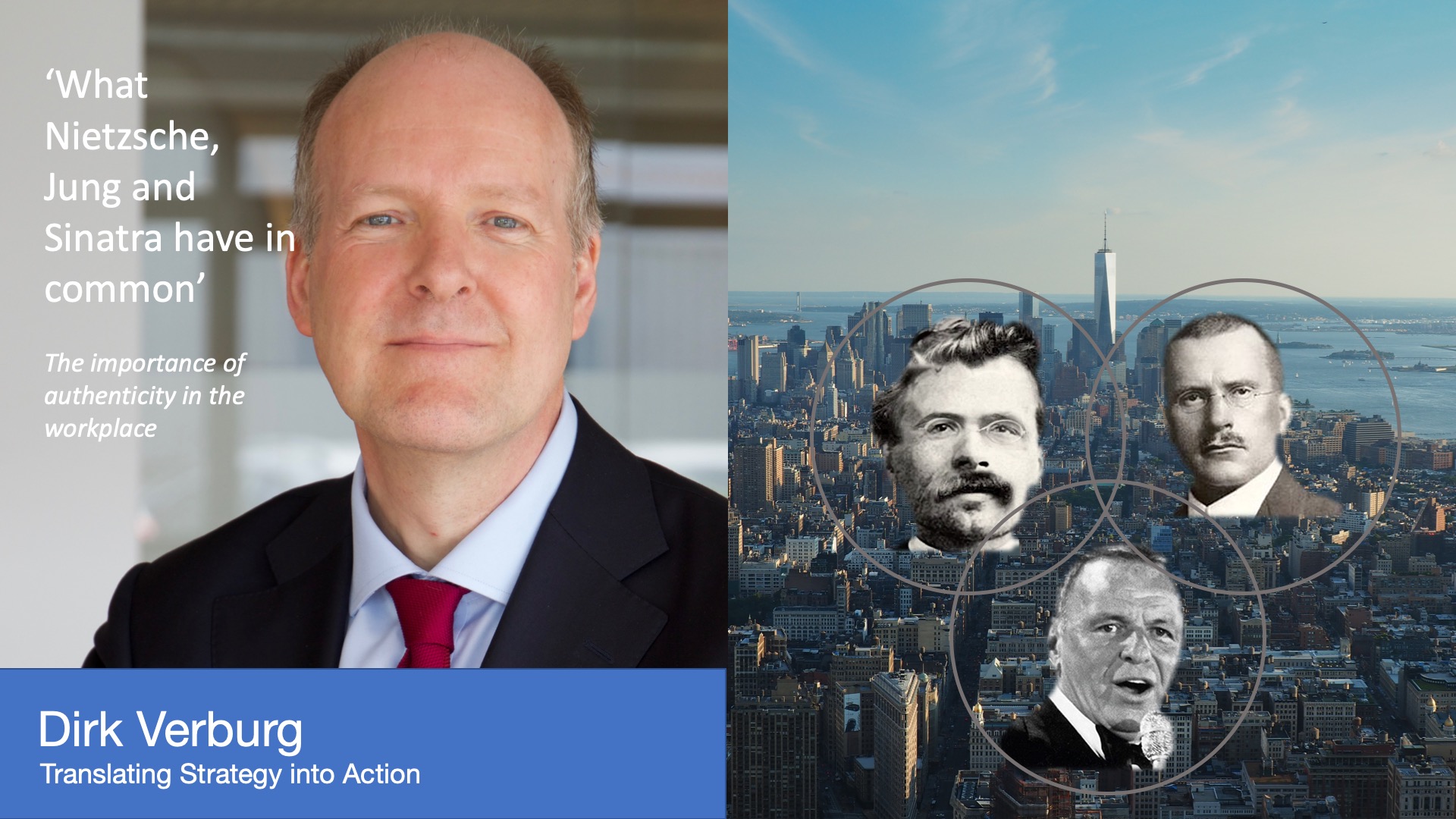
Why authenticity in the workplace is a requirement for mental health

20190603 Cover NJS Autenticity

What Nietzsche, Jung and Sinatra have in common

In the 1970s and 1980s, authenticity and self-development in the workplace were considered to be important by many middle and senior managers in the Western world. Perhaps too important: organizations were sometimes seen as narcissistic vehicles for self-development, instead of entities that should serve the interests of their shareholders and/or other stakeholders.

This orientation changed dramatically in the first half of the 1990s. Two popular business books that were published during that time perfectly illustrate this change. The first one was ‘Valuation’ (1990), a book written by Copeland, Koller and Murrin (three McKinsey consultants), the second one ‘Emotional intelligence’ by David Goleman (1995).

Continue reading

When do you need to think different?

By Dirk Verburg

One of the most inspirational videos I have ever seen is the Apple commercial ‘Think Different’. This video shows footage of several leaders from the worlds of business, arts, politics, sports and science, such as Richard Branson, Pablo Picasso, Albert Einstein, Martin Luther King, Mohammed Ali and Mahatma Ghandi. The key message of the commercial is that these people were able to change the world, because they were thinking differently. The suggestion is, of course, that people who purchase Apple products also ‘Think Different’.

The ability to ‘Think different’ is extremely important, but unfortunately not something that comes ‘naturally’ to us as human beings. There are several reasons for this. The most important ones are our ‘Bounded Rationality’, reliance on ‘Heuristics’ and ‘Theory-Induced Blindness’. Continue reading