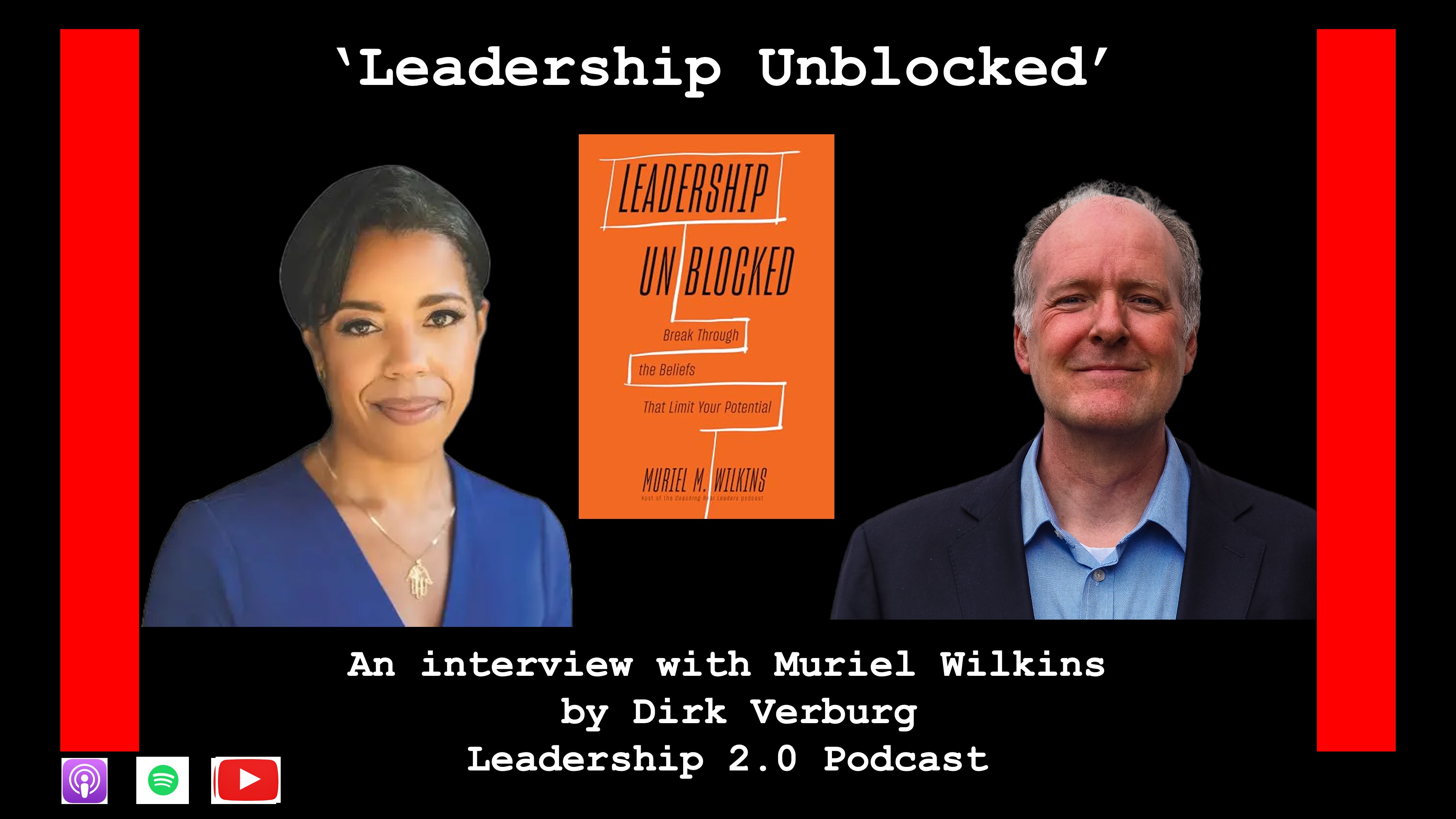
‘Why Great Leaders Ask Great Questions’ – Steve Mostyn

Are you working ‘in’ or ‘on’ the firm?

This is just one of the many provocative and thought stimulating questions Steve Mostyn asks in his book ‘Why Great Leaders Ask Great Questions’.

For a long time we looked to leaders to get answers. According to Steve this is because we confuse authority with leadership.

True leadership in business is grounded in knowing ourselves and building a reflective practice to enhance the understanding of ourselves, our organization and our enviroment, with the aim to develop ourselves, our teams, and our business.

In the 40th episode of the Leadership 2.0 podcast, I interview Steve Mostyn, focusing on the question how leaders can develop such a reflective practice.

Steve is a globally recognised leader in senior executive leadership development and an internationally acclaimed thought-leader in leadership training, and the author of the book ‘Why great Leaders ask Great Questions’.

During our conversation we discussed the following topics:

  • Why Great Leaders ask Great Questions
  • How Leaders Reflect
  • Skilled Defensiveness
  • How Leaders can learn to Reflect
  • The impact of reflection on execution
  • Experiences and Empowerment
  • Business Reviews as Joint Problem solving sessions – instead of blame games
  • How Reflective Leaders grow Reflective Leaders
  • Reflection in Executive Programs of the Said Business School

► You can watch or listen to a podcast with our conversation on:

➡️ Apple Podcasts

➡️ Spotify

➡️ YouTube

➡️ No time to watch or listen to the podcast now? Here is a short summary of the key points of our conversation:

Dirk Verburg: Why did you title your book Why Great Leaders Ask Great Questions rather than Why Great Leaders Give Great Answers, which is our typical expectation of leaders?

Steve Mostyn: Actually, my working title was The Best Leaders Ask the Best Questions, but my publisher and editor suggested Why Great Leaders Ask Great Questions.

Your provocative point about answers is interesting because we often conflate leadership with authority, which are two quite different things. Authority is about meeting the process needs for protection, direction, and order, where answers play an important part. However, leaders are asking a different question: what adaptations are necessary in my organization or team to thrive?

While that can start as an individual quest, it ultimately must become a community activity. Leadership is a process, an action, and a verb—not a noun. In the complexity of the modern world, leaders actually fuel greater productivity by asking questions.

Answers belong to the domain of authority, not leadership. In organizations, C-suite members are authority figures who may or may not exercise leadership. We all know authority figures who do not exercise leadership, as well as individuals without official titles who do. That distinction is why I focused on the power of questions.

Dirk Verburg: You say the best leaders must know two things: how they reflect, and how to build a reflective practice. How can leaders discover if and how they reflect?

Steve Mostyn: I think it is foundational. When working with executive groups, I am often deeply disappointed by the quality of questions from the C-suite. Most of their questions are driven by ego needs to reinforce their authority. Conversely, the most effective leaders know themselves quite well.

My starting point is to ask people in the first person: “How do I reflect?” I ask them to journal their responses without any prior explanation. To ask good questions in the moment, you must become better at reflecting in the midst of action.

You have to slow down to speed up. Understanding how you reflect helps you stand back from the psychological anxiety of needing to reinforce your authority status. A better question always comes from the art of reflection.

Dirk Verburg: What answers do you typically get when you ask leaders how they reflect? Do you sometimes get no answers at all?

Steve Mostyn: I sometimes hear, “I don’t reflect,” which makes me question how they manage, because everyone reflects. However, the most typical response is actually an answer to a different question: where do I reflect? Leaders will say they reflect while cycling, in the shower, or hill walking. Those are great answers, but they address location rather than method.

When we push further into the how, some explain that they use a journal, ask themselves specific questions, or perform a mental postmortem after an event. I also notice a deeply held assumption that reflection is only about improving weaknesses. Very few people seem to reflect on celebrating success.

Additionally, clever people often get exceptionally good at “skilled defensiveness.” They can use solitary journaling for self-justification. To examine your assumptions truly, the next stage requires reflecting with critical friends, confidants, or mentors. Ultimately, reflection can involve journaling or meditation; it is about whatever works for you. Some reflection is always better than none.

Dirk Verburg: The phrase “skilled defensiveness” sounds intriguing. Can you expand a little bit on that notion, Steve?

Steve Mostyn: The workplace is full of theater, and the more senior you are, the richer that theater becomes. People are constantly managing self-justification and self-defense routines.

There is a dark side to constant, isolated journaling: you might just use it to justify your own autocratic tendencies. Debriefing your reflections with someone who is close enough to the situation, but not too close, helps mitigate that skilled defensiveness. We see this dynamic in organizations all the time.

Dirk Verburg: If a leader realizes they should reflect more, what would you recommend to them?

Steve Mostyn: I believe in mini-experiments. My colleague at Saïd Business School, Mark Clark, suggests a “one-minute reflection” utilizing three simple questions. You can do it in 20 seconds:

  • When did I lead today?
  • When could I have led, but didn’t?
  • What did I learn most today?

Write these down as quick bullet points and then close your journal. This technique directly challenges the number-one excuse I hear, which is “I don’t have time.” Once people try this one-minute technique, they naturally start writing a bit more in the margins. Before they know it, it grows into five minutes.

Journaling physically gets thoughts out of your head onto the paper so you can look at them differently. This builds emotional mastery. It allows you to hold back raw anger or frustration and reframe the moment, giving you an edge as a leader.

Dirk Verburg: What do you recommend to leaders in high-paced industries, like Financial Services, to introduce reflection without slowing down execution?

Steve Mostyn: While financial services are high-paced, the idea that they are constant, non-stop decision-making machines is a bit of a myth. There is actually a ton of time in financial institutions that is deeply reflective. The long hours often involve a different rhythm of work, such as one-to-one discussions and informal corridor meetings.

There is always time if you choose to create it. Leaders in these environments are constantly involved in sense-making, particularly regarding markets. As the poet David Whyte says, the CEO is the chief storyteller. In the best institutions, leaders are sense-makers who tell the story of the market to their peers.

Even the busiest places have reflective routines; you just have to use the right language to access them. There is a cultural expectation to look busy, almost running between meetings. When greeted with “Busy?”, the mandatory answer is “Very busy!” We have to find our moments to access that available time productively.

Dirk Verburg: How do we recommend leaders to move away from the “blame game” we call operational business reviews and get into a joint problem-solving mindset?

Steve Mostyn: It starts with the leader. The easy, authoritarian route in an operational review is to play the blame game by asking one-sided questions about why figures are down.

A generative leader takes a different approach: “I see some concerning trends. Could the team convene a workshop to understand the root cause? I am happy to come along.” The people closest to the problem are usually both the problem and the solution. By giving the work back to the team, they leave empowered and engaged to conduct root-cause analysis.

Change in the market often happens at the periphery, not the center. Weak signals are more prevalent and crucial today than they were five years ago due to the complexity of technology and AI. Giving the work back allows the team to spot those quirky, peripheral signals and experiment.

Do not just outsource the problem by telling them to blindly fix it. That is old-school management, not leadership.

Dirk Verburg: Is there a lesson for corporate talent management and succession planning in your philosophy that reflective leaders grow more reflective leaders?

Steve Mostyn: Succession management is a process, not a standalone event. To have an easier life as an executive, you must constantly grow more leaders. While formal leadership programs are excellent, real development happens in micro-moments and by giving the work back.

For example, if you culturally always chair a specific meeting, rotate the chair. Let a team member manage the details. This allows you to step onto the balcony and observe the process. You might be pleasantly surprised by how fabulously they run it.

Leadership development is a behavior forged in the moment. You cannot develop leaders without giving people the headroom, elbow room, and scope to make decisions.

Dirk Verburg: How do reflection and experimentation shape the way you design and deliver executive education at the Saïd Business School?

Steve Mostyn: It is fundamental. Saïd Business School is part of Oxford, where the tutorial system relies on challenging assumptions. On our eight-week Oxford Executive Leadership Program, reflection is deeply embedded into the design.

We encourage journaling, host online tutorials, and conduct live sessions to manage the momentum. I used to be cynical about online learning for leadership development, but I have changed 360 degrees. It absolutely works, and it builds an incredibly strong, mutually helpful alumni community.

Participants must write a concise 500-word submission on a specific question each week. They initially complain that 500 words is too short and difficult, but the constraint is intentional. It forces them to be incredibly concise and clear about their assumptions. By the end, they are glad for the constraint because it works.

Dirk Verburg: Steve, thank you so much for this interview. I really enjoyed it.

Steve Mostyn: Yes, I am always happy to discuss this. Thank you for your support, interest, and your own curiosity, Dirk, which is a strong feature of your style.

About Steve Mostyn

Steve Mostyn is the author of Why Great Leaders Ask Great Questions: 7 essential reflections for every aspiring leader (John Murray Business). Mostyn is one of the world’s leading designers and directors of senior executive leadership programs and an internationally recognised thought leader in leadership training. He is Associate Fellow at Saïd Business School, University of Oxford; creates and leads the Oxford University Executive Leadership Program; and is Honorary Professor, Adam Smith Business School, University of Glasgow. Mostyn has led many corporate programs for senior leaders including the UN, Standard Chartered Bank, Royal Mail, The Financial Services Authority, and Mercedes F1 Team.

The Book ‘Why Great Leaders Ask Great Questions’

Oxford Executive Leadership Program Said Business School

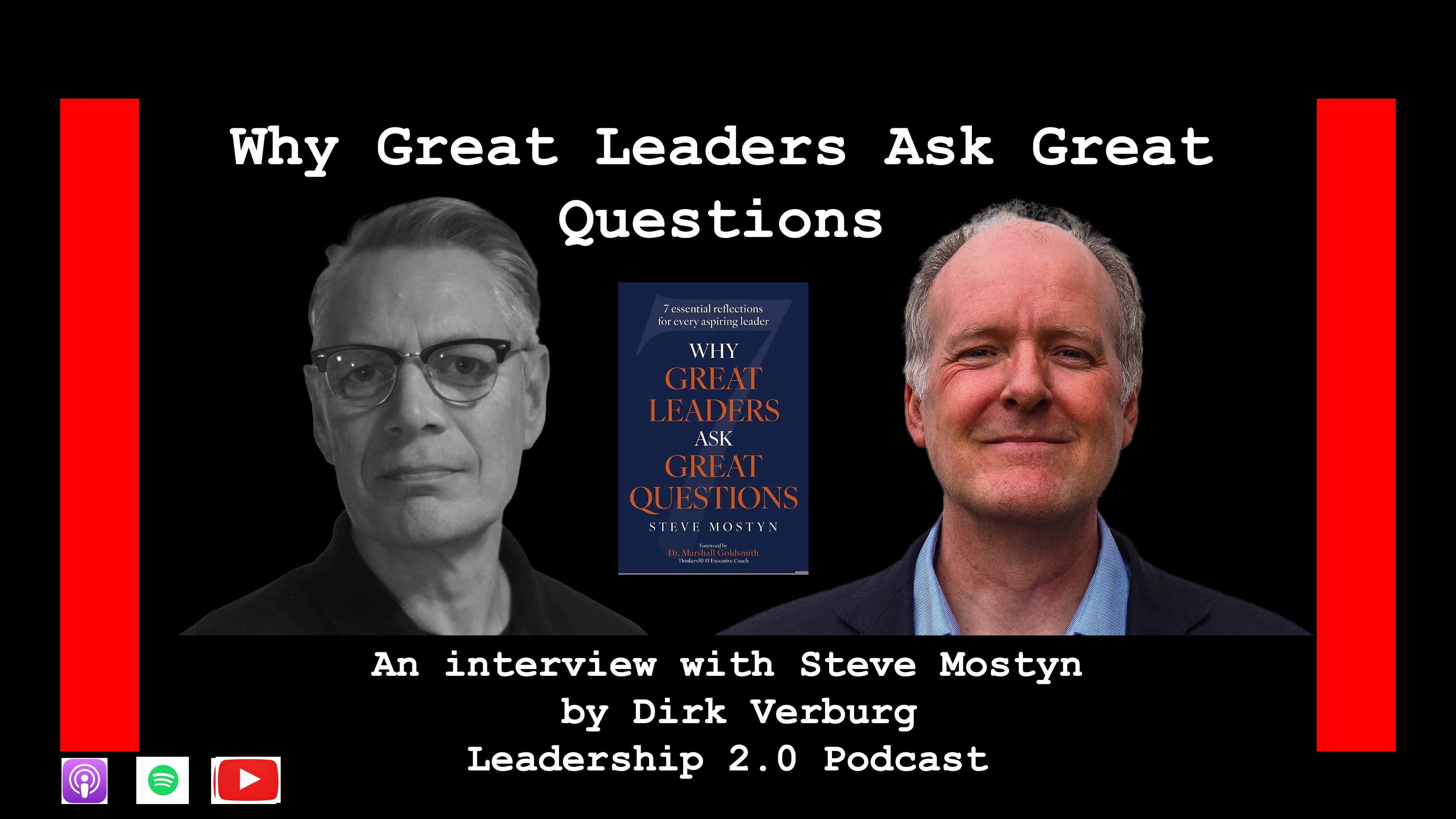
Successfully Managing Executive Transitions – Interview Navid Nazemian

Almost 90% of senior HR leaders agree that transitions into new roles are the most challenging periods in a leader’s professional life. However, organizational appetite to invest in these transitions remains minimal.

As business leaders, we seem to accept a 40% failure rate among newly appointed executives as an unavoidable risk.

The consequences of these failures are significant for both the individual and their organization.

For the individual, a failed transition damages their professional reputation and potentially their livelihood. For their organization, it results in direct financial costs (recruitment), opportunity costs, diminished employee engagement, and a degraded Employer Value Proposition (EVP).

In the 37th episode of the Leadership 2.0 podcast, I speak with Navid Nazemian—my brother-in-arms in the Executive Transition Coaching space—about how organizations can mitigate the risks of executive appointments by engaging an executive coach.

During our conversation, we discussed:

Continue reading
The Company Culture of On – An interview with Alessandra Del Pino

There are some companies I deeply admire, and On, the Swiss sports and apparel brand is definitely one of them! Not only do they make amazing products and have an extremely powerful brand, they also have a unique company culture.

For this reason, I was thrilled to sit down with Alessandra Del Pino, Head of Engagement & Talent Growth at On, to discuss the company culture of On, or, as Alessandra describes it, their ‘secret sauce’.

During our conversation, we covered the following topics:

Continue reading

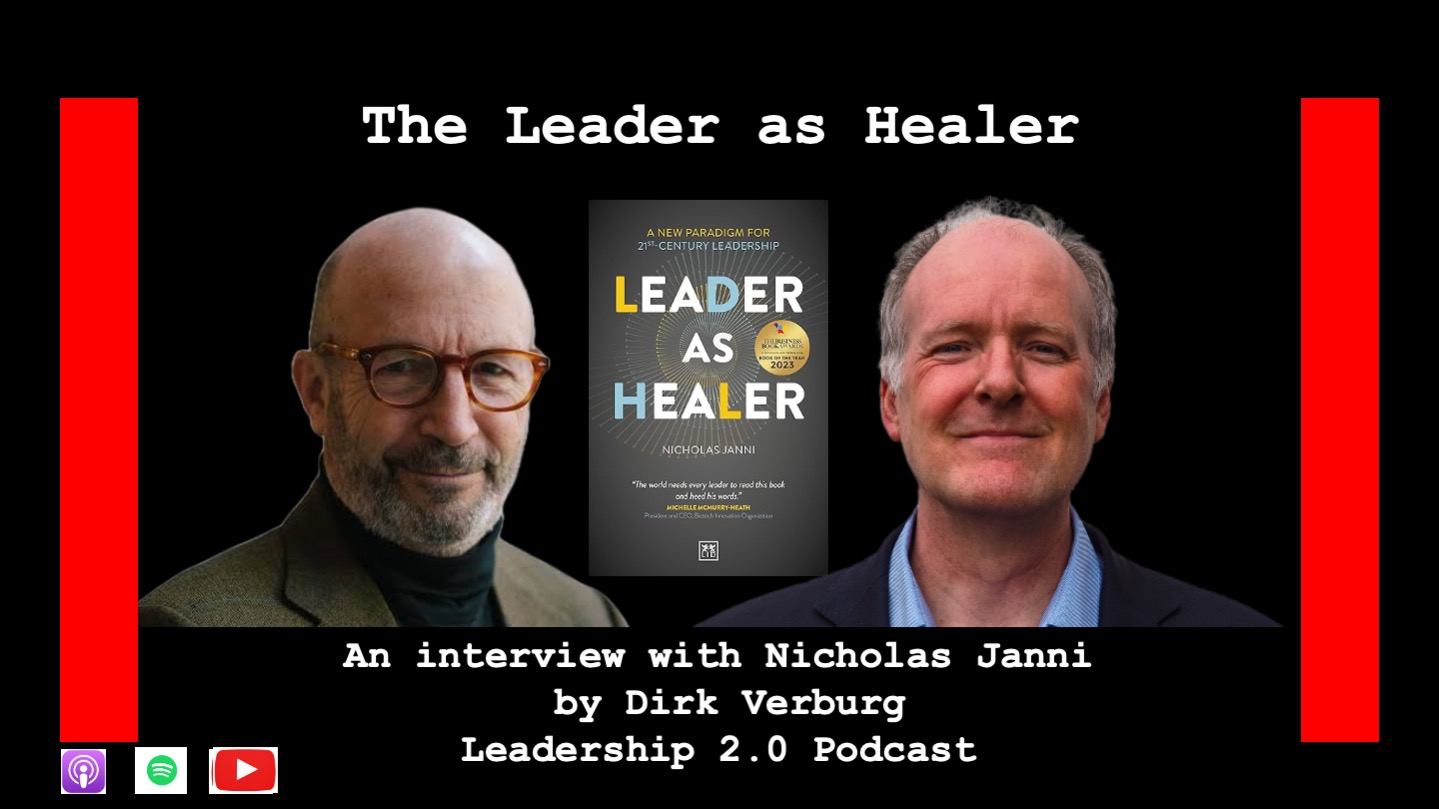
‘The Leader as Healer’ (Business Book of the year 2023) – An interview with Nicolas Janni

‘A transformational read that every leader of today needs’.

These were the words Head Judge, Jacq Burns used when she announced that ‘Leader As Healer’, written by Nicholas Janni was selected as the overall winner for the 2023 Business Book Awards.

In his book, Nicolas Janni argues that we need a new leadership model to address the challenges our society faces.

Our current leadership model is one where we see great leaders as warriors ‘on the battlefield of relentless competition’, who drive action, pursue instrumental (shareholder value related) goals, and maintain transactional relationships.

Instead, Nicholas Janni pleads for leaders who are empathetic, intuitive, present, skilled in mindfulness and deep listening, and who can inspire colleagues to engage and collaborate.

In this episode of the Leadership 2.0 podcast, I discuss with Nicholas:

Continue reading

How to ensure successful leadership transitions – An interview with Michael Watkins

The statistics are sobering: not only do 49% of external executive hires end in failure within 18 months, but internal moves prove to be challenging as well. For instance, 40% of internal job moves involving high potentials also end in failure.

Besides the fact that these failures often have a traumatic impact on the individuals involved, the costs for the organisations are huge. Not only in terms of image and hiring costs but, more importantly, in terms of opportunity costs.

To find out why leadership transitions prove to be so hard, and what companies and individuals can do about it, I interviewed Michael Watkins for my Leadership 2.0 podcast.

Continue reading

‘Understanding organizations…Finally’ – An interview with Interview with Henry Mintzberg

‘We live in a world of organizations – and we do not understand them’

This is one of the statements Henry Mintzberg, one of the leading thinkers in the field of Management, made when I interviewed him for my Leadership 2.0 Podcast about his latest book ‘Understanding Organizations…Finally’.

During our conversation, we discussed the following topics:

0️⃣1️⃣ The importance for organizations to get their structure ‘right’
0️⃣2️⃣ The evolvement of Henry’s thinking about organizations
0️⃣3️⃣ ‘Every (organization) form contains the seeds of its own destruction’
0️⃣4️⃣ ‘Emergent structures’ versus large-scale reorganizations
0️⃣5️⃣ The fit between the leader and the structure of the organization
0️⃣6️⃣ The structures of Apple and Tesla and the personalities of their founders
0️⃣7️⃣ The complementary role of conflict and culture in organizations
0️⃣8️⃣ The relationship between the structure and the culture of an organization
0️⃣9️⃣ The gap between formulators and implementers of corporate strategies
1️⃣0️⃣ The interest in structuring organizations in academia and business

You can watch or listen to this podcast episode on:

▶ YouTube https://youtu.be/sDWnSgQNmKs

▶ Apple Podcasts https://podcasts.apple.com/ch/podcast/henry-mintzberg-understanding-organizations-finally/id1511327057?i=1000656746374

▶ Spotify https://open.spotify.com/episode/0npqef0iZdAvrOeTiRLyfV?si=VIJT0CjrRF6Zhm6379JIHg

Continue reading

‘Scenario Thinking and Leadership’ – An interview with Jeremy Bentham

Scenario thinking enables organizations to establish possible visions of the future in the form of scenarios.

These scenarios enable decision-makers to think through the different ways in which the environment of their organizations could evolve, based on different sets of assumptions. It enables leaders to ‘think through ‘a wide range of what if questions’: ‘What if the dollar…’, ‘What if China…’, ‘What if scientific developments make it possible in the near future to…’, etc. This enables them to mentally prepare themselves for possible ‘Black Swans’, and review the ability of their organization to cope with, or, iedeally, benefit from these.

One of the companies that is best known for its scenario-thinking activity is Shell. For decades, Shell’s scenarios have supported the decision-making of Shell leaders, academics, governments, and businesses.

Jeremy Bentham led this activity in Shell between 2006 and his retirement in 2022 as Shell Scenarios & strategy Leader and VP Global Business Environment.
In this episode of the Leadership 2.0 podcast, I am interviewing Jeremy Bentham about scenario thinking and leadership.

During our conversation, Jeremy and I discussed the following topics:

Continue reading

‘From Crisis to Innovation: A Mental Health Entrepreneur’s journey’ – An interview with Vlad Gheorghiu

The World Health Organization estimates that 12 billion working days are lost every year due to depression and anxiety. This costs $1 trillion in lost productivity.

McKinsey research showed that ‘60 % of employees have experienced at least one mental-health challenge at some point in their lives’. According to the same study ‘Failing to address the effects of mental health and well-being challenges is a missed opportunity for employers’.

Employees dealing with mental health issues are 4x more likely to say they intend to leave, 3x more likely to report low job satisfaction, 3x more likely to experience toxic workplace behavior, and 2x more likely to report low engagement.

At the same time, classic Employee Assistance Programs do not seem to work…

Vlad Gheorghiu experienced mental health issues firsthand, whilst working for McKinsey. 

This experience inspired him to design solutions. First for McKinsey, and later by co-finding a start-up company called Kyan Health.

In my conversation with Vlad, we covered the following topics:

1️⃣ Vlad’s background

2️⃣ Vlad’s engagement with mental health

3️⃣ The gap in the workplace between the mental health support employees need and receive

4️⃣ The concept of Kyan Health

5️⃣ Measuring impact

6️⃣ Creating a start-up company: Three Dos

7️⃣ Creating a start-up company: Three Dont’s

8️⃣ Vlad’s role models as an entrepreneur

If you are interested, you can watch our conversation on YouTube.


You can also listen to it Apple Podcasts or Spotify

Continue reading

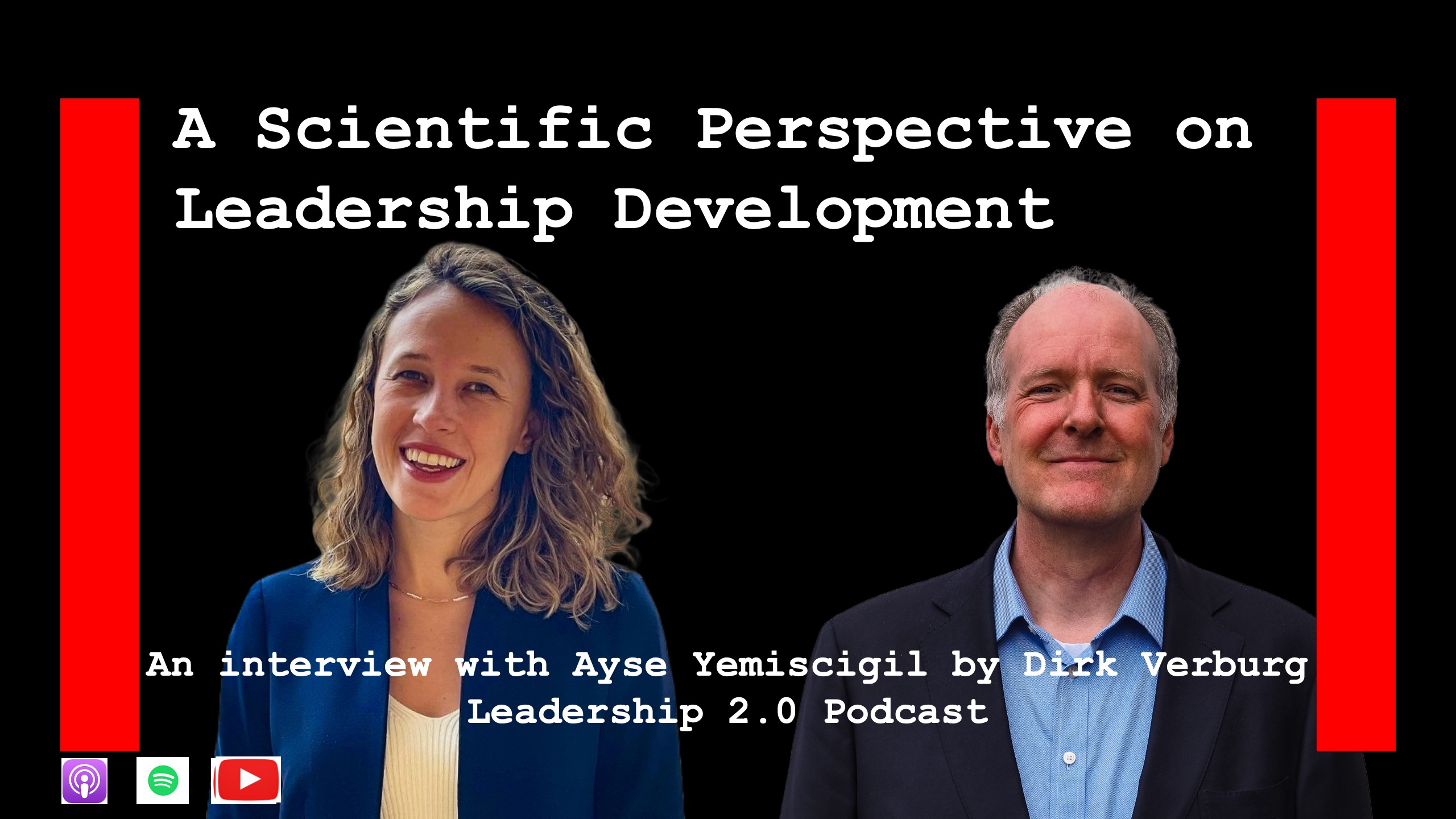
A Scientific Perspective on Leadership Development – An interview with Ayse Yemiscigil

Everyone is an expert in Leadership Development, or at least has an opinion about it.

However, if that is the case, why do global organizations spend more than $60 billion every year on leadership development programs, but is it so hard to ensure the ROI of these programs?

To find the answer to this question, I decided to interview Ayse Yemiscigil for my Podcast Leadership 2.0.

Ayse Yemiscigil is an Assistant Professor of Organizational Behavior at Fordham University’s Gabelli School of Business and a Research Affiliate with the Human Flourishing Program at Harvard University.

In February 2023, she, Dana Born, and Horace Ling, published an article for HBR.org of the Harvard Business Review titled: ‘What Makes Leadership Development Programs Succeed?’

During our conversation, we discussed the following topics:

Continue reading

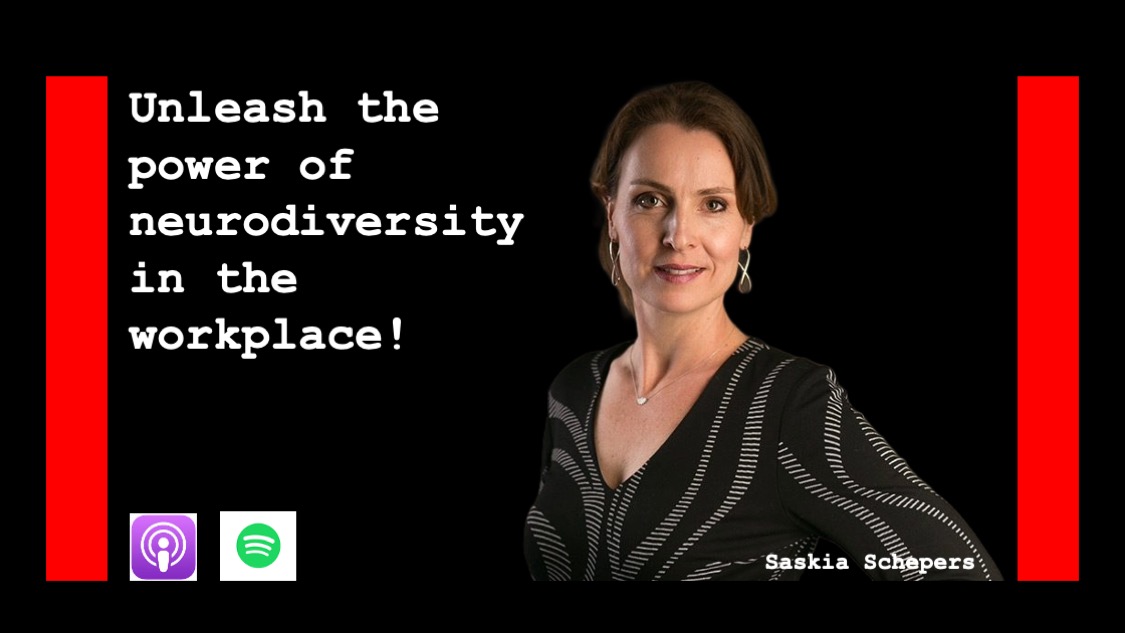
Unleash the power of neurodiversity in the workplace! – An interview with Saskia Schepers

Recently I had a conversation with Saskia Schepers about her book on Neurodiversity in the workplace with the title ‘Als alle breinen werken – Waarom ruimte voor neurodiversiteit op het werk goed is voor iedereen’ (‘When all brains are switched on – Why space for neurodiversity in the workplace benefits everyone’).

Around 80% of mankind is neurotypical, and 20% is neurodivergent. We tend to ‘equip’ people in the latter category with labels like ADD, DHD, bipolar, autistic, etc.

Most leaders find it hard to integrate neurodivergent people in their teams.

The reason is that most of us have preconceived ideas about the way people in the workplace should behave. For instance, we expect people to like attending and participating in meetings, do their work in teams, be productive in open-plan offices, and socialize with their colleagues after work.

People who do not fit this mold are seen as bad ‘team players’, and are often criticized for this behavior, e.g. during annual performance review meetings.

In her book, Saskia Schepers describes what neurodiversity is, what the strong points of different types of neurodivergent people are, and how, as an organization, you can integrate neurodivergent people and capitalize on their strengths.

The book almost immediately reached the number 1 position in the Dutch bestseller list of management books, was quickly sold out, and is now in its third printed edition.

An English translation is in the making and will be published in 2024.

During our conversation, we discussed the following topics:

Continue reading

The why and how of corporate ethics – An interview with John Hollwitz

Our society is more complex than ever. For the first time since WWII two nations find themselves at war on the European continent. At the same time our economy is slowing down, inflation is on the rise, whilst technological developments in the AI space are more unpredictable than ever, and we are still trying to find out if these will be our friend or foe… 

In times like these ethics, and a sense of purpose are more important than ever. Therefore I was glad to have the opportunity to have a conversation on these topics with John Hollwitz.

John Hollwitz is a University Professor of psychology and rhetoric. Before coming to Fordham, he was the A.F. Jacobson Professor of Communications at Creighton University and dean of arts and sciences at Loyola College in Maryland. He also has been the vice president of academic affairs at Fordham.

Our interview was focused on the why and how of corporate ethics. During our conversation, we discussed, amongst others, the following topics:

Continue reading

Developing compassionate leaders – An interview with Sophia Town

Our expectations of leaders and ideas about leadership have changed dramatically in the last couple of years.

Recently I was introduced to Sophia Town, Ph.D. , an assistant professor of organizational behavior at the Gabelli School of Business of Fordham University, who is at the forefront of academic research in this area.

In the classroom, Professor Town’s curriculum is guided by the question: “How can we develop compassionate leaders in service of a flourishing world?”

SophiaTown leads Fordham’s Human Flourishing Project (FHFP), a mixed-methods, interdisciplinary research lab that explores behavioral, psychological, communicative, and spiritual development in business education. Related to this project, Dr. Town serves as a Research Affiliate and Advisory Board Member for the Human Flourishing Program at Harvard University.

During our conversation, we discussed, amongst others, the following topics:

Continue reading

Why you are a micro-manager and what you can do about it (Stop adding value)

One of the big temptations we as leaders face is our urge to add value to the work of our staff. Typically, we add this value in the form of change or additional requests.

There are three reasons why adding value is tempting for us:

  • Accountability – We are accountable for the work of our staff. If something goes wrong, we as leaders suffer the consequences (‘It happened on your watch’)
  • Know-how – We know it better than our staff. Seriously. That is most often the reason why we were appointed
  • We like it – As leaders it is often tempting to take a break from the daily grind of budgets and office politics, to dive back into the content we love(d) so much (‘Let me show you how it is done’)

As with every temptation in life, we need to fight this one as well. There are fivereasons for this:

Continue reading

Improve your decision-making skills: time to get back to the gym!

Something I struggled with for a long time is chronic neck and shoulder pain when working with my computer. For the largest part of my life, I sat behind my computer like the hunchback of Notre Dame.

Well meant ergonomic advice, a standing desk, and using the mouse with my left hand only gave temporary relief.

The only thing that solves the problem structurally is going to the gym.

The problem is that I experienced being in the gym as exciting as watching grass grow. Besides, I always took the words of the apostle Paul “For bodily exercise profiteth little” (1 Tim 4:8) perhaps a little too close to heart. 

If getting back in shape is part of your past summer holiday intentions – here are three things that got me back in the gym earlier this year!

Continue reading

Three design principles for Leadership Development

In the last three decades, the business world has become more complex than ever before. This complexity is mainly driven by two factors:

  • Globalization – Never before in the history of mankind have materials, capital and people moved faster and more freely across our planet
  • Technology – The amount of data we have at our disposal for decision-making is dramatically increasing each year, and AI is providing us with the tools to do this faster and more effective than ever.

As a result, our world has become more interconnected and interdependent than ever. A case in point are the supply chain issues businesses experienced in the initial stage of the COVID-19 pandemic.

This interconnectedness and interdependence has huge implications for the way organizations need to operate, both externally as well as internally.

Continue reading

Why leadership has become more difficult and why this matters

I spent a significant part of my working life developing leaders in organizations. What strikes me is that during COVID-19 the demand for this type of work has not decreased; if anything, the demand for leadership development has increased. That is remarkable. During the financial crisis in 2007-2008, for instance, most companies tried to save money, and one of the first things they considered was decreasing the out-of-pocket costs associated with these, and other kind of developmental activities.

Recently I was asked why companies continue to invest in the quality of their leadership at all levels of the organizations, despite the economic uncertainty they are facing.

In my opinion, the reason is that companies have come to realize the growing importance of the quality of leadership at all levels of the organization. I believe that this is a good thing, especially because leadership roles have become more demanding in the last couple of decades, not only for senior leaders, but also for first, and second-level leaders in organizations. 

Continue reading

Decision making for a new Decade

Every year millions of people around the world make New Year’s resolutions. Given that we are currently starting the 2020’s, we have the exciting opportunity to make resolutions for a whole new decade!

I decided to make mine around decision making. The reason for this was the fact that I had the opportunity to read ‘Unlocking Leadership Mindtraps – How to thrive in complexity’ by Jennifer Garvey Berger during the Christmas vacation.

One of the key notions in this book is that the world has become much more interconnected and therefore more complex. Unfortunately, our decision-making skills are ‘brilliantly designed – for an older, less connected, and more predictable version of the world’. In this context, Jennifer Garvey Berger mentions five mind traps we can find ourselves in, one of them being trapped in ‘Simple stories.

Continue reading

Adopting a growth mindset requires critical self-reflection from leaders

HC Gage Skidmore

Critical self-reflection is difficult to acquire, but extremely important for leaders

By Dirk Verburg

For several reasons I love reading autobiographies of leaders in business and politics. The first reason is plain curiosity: the possibility to take a look behind the stage of well-known events. The second reason is because these autobiographies provide a unique opportunity to understand decision making processes from the perspective of the decision makers. Why did they take certain decisions in specific situations? Were they aware of certain developments? From whom did they obtain advice? What was the role of important stakeholders? etc. Continue reading