
McKinsey’s infamous stat haunts every executive: 70% of all change management efforts fail. Despite decades of expertise, this number seems frozen in time. Why?
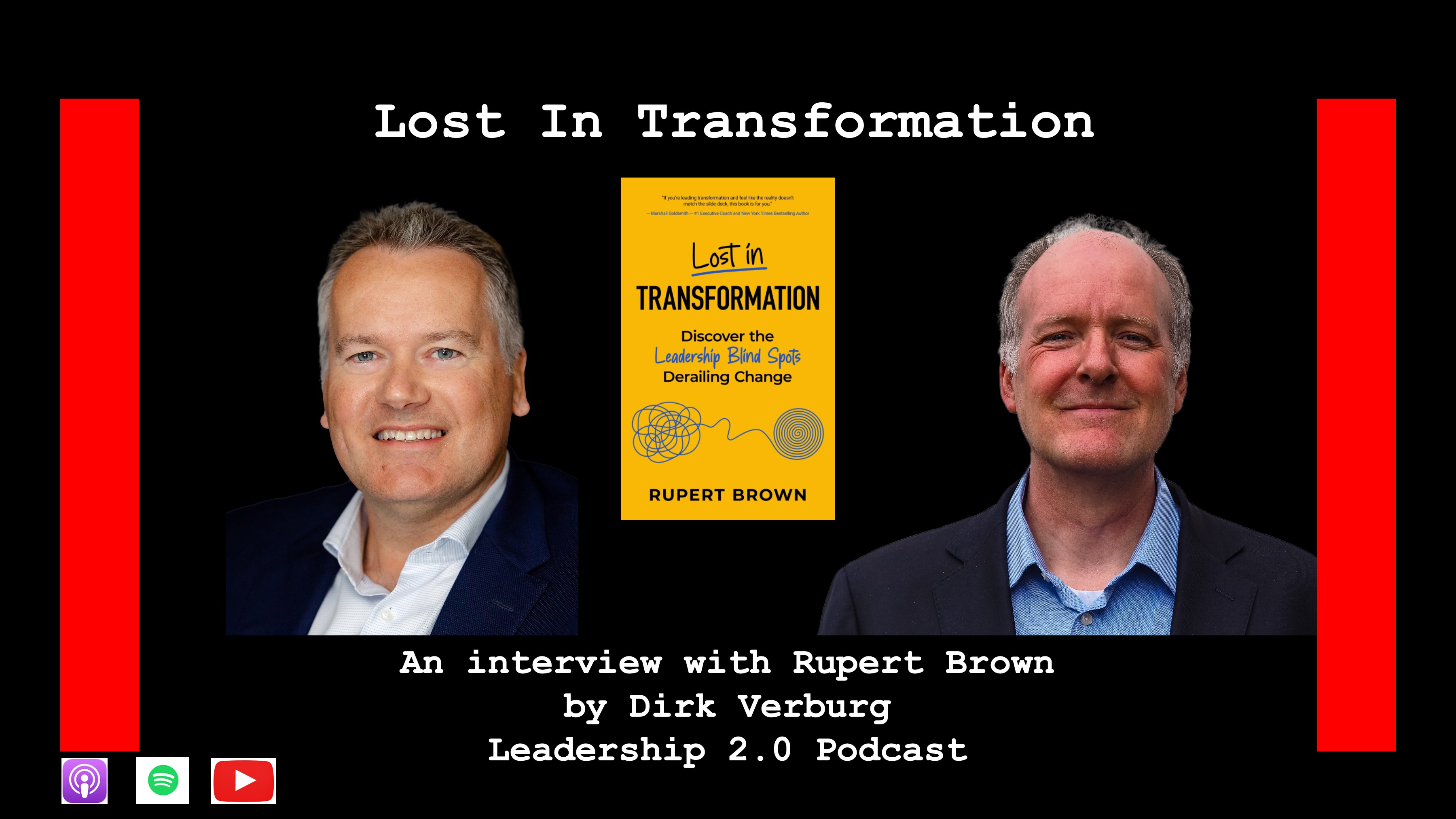
In the 35th episode of the Leadership 2.0 podcast, I sat down with a true transformation veteran, Rupert Brown, author of the eye-opening book, ‘Lost in Transformation’.
Rupert is an experienced Chief People Officer and change management specialist with deep expertise in M&A, digital transformation, and turnarounds, having advised giants like Procter & Gamble and Maersk.
This wasn’t just a discussion of tactics; it was a candid, emotionally intelligent discussion on how Transformations can be handled better.
Tune in to learn about:
- Why Transformation projects continue to fail
- The difference between Change and Transformation
- The Bad Reputation of the word ‘Transformation’
- Why we still struggle with Change Management
- In-Groups and Out-Groups in Change Management Processes
- Chief Acceleration Officers
- Trust is Energy
- Crises as Catalysts for Change
- The impact of our Permacrisis on Change Management
- Behavioral Skills to cope with the BANI world’
- Change Management and AI
If you’re leading a transformation—or struggling to survive one—you can’t afford to miss this. Rupert delivers the hard truths and the practical guidance needed to shift from ‘being Lost’ to becoming ‘the Leader of change’.
► You can watch or listen to a podcast with our conversation on:
Continue reading
 Dirk Verburg