Why Knowing Your ‘Why’ Makes You a Better Leader

Most people I know regularly reflect on the meaning and purpose of life. In 1946, Viktor Frankl, an Austrian psychiatrist and psychotherapist, wrote one of the most important and influential books on this topic: ‘Man’s Search for Meaning‘.

Continue reading
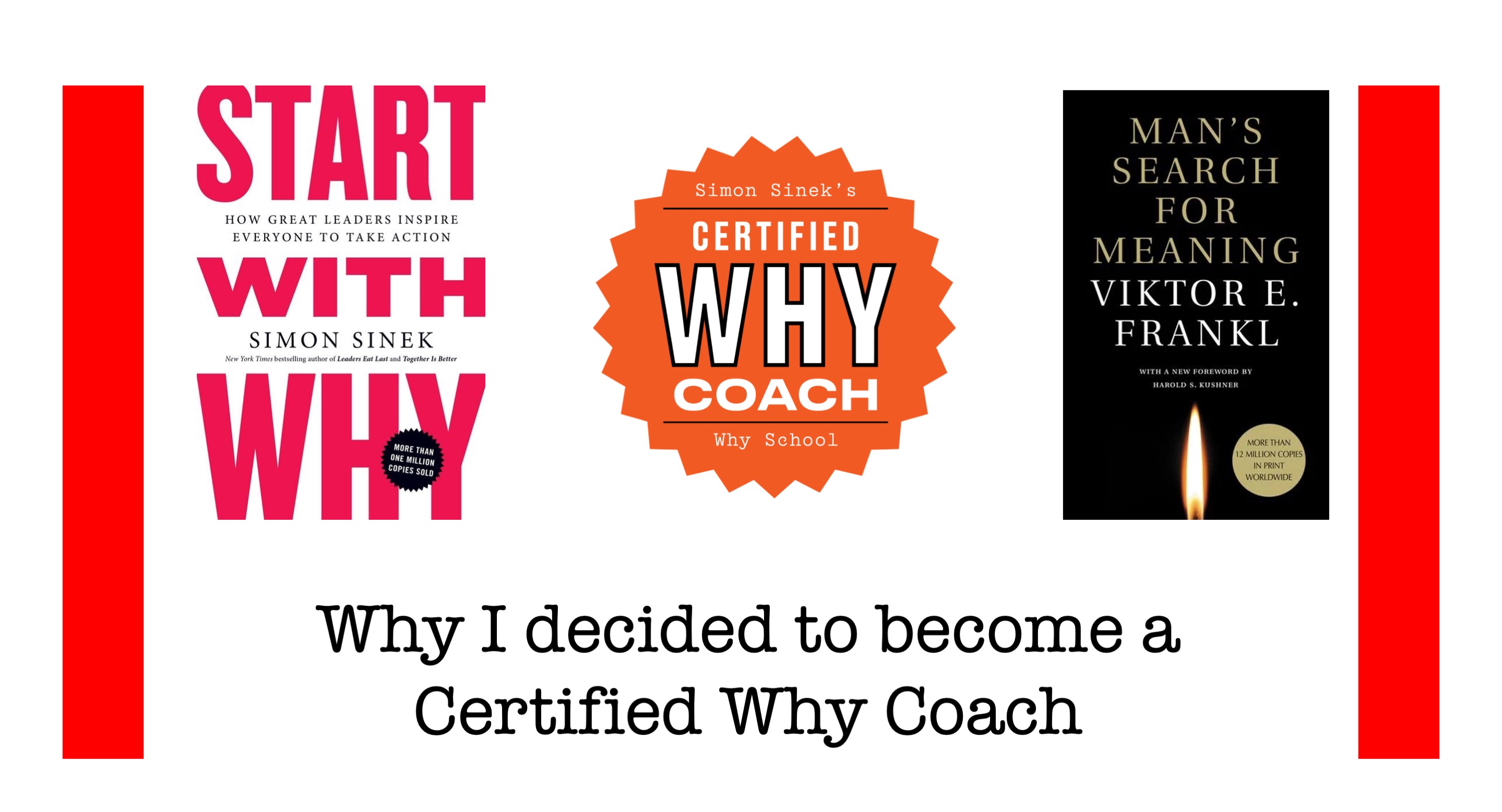
All business leaders I know are able to explain What they do, almost all of them How they do it, but only a minority can explain Why they do what they do, and that is a missed opportunity, both for themselves and their teams.

Most people I know regularly reflect on the meaning and purpose of life. In 1946, Viktor Frankl, an Austrian psychiatrist and psychotherapist, wrote one of the most important and influential books on this topic: ‘Man’s Search for Meaning‘.

Continue reading
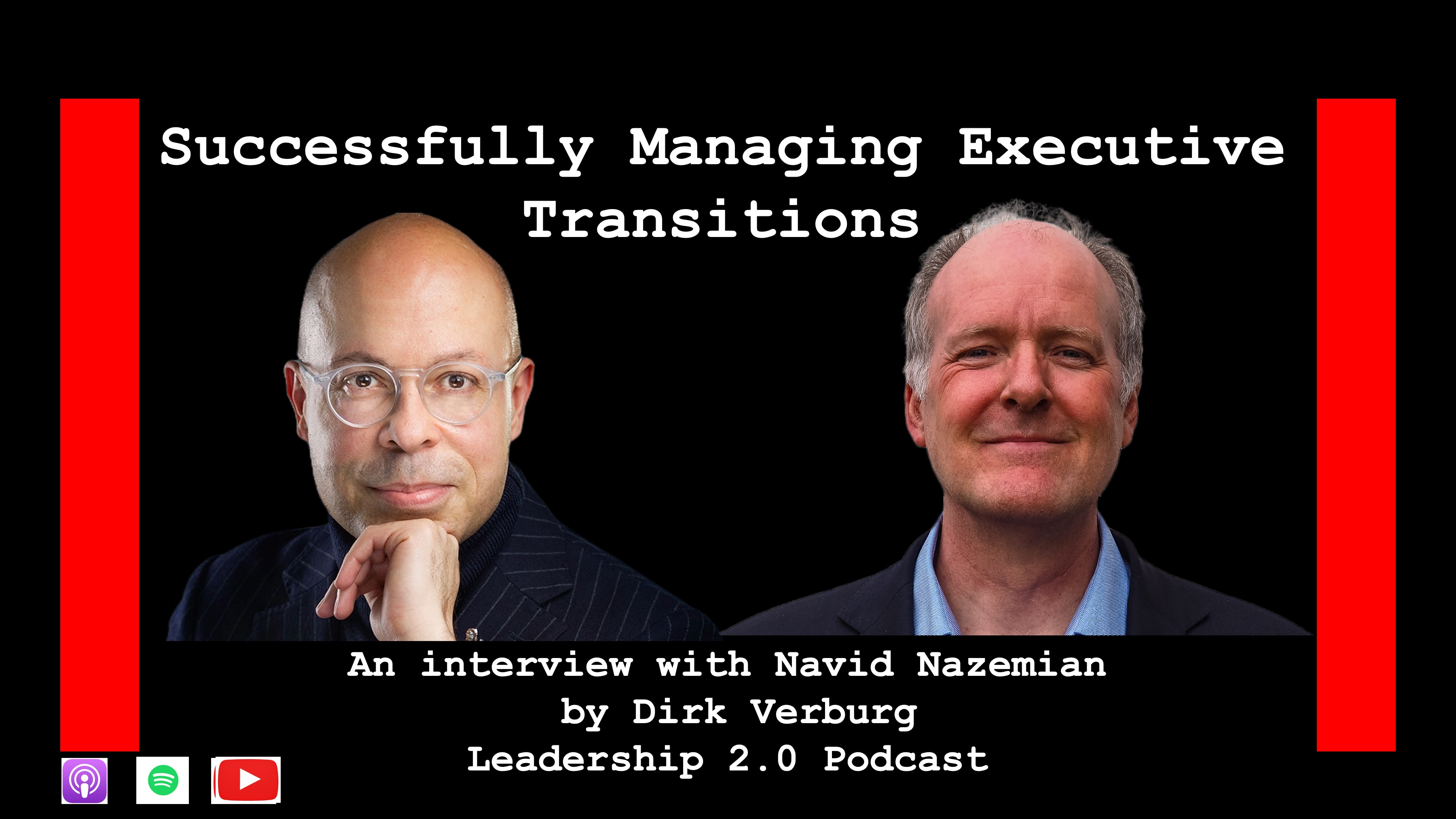

Successfully Managing Executive Transitions – Interview Navid Nazemian

Almost 90% of senior HR leaders agree that transitions into new roles are the most challenging periods in a leader’s professional life. However, organizational appetite to invest in these transitions remains minimal.

As business leaders, we seem to accept a 40% failure rate among newly appointed executives as an unavoidable risk.

The consequences of these failures are significant for both the individual and their organization.

For the individual, a failed transition damages their professional reputation and potentially their livelihood. For their organization, it results in direct financial costs (recruitment), opportunity costs, diminished employee engagement, and a degraded Employer Value Proposition (EVP).

In the 37th episode of the Leadership 2.0 podcast, I speak with Navid Nazemian—my brother-in-arms in the Executive Transition Coaching space—about how organizations can mitigate the risks of executive appointments by engaging an executive coach.

During our conversation, we discussed:

Continue reading

Do not leave the Onboarding if Executives to chance – Why you should consider Transition Coaching

The statistics around executive transition failure rates of newly appointed executives are staggering: 

  • Nearly half of all leadership transitions fail (McKinsey)
  • Not only external hires fail: research from DDI shows that 35% of all executives promoted internally are considered failures
  • The costs of C-level failures are, in the vast majority of cases, higher than USD 2 million, but can be as high as USD 30 million. In their Harvard Business Review article, Claudio Fernández-Aráoz, Gregory Nagel, and Carrie Green estimate that the costs of mismanaged CEO transitions in the S&P 1500 alone already result in nearly USD1 trillion in market value loss on a yearly basis.

Unfortunately, the number of leaders and organizations that actually invest in addressing this problem is relatively small. And that is an issue for both the individuals concerned and their organizations.

Continue reading

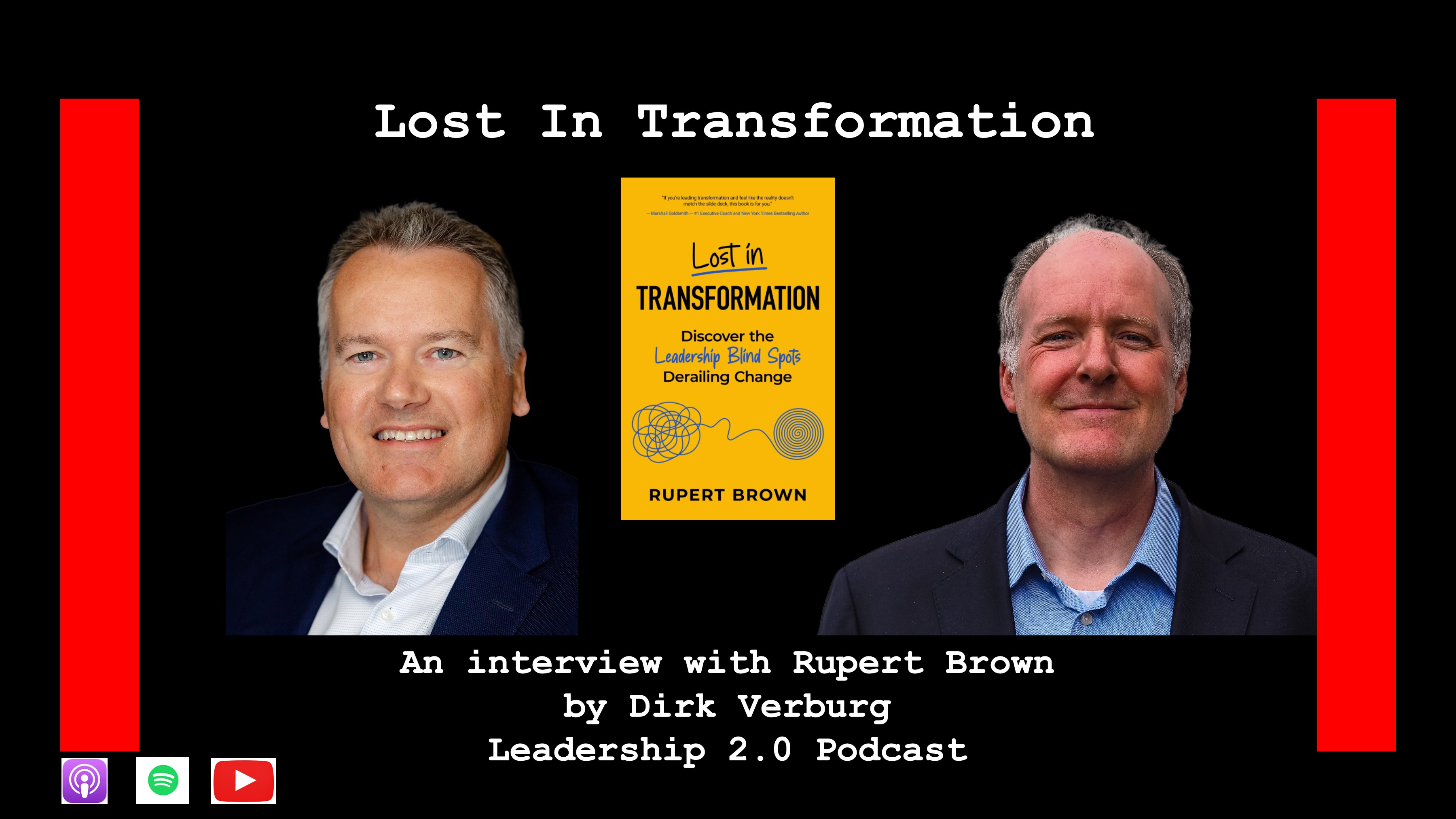
The 70% Failure Rate: Why are most Business Transformations STILL getting ‘Lost’? – Interview Rupert Brown

McKinsey’s infamous stat haunts every executive: 70% of all change management efforts fail. Despite decades of expertise, this number seems frozen in time. Why?

In the 35th episode of the Leadership 2.0 podcast, I sat down with a true transformation veteran, Rupert Brown, author of the eye-opening book, ‘Lost in Transformation’.

Rupert is an experienced Chief People Officer and change management specialist with deep expertise in M&A, digital transformation, and turnarounds, having advised giants like Procter & Gamble and Maersk.

This wasn’t just a discussion of tactics; it was a candid, emotionally intelligent discussion on how Transformations can be handled better.

Tune in to learn about:

  • Why Transformation projects continue to fail
  • The difference between Change and Transformation
  • The Bad Reputation of the word ‘Transformation’
  • Why we still struggle with Change Management  
  • In-Groups and Out-Groups in Change Management Processes  
  • Chief Acceleration Officers
  • Trust is Energy
  • Crises as Catalysts for Change
  • The impact of our Permacrisis on Change Management 
  • Behavioral Skills to cope with the BANI world’
  • Change Management and AI

If you’re leading a transformation—or struggling to survive one—you can’t afford to miss this. Rupert delivers the hard truths and the practical guidance needed to shift from ‘being Lost’ to becoming ‘the Leader of change’.

► You can watch or listen to a podcast with our conversation on:

Continue reading

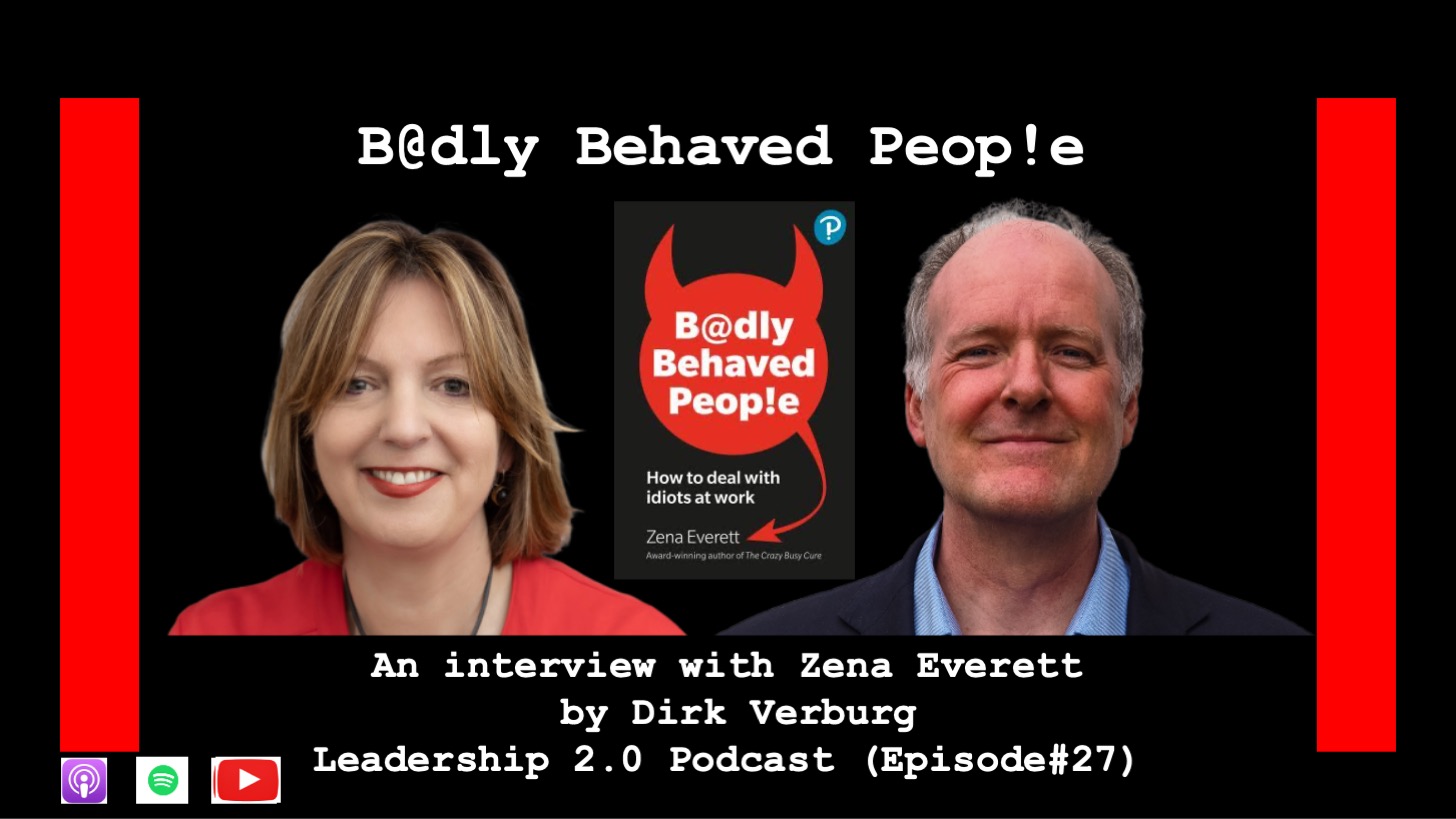
Coaching in the workplace – An interview with Zena Everett

Most of us are acutely aware of the gap between how organizations aspire to operate and the everyday reality of working within them.

This discrepancy often has a negative impact on the motivation and well-being of employees, ranging from a decrease in employee engagement, to mental health issues,

In her book ‘Badly Behaved People’, my fellow executive coach Zena Everett describes a number of real-world cases about how this discrepancy can manifest itself, and, perhaps more importantly, how we can address them

What I particularly like about about this book is how Zena makes complex psychological concepts (for instance, Transactional Analysis) accessible without oversimplifying them, and demonstrates how they can be applied in the workplace.

In our conversation about her book, Zena and I discussed the following topics:

Continue reading

The Company Culture of On – An interview with Alessandra Del Pino

There are some companies I deeply admire, and On, the Swiss sports and apparel brand is definitely one of them! Not only do they make amazing products and have an extremely powerful brand, they also have a unique company culture.

For this reason, I was thrilled to sit down with Alessandra Del Pino, Head of Engagement & Talent Growth at On, to discuss the company culture of On, or, as Alessandra describes it, their ‘secret sauce’.

During our conversation, we covered the following topics:

Continue reading