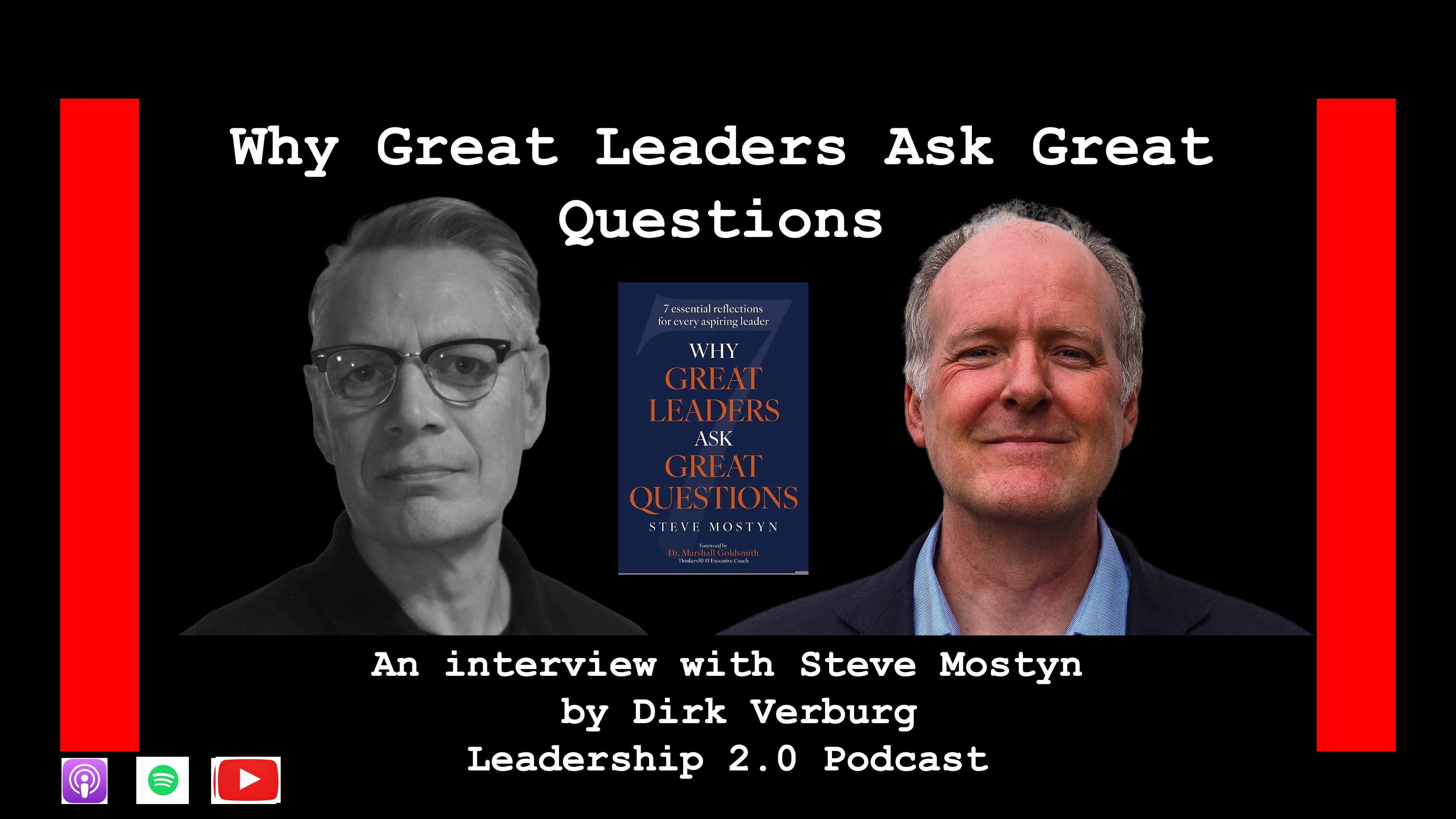
This is just one of the many provocative and thought stimulating questions Steve Mostyn asks in his book ‘Why Great Leaders Ask Great Questions’.
For a long time we looked to leaders to get answers. According to Steve this is because we confuse authority with leadership.
True leadership in business is grounded in knowing ourselves and building a reflective practice to enhance the understanding of ourselves, our organization and our enviroment, with the aim to develop ourselves, our teams, and our business.
In the 40th episode of the Leadership 2.0 podcast, I interview Steve Mostyn, focusing on the question how leaders can develop such a reflective practice.
Steve is a globally recognised leader in senior executive leadership development and an internationally acclaimed thought-leader in leadership training, and the author of the book ‘Why great Leaders ask Great Questions’.
During our conversation we discussed the following topics:
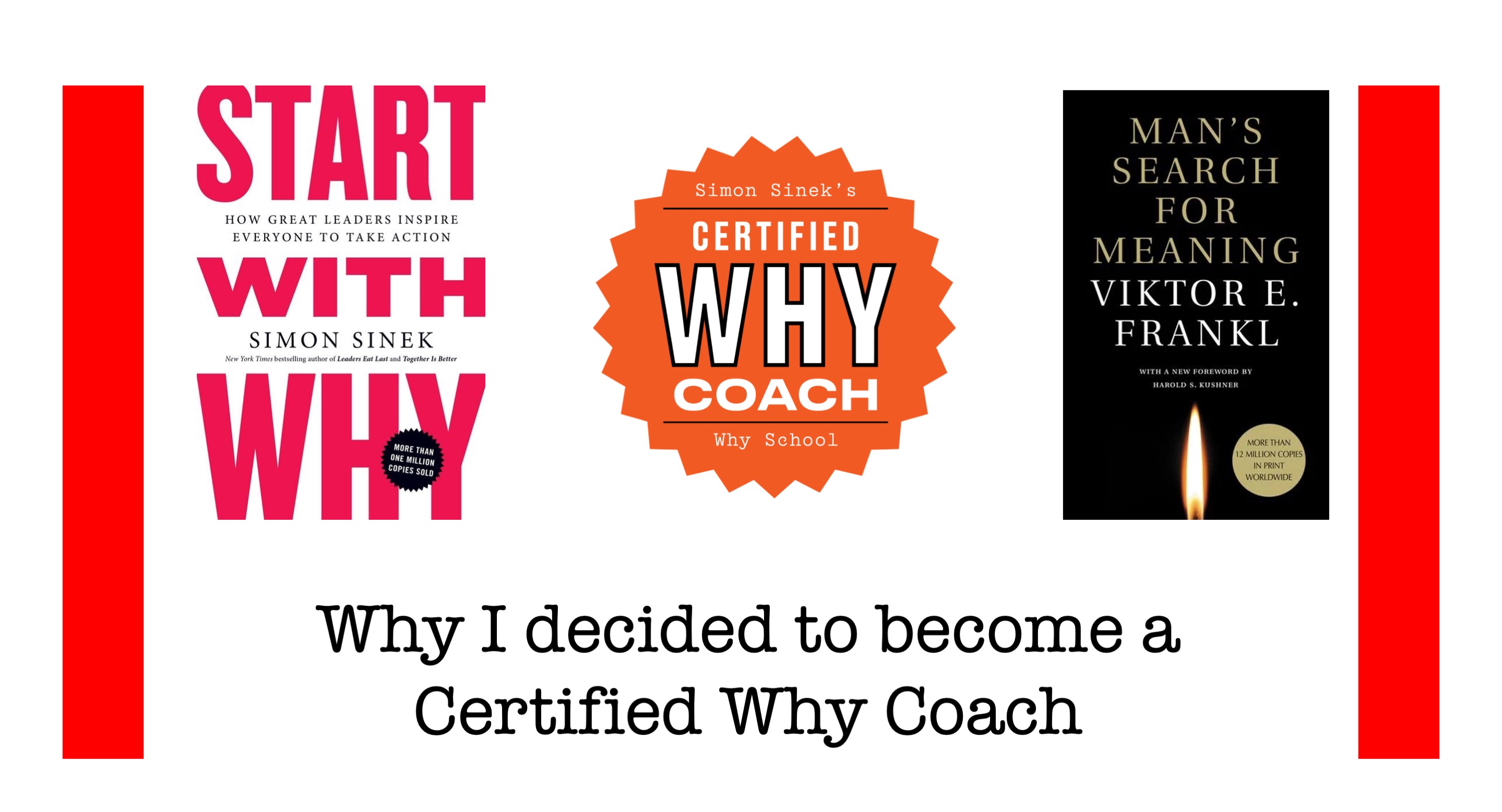
Most people I know regularly reflect on the meaning and purpose of life. In 1946, Viktor Frankl, an Austrian psychiatrist and psychotherapist, wrote one of the most important and influential books on this topic: ‘Man’s Search for Meaning‘.
All business leaders I know are able to explain What they do, almost all of them How they do it, but only a minority can explain Why they do what they do, and that is a missed opportunity, both for themselves and their teams.
Man’s Search for Meaning
Most people I know regularly reflect on the meaning and purpose of life. In 1946, Viktor Frankl, an Austrian psychiatrist and psychotherapist, wrote one of the most important and influential books on this topic: ‘Man’s Search for Meaning‘.
McKinsey’s infamous stat haunts every executive: 70% of all change management efforts fail. Despite decades of expertise, this number seems frozen in time. Why?
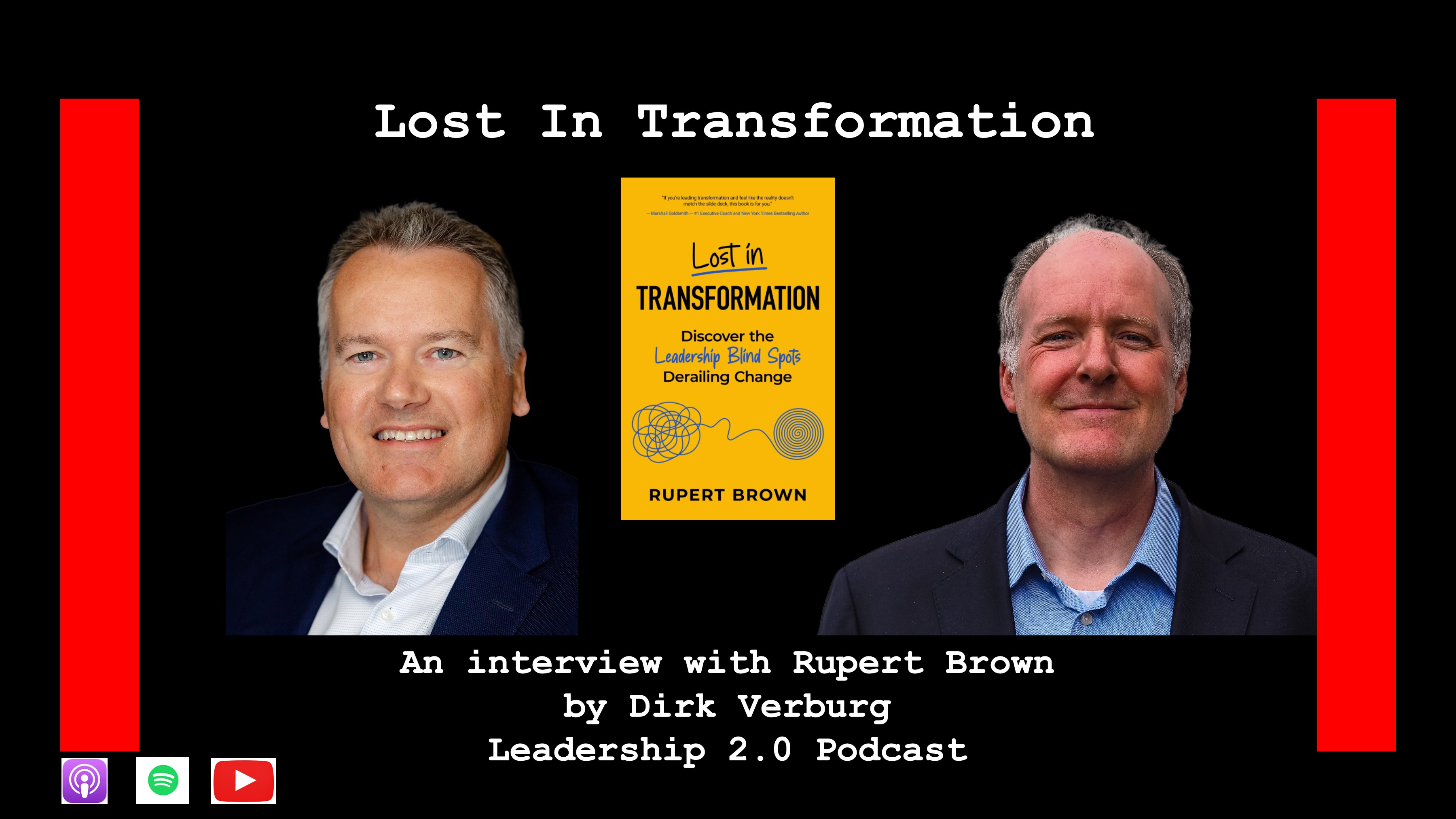
In the 35th episode of the Leadership 2.0 podcast, I sat down with a true transformation veteran, Rupert Brown, author of the eye-opening book, ‘Lost in Transformation’.
Rupert is an experienced Chief People Officer and change management specialist with deep expertise in M&A, digital transformation, and turnarounds, having advised giants like Procter & Gamble and Maersk.
This wasn’t just a discussion of tactics; it was a candid, emotionally intelligent discussion on how Transformations can be handled better.
Tune in to learn about:
Why Transformation projects continue to fail
The difference between Change and Transformation
The Bad Reputation of the word ‘Transformation’
Why we still struggle with Change Management
In-Groups and Out-Groups in Change Management Processes
Chief Acceleration Officers
Trust is Energy
Crises as Catalysts for Change
The impact of our Permacrisis on Change Management
Behavioral Skills to cope with the BANI world’
Change Management and AI
If you’re leading a transformation—or struggling to survive one—you can’t afford to miss this. Rupert delivers the hard truths and the practical guidance needed to shift from ‘being Lost’ to becoming ‘the Leader of change’.
► You can watch or listen to a podcast with our conversation on:
🎙️ In the 30th episode of the Leadership 2.0 podcast, I interview Rebecca Robins CMgr CCMI and Patrick Dunne about ‘Maximising the business opportunity of generational diversity’
During our conversation, we discussed the following topics:
Many people in the workplace wrestle with combining their ethical and spiritual convictions on the one hand, with what they feel is required of them to progress their careers, or simply to stay in their roles, on the other.
For people who want to address this tension, ‘Heroic Leadership – Best Practices from a 450-Year-Old Company That Changed the World’ by Chris Lowney. ‘ will be a great read!
Chris Lowney, is a one-time Jesuit seminarian, who currently chairs the board of CommonSpirit Health, America’s largest not-for-profit healthcare system with 140 hospitals and more than 150,000 employees. Previously, he served as a Managing Director of J.P. Morgan & Co. in Tokyo, Singapore, London and New York.
In the 28th episode of the Leadership 2.0 podcast, I interview Chris Lowney about Heroic Leadership. During our conversation, we discussed the following topics:
Most of us are acutely aware of the gap between how organizations aspire to operate and the everyday reality of working within them.
This discrepancy often has a negative impact on the motivation and well-being of employees, ranging from a decrease in employee engagement, to mental health issues,
In her book ‘Badly Behaved People’, my fellow executive coach Zena Everett describes a number of real-world cases about how this discrepancy can manifest itself, and, perhaps more importantly, how we can address them
What I particularly like about about this book is how Zena makes complex psychological concepts (for instance, Transactional Analysis) accessible without oversimplifying them, and demonstrates how they can be applied in the workplace.
In our conversation about her book, Zena and I discussed the following topics:
🎙️ Even though we have a vast array of change management theories and methodologies at our disposal (John Kotter, Kurt Lewin, Elisabeth Kübler-Ross, William Bridges, ADKAR, etc.), it still proves to be very hard for us as leaders and consultants to implement real, sustainable change (transformation).
🚫 The harsh reality is that most change projects fail (the famous 70% of McKinsey), or end with a superficial victory declaration, after which the organization often falls back to ‘the way we DID things here’.
⁉️ ‘Why is that?’ That very question drove Daniël Wolfs, experienced change consultant and co-founder of The Change Studio (Netherlands), to write his thought-provoking book ‘De Veranderfilosoof’ (The Change Philosopher) on how we can approach transformation in a deeper, more human, and more sustainable way.’
► In our conversation about this book, we discussed the following topics:
Most leaders leave the composition and agendas of their leadership teams to chance. This is a waste of time, energy, and focus.
Almost all senior leaders choose the members of their leadership teams almost by default: all their direct reports, as well as a selection of participants from staffing and back-office roles ‘in the matrix’ (Finance, HR, IT, Regulatory, Affairs, Communications, Quality Assurance, etc.).
The advantages of composing leadership teams in this way are that:
✅ Representatives of all functions are aware of every topic that is discussed (information and awareness)
✅ Participants from staffing and back-office functions feel they (and their functions) are taken seriously as true ‘business partners’
✅ The leader avoids difficult discussions about the composition of their leadership team
Although this sounds great, this typically results in:
There are some companies I deeply admire, and On, the Swiss sports and apparel brand is definitely one of them! Not only do they make amazing products and have an extremely powerful brand, they also have a unique company culture.
For this reason, I was thrilled to sit down with Alessandra Del Pino, Head of Engagement & Talent Growth at On, to discuss the company culture of On, or, as Alessandra describes it, their ‘secret sauce’.
During our conversation, we covered the following topics:
‘Everyone who wins nowadays is challenging the Shareholder Value Maximization doctrine’
This is just one of the powerful and thought-provoking statements Professor Michael Pirson (Fordham University – Gabelli School of Business) made when I interviewed him about ‘Humanistic Management’.
In the last decades, the shortcomings of the neo-liberal economic order in our society have become clearer than ever (e.g. the credit crunch, climate change, and wars). An increasing number of people want to move away from a system that commoditizes human beings, and the natural environment in which they live.
They seek, amongst others, dignity, a sense of purpose, and attention to well-being, instead of material prosperity only.
Humanistic Management is a relatively young academic movement that seeks to create a more balanced relationship between those things that can be exchanged on markets and those that are not but make life worthwhile.
Michael Pirson is an active member of this movement, and in this episode of the Leadership 2.0 podcast, I discuss with him
1️⃣ What Humanistic Management is 2️⃣ How Michael discovered Humanistic Management 3️⃣ What we as mankind can learn from the Covid 19 Pandemic 4️⃣ Measuring Wealth versus Wellbeing 5️⃣ Will Shareholder Value (Economistic Management) not always prevail? 6️⃣ Is Humanistic Management industry agnostic? 7️⃣ Resources on Humanistic Management 8️⃣ Final Thoughts
👇 You can watch or listen to this podcast episode on
Twenty years ago, in 2004, Shell was hit by the reserves scandal. In the midst of this crisis, the board asked Jeroen van der Veer to become CEO and navigate the company out of this crisis. Recently Jeroen wrote a book titled ‘Van A near B – Lessen in leiderschap’ (‘From A to B – Lessons in Leadership’), in which he reflects on these, and other experiences during his long career (which also included for instance being the chairman of the supervisory board of ING during the financial crisis).
In this episode of the Leadership 2.0 podcast, I discuss with Jeroen:
With the publication of his bestseller ‘HR Champions’ in 1997, Dave Ulrich signaled the potential for HR functions to develop themselves from ‘administrative support functions’ into strategic and mission-critical ones (my words—not Dave’s!).
The book served as a catalyst for a vast number of HR organizations to critically review their roles, activity portfolios and structures. As a result, many organizations defined HR strategies, and initiated HR transformation projects to realize these.
All in all, Dave published over 200 articles and book chapters and over 30 books. He edited Human Resource Management 1990-1999, served on the editorial board of 4 other journals and on the Board of Directors for Herman Miller (16 years), has spoken to large audiences in 90 countries; performed workshops for over half of the Fortune 200; coached successful business leaders, and is a Distinguished Fellow in the National Academy of Human Resources.
During our conversation, Dave and I discussed the following topics:
Culture change is firmly back on the map! More and more companies are starting to reflect (again) what their culture is and what it should be.
More often than not, such a culture review is initiated by the CEO. The reason is that CEOs have a unique position in organizations: they often see both the current performance of the organization, as well as its unrealized potential. In case CEOs do not see this unrealized potential themselves, their Supervisory Boards, analysts and (activist) shareholders will point it out to them quickly enough.
‘I defy anybody to be energized by most appraisal systems I have seen in my career’ – Sally Bibb
As HR professionals and line managers (present company included!), we tend to take the strengths of our staff for granted and focus most of our attention on their ‘development areas’ (a euphemism for weaknesses).
The question is, however, how effective this is, and which business opportunities we miss, by following this approach.
Sally Bibb, partner at PA Consulting, leader and author in the field of strengths-based approaches to people and organisations, proposes a radically different approach and advocates focusing on strengths instead of weaknesses.
To find out what Strength Management is, and how we can implement it, I interviewed her for my Leadership 2.0 podcast.
During our conversation, Sally and I discussed the following topics:
0️⃣1️⃣ What Strength Management is
0️⃣2️⃣ How Sally became interested in the topic
0️⃣3️⃣ Is Strength Management incompatible with a Growth Mindset?
0️⃣4️⃣ Why most HR professionals remain focused on Development Areas
0️⃣5️⃣ Implementing Strength Management in HR Processes
0️⃣6️⃣ How can appraisals be improved?
0️⃣7️⃣ Is strength management a generational phenomenon?
0️⃣8️⃣ Will AI support Strength Management?
0️⃣9️⃣ Issues Sally is asked to address by her clients
➡️ No time to watch or listen to podcast now? Here is a short summary of our conversation ⤵
Dirk Verburg: I was classically trained as a line manager to focus on development areas to create “all-round” people. What are the advantages of focusing on a person’s strengths instead?
Sally Bibb: A strength is something you are naturally drawn to, that energizes you, and that you’re good at. Twenty years of neurobiological evidence shows that when people use their strengths, they are happier, more resilient, and perform better. Football managers, for example, know each player’s strengths and don’t try to make them all-rounders. While a team can be good at everything, an individual cannot. Focusing on strengths is not about ignoring weaknesses, but about intentionally using what you’re great at. Spending too much time on things you’re not good at will cause your motivation to drop, and your performance will be good at best—not great.
Dirk Verburg: Where does your personal interest in strengths come from? Did you have an experience that inspired you to focus on this topic?
Sally Bibb: My interest stems from an early experience in my career. I was promoted from a job I loved, which involved crewing ships, to one that required doing research for trade union negotiations. I was good at the first job because it leveraged my strengths in connecting with people and problem-solving. The second job, however, was a poor fit. I felt a loss of confidence and didn’t understand why until years later at a conference. A Harvard professor spoke about the emerging field of positive psychology and focusing on what’s right with people. That was a lightbulb moment for me. I realized there was nothing wrong with me; I was just a square peg in a round hole. This experience inspired me to study what makes great salespeople so successful, which was my first foray into applying strengths to the workplace.
Dirk Verburg: How do you see the relationship between strengths management and the desire to adopt a “growth mindset”? Are they contradictory, or do they strengthen each other?
Sally Bibb: I think they are highly complementary. A growth mindset—the belief that you can learn and grow—is important whether you are playing to your strengths or working on something you’re not good at. The growth mindset is not about being good at everything, but about being open to learning. For example, I worked with an executive who had never been in an innovative environment before. By having a growth mindset, he discovered a new strength in “joining the dots” and making connections. Had he not been open to this, he might have boxed himself in, assuming he wasn’t an innovative person. A growth mindset helps you discover new strengths and apply existing ones to new challenges.
Dirk Verburg: Why do you think many people in HR and talent management still focus so much on areas of development, even though the thinking has moved on?
Sally Bibb: I think a lot of it is organizational inertia. Organizations tend to do what they’ve always done, like using traditional competency frameworks and appraisal systems, even when they know these systems don’t energize people or get the best results. The organizations I work with that adopt a strengths-based approach do so because they want different outcomes, like improved performance and morale. Adopting this approach is a gradual process that requires a leader with a clear focus and determination to change things. I hope that in the next ten years, a strengths-based approach will be the norm, with new generations of leaders recognizing the benefits of this way of thinking.
Dirk Verburg: How would you practically conduct a strengths-based interview?
Sally Bibb: First, you have to know what strengths are needed for the role. For example, we studied the strengths of exemplary midwives in charge of labor wards. We found that the best ones share certain strengths beyond their clinical competencies, like a strong sense of doing the right thing. In a strengths-based interview, you ask candidates about those specific strengths. For example, “Tell me about a time when you had to ensure the right thing was done.” If it is a genuine strength, you can see their face light up and they can easily provide examples. In contrast, if you don’t know what “great” looks like for that role, a strengths interview is difficult to do effectively. The key is to match the candidate’s natural inclinations with the specific strengths that you know are critical for success in that job.
Dirk Verburg: What can we do to make classic performance interviews more meaningful by applying a strengths-based approach?
Sally Bibb: A strengths-based performance discussion should be an ongoing conversation throughout the year, not just a one-off event. It should focus on three things: the strengths you’re using regularly, the strengths you have that you might not be using, and the “weaknesses that matter”—the ones that are really getting in your way. Instead of criticizing, you can have a collaborative conversation about how to mitigate those weaknesses. This could involve using your strengths to compensate, getting help from colleagues, or finding ways to avoid the task altogether. This approach makes people feel relaxed and authentic because they don’t have to pretend to be perfect. The conversation becomes focused on potential and how to make the person even better at what they already do well.
Dirk Verburg: I have the impression that focusing on strengths comes more naturally to younger generations than to baby boomers or millennials. Would you agree with that observation?
Sally Bibb: That’s an interesting observation, and I’m not aware of any specific research on it. However, people in their 20s and 30s were raised in an era of “positive parenting” and a greater focus on self-esteem. They are often less modest and more willing to talk about their strengths. In contrast, older generations can be more modest. This is also culturally influenced. In the United States, people are generally more comfortable discussing their strengths, whereas in the UK and Switzerland, modesty can be a national sport. I see modesty as being a bit overrated, as not talking about your strengths can inhibit your ability to serve others and be overlooked for opportunities.
Dirk Verburg: You work with very big clients. What are the starting points for you in those conversations when a client wants to think about a strengths-based approach?
Sally Bibb: Clients rarely ask for a strengths-based approach directly. They come with business problems like: “We need to improve our performance,” “We need to improve our safety,” or “We need to improve staff morale and engagement.” These are the real-world problems that a strengths-based approach can solve. When clients see the impact of this approach, they like it because it connects with people and makes common sense. It’s not just a psychometric tool; it translates into hard returns and measurable outcomes. The private equity sector, for example, has been a leader in this thinking because they know that having the right combination of strengths in a leadership team is critical to a successful investment.
Dirk Verburg: We’ve discussed a lot of elements around strengths. Is there anything we haven’t touched on that you would like to mention?
Sally Bibb: There’s just one thing that’s very dear to my heart. From women in prison to senior executives, people often don’t really know their strengths or their value. The strengths-based approach makes people feel good about themselves and the contribution they make. This is the best starting point for helping people realize their potential. If we could bring this thinking into the public and political arena, there would be less burnout, less imposter syndrome, and more satisfaction and engagement at work. It’s a win-win-win for individuals, employers, and society as a whole.
▶ About Sally Bibb
She started her career working for BT International and then moved into an international role at The Economist Group before founding the strengths consultancy Engaging Minds in 2012. In 2021, she joined PA Consulting as a partner to advance her vision of bringing strengths to many more employers worldwide.
In this role, she leads strengths-based organizational change work in Europe, the USA, and Asia, and has built a track record of achieving transformational results for a number of high-profile clients in both the private, as well as in the public sector.
Sally has an MSc in organizational change from the University of Surrey and has (co-)authored eight books. A full list can be found here: https://sallybibb.com/my-books/
She is a fellow of the RSA (Royal Society of Arts) and a member of the steering committee of The Daedalus Trust, a charity founded by Lord David Owen to promote research into hubris syndrome in business.