Toxic Leadership – Does Your Leader Have A Dark Triad?

‘Guys, I will always have your back’, she said when she became our leader … until she did not.

We all know the stories about how notorious dictators like Joseph Stalin, Mao Zedong, and Saddam Hussein, not only ruled their countries with an iron fist, but had an inner circle of followers that were on the one hand attracted to them and craving for their approval, and on the other hand continuously on their toes, out of fear of falling out of favor and being ‘purged’ as a result. A contemporary example of such a dictator is Kim Jong Un.

Nowadays, we would say these dictators had a ‘dark triad’. 
Continue reading

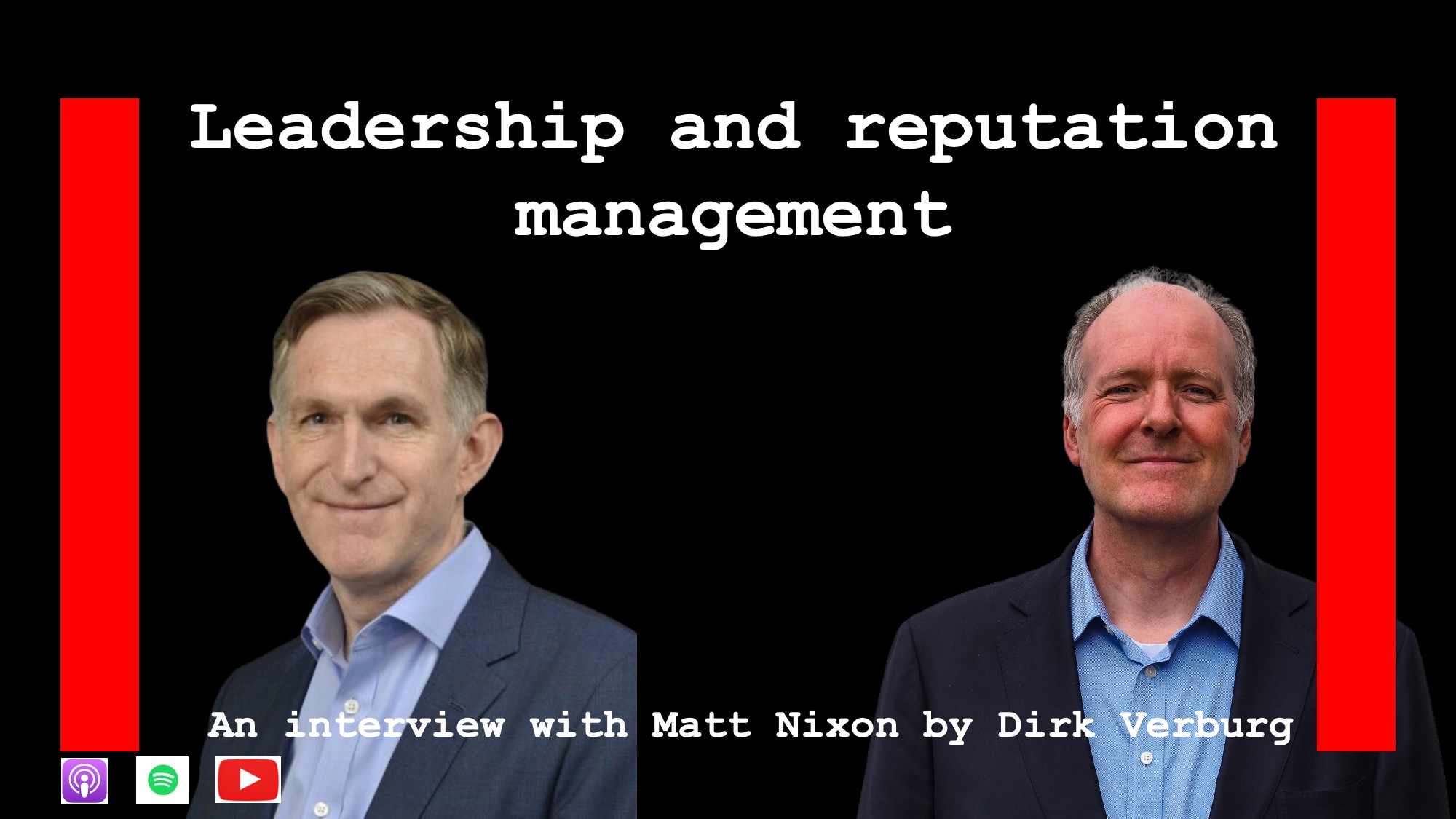
‘Leadership and reputation management’ An interview with Matt Nixon

‘The real problem of humanity is the following: we have Paleolithic emotions, medieval institutions, and god-like technology’.

With this quote from Edward O. Wilson 1929 Matt Nixon answered my question if our requirements about leadership have changed in the last decades. 

Matt Nixon has more than 30 years of experience as a management consultant and HR executive, working with CEOs and senior leaders around the world. An Oxford classics graduate, he was a partner in Towers Perrin in Chicago and London, and subsequently held the positions of Global Head of Organization Effectiveness for Royal Dutch Shell, and Managing Director, Group Head of Talent for Barclays, before returning to the consulting industry.

Nowadays Matt works as a partner in a specialized consulting boutique where he coaches and advises CEOs and other senior leaders during career transitions and other periods of change and transition.

Matt has written and taught extensively on hubris in executives.

During our conversation, Matt and I discussed the following topics:

Continue reading

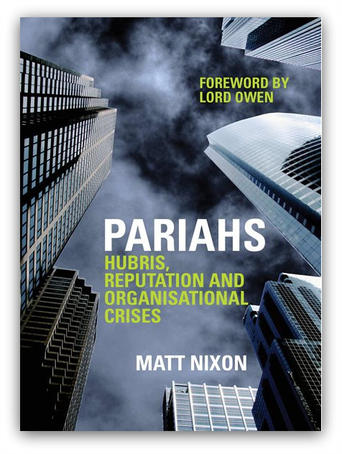
Book Review: Pariahs, Hubris, Reputation and Organizational crises

Tw Cover PariahsA ‘must read’ for the C-suite.

By Dirk Verburg

Ever since the industrial revolution, large corporations have played an important role in our society. Due to the globalization in the past decades, their influence is continuously increasing.

At the same time it seems that the number of scandals caused by these large organizations is growing as well. Established names, such as Barclays, Siemens, Wells Fargo, Ahold, VW, BP, Shell, Worldcomm, Tyco, Enron, Olympus, Arthur Anderson, E&Y, the BBC and many others, have all experienced scandals, and some no longer exist as a result.

What complicates this situation even is that governments and other institutions (e.g. regulators and ‘independent’ accounting firms) do not seem to be able to control, or at least monitor, the way companies in the private sector are operating. Continue reading