‘ESG: Farce of Force for Good?’ – An Interview with Sander Tideman (‘Triple Value Leadership’)

‘You need to provide recyclable note paper to demonstrate the commitment of our company to sustainability’, I was told when I co-organized a meeting where the vast majority of participants arrived by airplane, most of them on intercontinental flights…

I have always been quite cynical about ESG (Environmental, Social, and Governance) and CSR (Corporate Social Responsibility) initiatives from public companies.

Some of my favorite examples include:

  • A “Big Oil” company using the “greenness” of suppliers as a selection criterion in the purchasing process
  • A Financial Services company that directly contributed to the Euro crisis but gave its employees an afternoon off to paint schools in derelict areas to “give back to society”
  • ESG leaders flying en masse to conferences in New York to discuss how to make the world a more sustainable place
  • Companies that started “recalibrating” their DEI efforts in the aftermath of the last US presidential election.

The behavior of most pubic companies in the ESG and CSR space always strikes me as ‘Do as I say, not what I do’. Not because the leaders of these companies are inherently ‘evil’ or ‘immoral’, but simply because, when push comes to shove (most often under pressure from their supervisory boards, or activist shareholders), they do not seem to have an alternative but to let Shareholder Value prevail in their decision-making process.


‘People, Planet, and Profit. But the greatest of these is Profit…’


🎙️ ‘A big conversation with big questions’, that is how Sander Tideman characterized the conversation I had with him about ESG and CSR.

Sander is a researcher, author, entrepreneur and executive coach in sustainable leadership. He works with leaders to build flourishing organizations equipped to address the unprecedented challenges of today. He has worked for and consulted with leading organizations on three continents, and is publicly known for his work with top leaders in, for instance, Unilever.

In the 31th episode of the Leadership 2.0 podcast, I interview Sander about the question if and how pubic companies and our society should adopt ESG and CSR concepts.

During our conversation, we discussed the following topics:
Continue reading

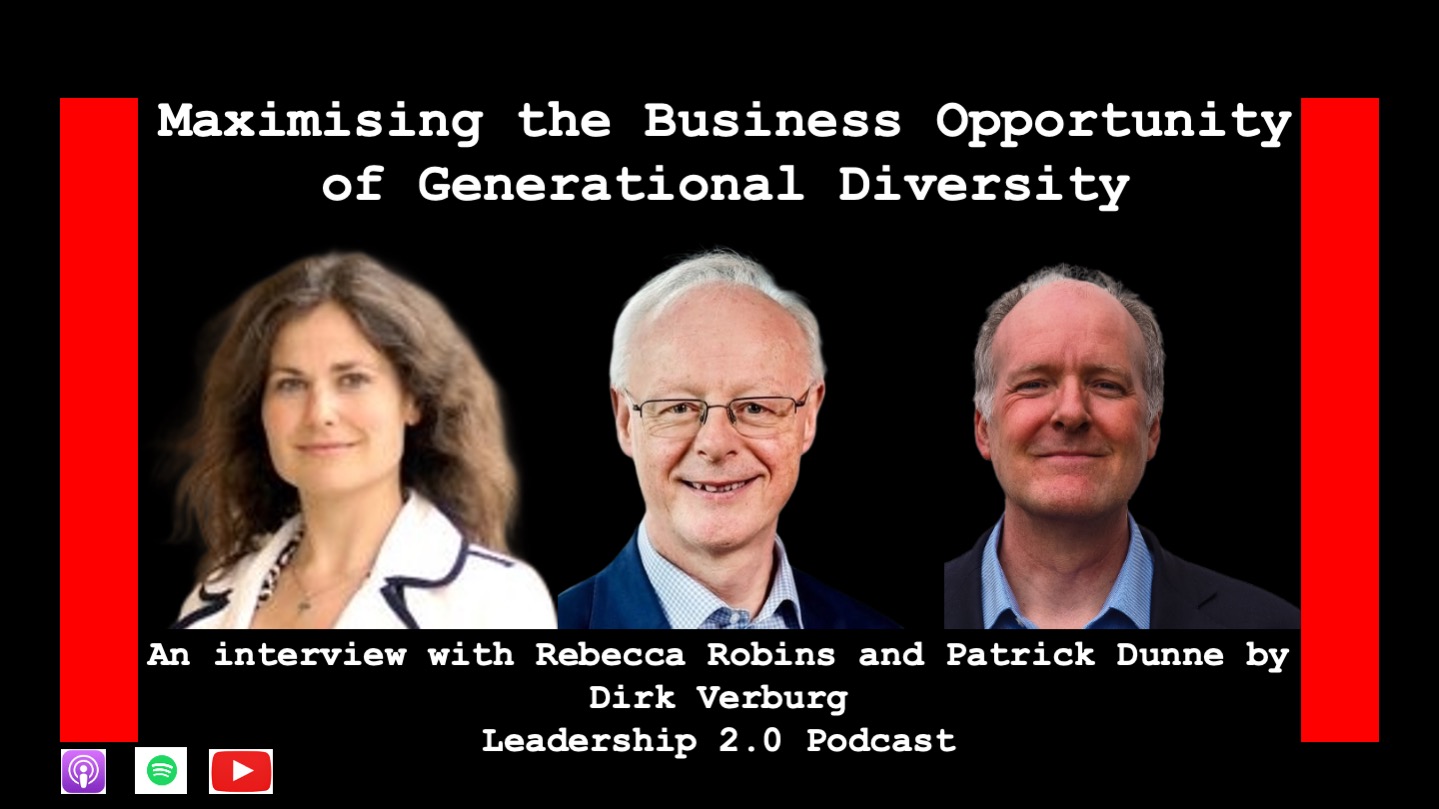
‘Maximizing the Business Opportunity of Generational Diversity’ – An Interview with Rebecca Robins and Patrick Dunne (‘Five Generations at Work’)

❗ ‘We live in the most Generationally Diverse Demographic’ (Rebecca Robins).

🚫 Unfortunately, generational differences are often seen as a source of problems – sometimes misunderstood, and exaggerated by social media.

⁉️ However, what would happen if we saw Generational Differences as Opportunities instead of Issues?

📖 This is precisely the topic of the book ‘Five Generations at Work: How We Win Together, For Good’ by Rebecca Robins CMgr CCMI and Patrick Dunne.

🎙️ In the 30th episode of the Leadership 2.0 podcast, I interview Rebecca Robins CMgr CCMI and Patrick Dunne about ‘Maximising the business opportunity of generational diversity’

During our conversation, we discussed the following topics:

Continue reading

The Company Culture of On – An interview with Alessandra Del Pino

There are some companies I deeply admire, and On, the Swiss sports and apparel brand is definitely one of them! Not only do they make amazing products and have an extremely powerful brand, they also have a unique company culture.

For this reason, I was thrilled to sit down with Alessandra Del Pino, Head of Engagement & Talent Growth at On, to discuss the company culture of On, or, as Alessandra describes it, their ‘secret sauce’.

During our conversation, we covered the following topics:

Continue reading

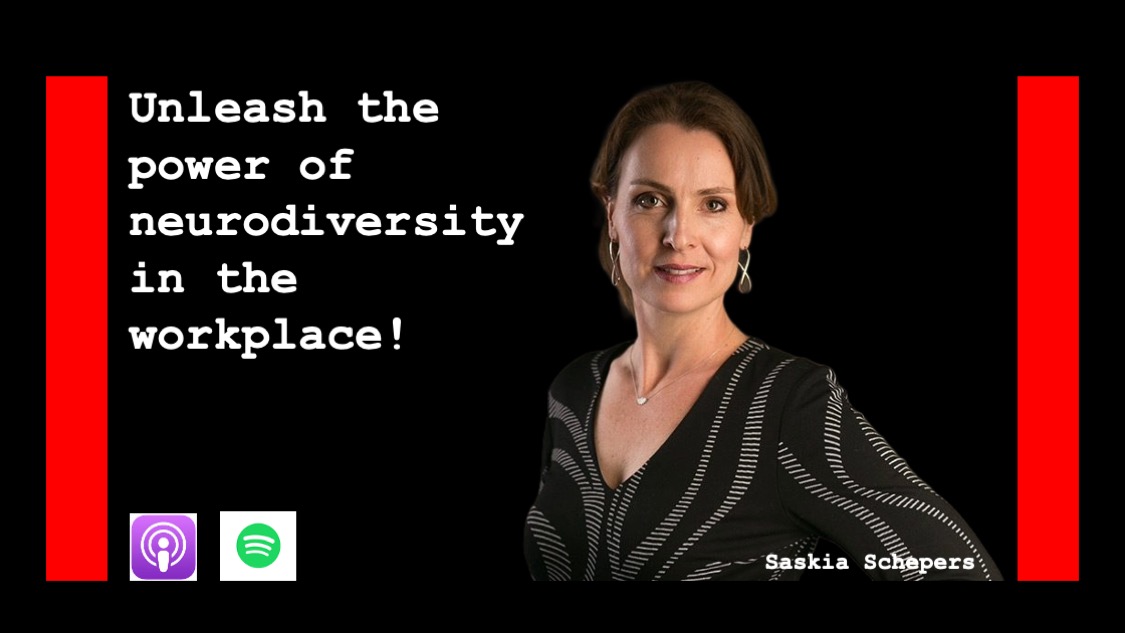
Unleash the power of neurodiversity in the workplace! – An interview with Saskia Schepers

Recently I had a conversation with Saskia Schepers about her book on Neurodiversity in the workplace with the title ‘Als alle breinen werken – Waarom ruimte voor neurodiversiteit op het werk goed is voor iedereen’ (‘When all brains are switched on – Why space for neurodiversity in the workplace benefits everyone’).

Around 80% of mankind is neurotypical, and 20% is neurodivergent. We tend to ‘equip’ people in the latter category with labels like ADD, DHD, bipolar, autistic, etc.

Most leaders find it hard to integrate neurodivergent people in their teams.

The reason is that most of us have preconceived ideas about the way people in the workplace should behave. For instance, we expect people to like attending and participating in meetings, do their work in teams, be productive in open-plan offices, and socialize with their colleagues after work.

People who do not fit this mold are seen as bad ‘team players’, and are often criticized for this behavior, e.g. during annual performance review meetings.

In her book, Saskia Schepers describes what neurodiversity is, what the strong points of different types of neurodivergent people are, and how, as an organization, you can integrate neurodivergent people and capitalize on their strengths.

The book almost immediately reached the number 1 position in the Dutch bestseller list of management books, was quickly sold out, and is now in its third printed edition.

An English translation is in the making and will be published in 2024.

During our conversation, we discussed the following topics:
Continue reading