Ralph Schonenbach is a serial entrepreneur whose work centers around developing and nurturing relationships. www.trymeerkat.ai is his latest start-up, and in this episode of the Leadership 2.0 podcast, I talk with Ralph about this venture, as well as his book ‘Relationships matter’, which was recently published.
In our conversation, we touched on the following topics:
The image of the banking industry has been severely tarnished by the financial crisis (2007-2008), which led to increasing regulatory and compliance demands. At the same time, the industry is experiencing emerging competition from FinTechs, evolving business models, and disruptive technologies.
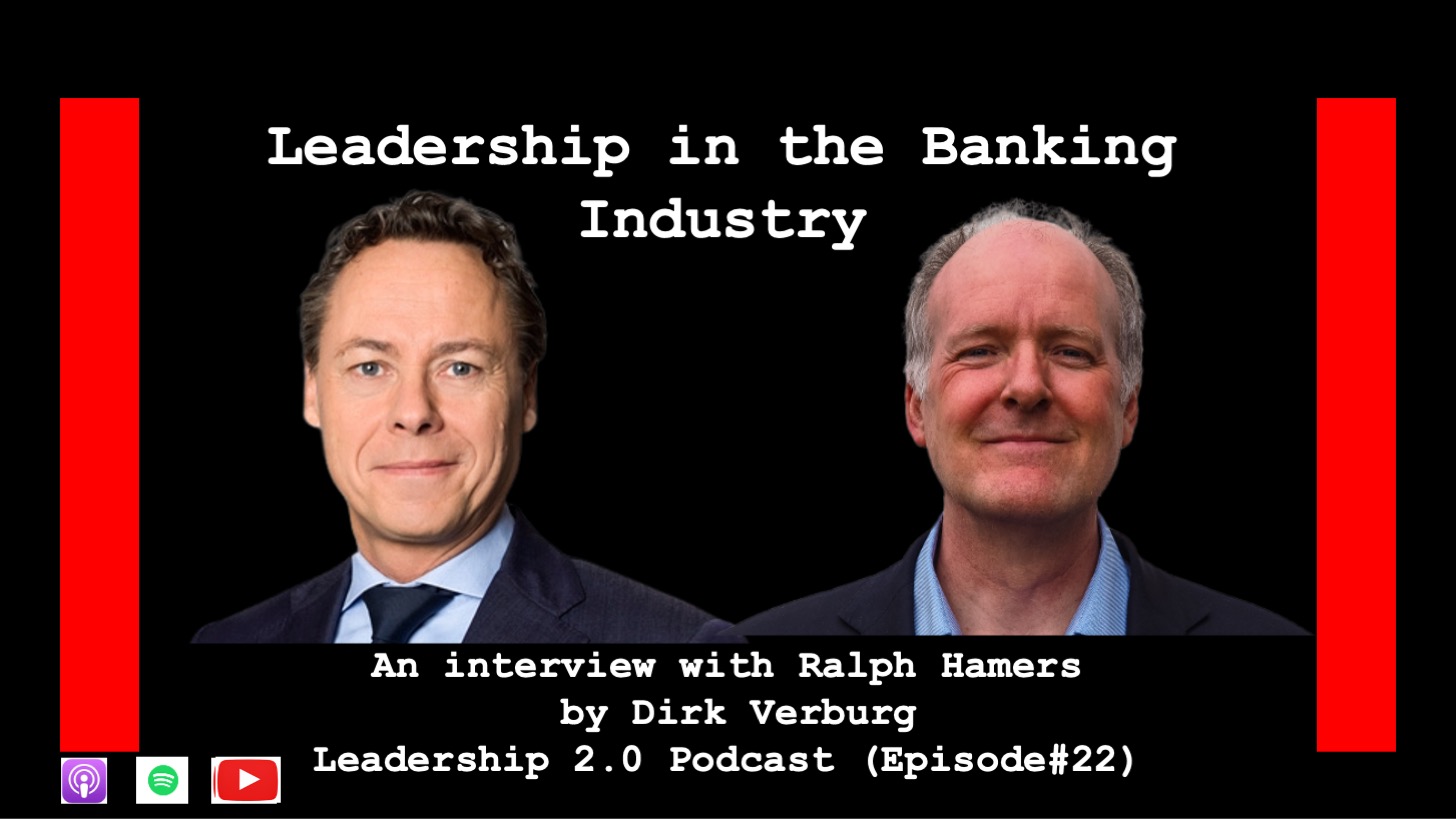
In light of these challenges, I recently spoke with Ralph Hamers, to explore his views on what effective leadership in the banking sector entails.
In our conversation, we touched on the following topics:
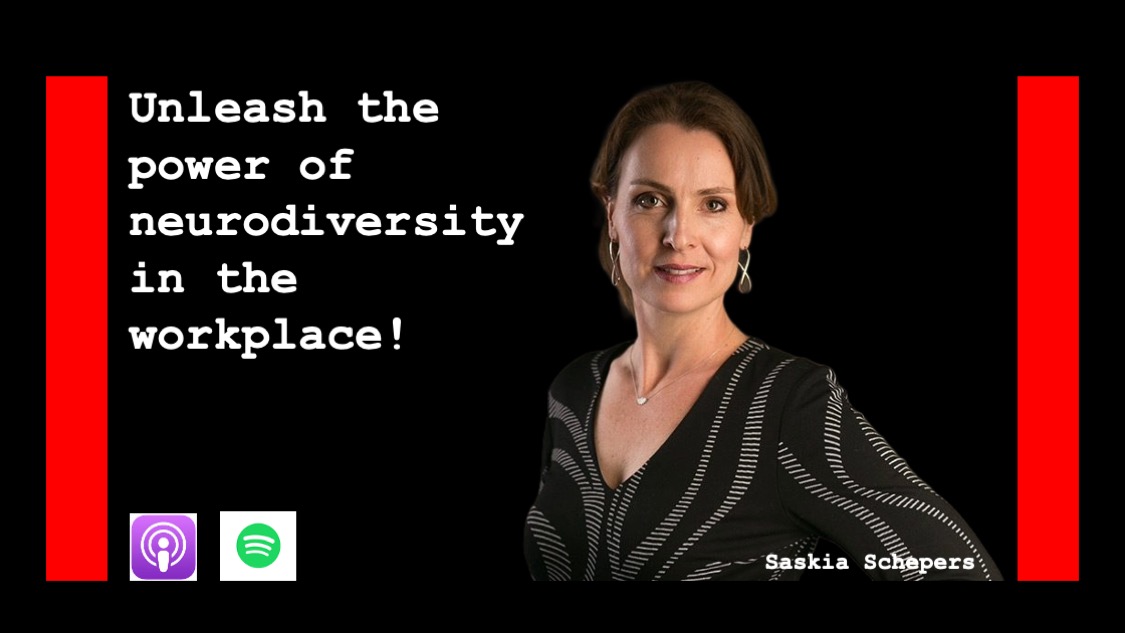
Recently I had a conversation with Saskia Schepers about her book on Neurodiversity in the workplace with the title ‘Als alle breinen werken – Waarom ruimte voor neurodiversiteit op het werk goed is voor iedereen’ (‘When all brains are switched on – Why space for neurodiversity in the workplace benefits everyone’).
Around 80% of mankind is neurotypical, and 20% is neurodivergent. We tend to ‘equip’ people in the latter category with labels like ADD, DHD, bipolar, autistic, etc.
Most leaders find it hard to integrate neurodivergent people in their teams.
The reason is that most of us have preconceived ideas about the way people in the workplace should behave. For instance, we expect people to like attending and participating in meetings, do their work in teams, be productive in open-plan offices, and socialize with their colleagues after work.
People who do not fit this mold are seen as bad ‘team players’, and are often criticized for this behavior, e.g. during annual performance review meetings.
The book almost immediately reached the number 1 position in the Dutch bestseller list of management books, was quickly sold out, and is now in its third printed edition.
An English translation is in the making and will be published in 2024.
During our conversation, we discussed the following topics:
One of the most inspirational videos I have ever seen is the Apple commercial ‘Think Different’. This video shows footage of several leaders from the worlds of business, arts, politics, sports and science, such as Richard Branson, Pablo Picasso, Albert Einstein, Martin Luther King, Mohammed Ali and Mahatma Ghandi. The key message of the commercial is that these people were able to change the world, because they were thinking differently. The suggestion is, of course, that people who purchase Apple products also ‘Think Different’.
The ability to ‘Think different’ is extremely important, but unfortunately not something that comes ‘naturally’ to us as human beings. There are several reasons for this. The most important ones are our ‘Bounded Rationality’, reliance on ‘Heuristics’ and ‘Theory-Induced Blindness’.Continue reading →


 Dirk Verburg