Toxic Leadership – Does Your Leader Have A Dark Triad?

‘Guys, I will always have your back’, she said when she became our leader … until she did not.

We all know the stories about how notorious dictators like Joseph Stalin, Mao Zedong, and Saddam Hussein, not only ruled their countries with an iron fist, but had an inner circle of followers that were on the one hand attracted to them and craving for their approval, and on the other hand continuously on their toes, out of fear of falling out of favor and being ‘purged’ as a result. A contemporary example of such a dictator is Kim Jong Un.

Nowadays, we would say these dictators had a ‘dark triad’. 
Continue reading

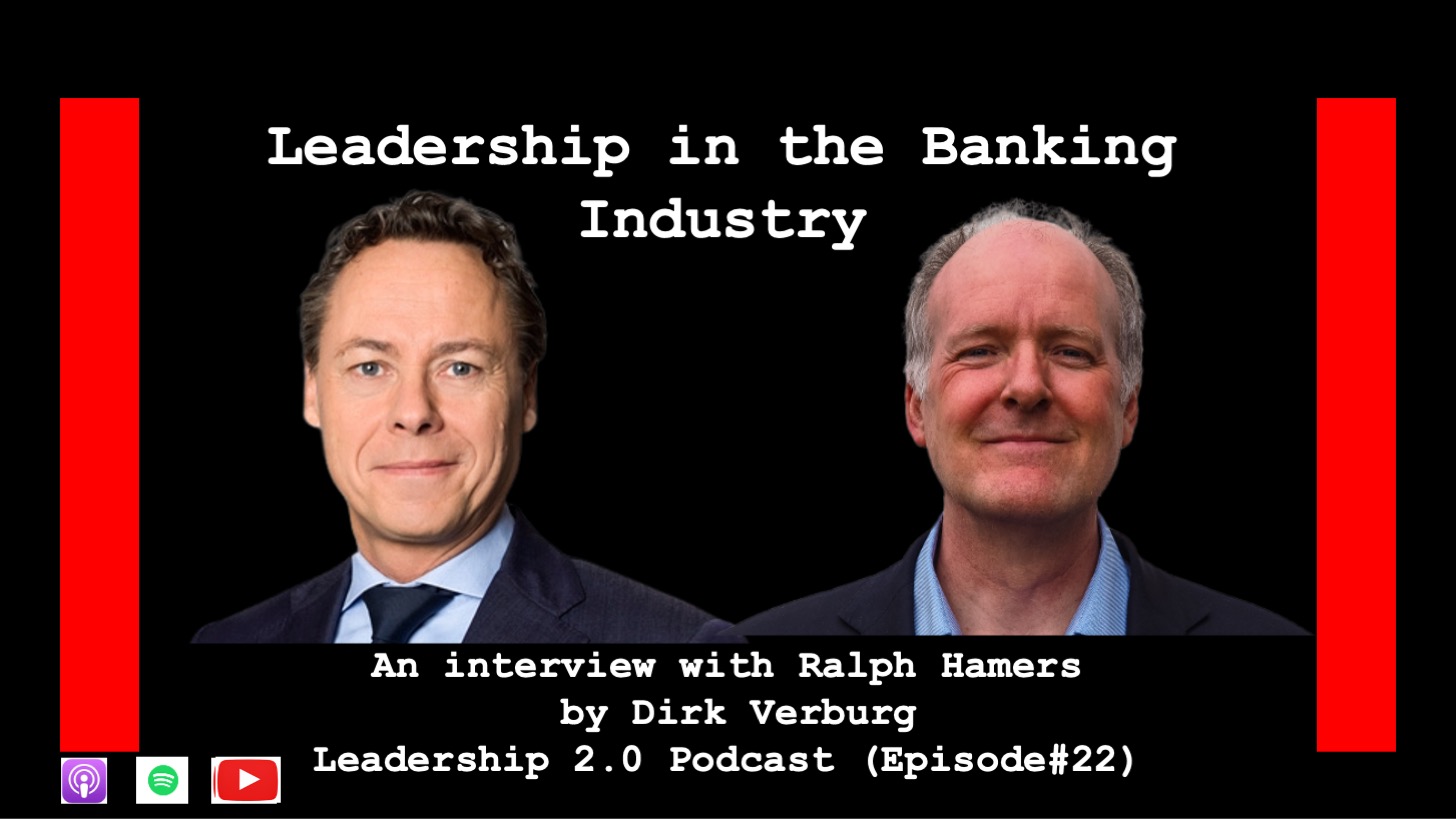
Leadership in the Banking Industry – Interview Ralph Hamers

The image of the banking industry has been severely tarnished by the financial crisis (2007-2008), which led to increasing regulatory and compliance demands. At the same time, the industry is experiencing emerging competition from FinTechs, evolving business models, and disruptive technologies.

In light of these challenges, I recently spoke with Ralph Hamers, to explore his views on what effective leadership in the banking sector entails.

In our conversation, we touched on the following topics:

Continue reading

How to make a flying start in 2024 with your regional leadership team!

The vast majority of global companies have regional leadership teams. These teams are often uncomfortably situated between the corporate executive team, and their own national (sales) organizations(s).

They usually have a tough job.

Regional leadership teams often find themselves being caught in a sandwich.

On the one hand, they are being kept responsible for realizing the revenue and profit targets for their geographic area (’their’ business), whilst also ensuring ‘compliance’ in all relevant areas.

Continue reading

Why leadership has become more difficult and why this matters

I spent a significant part of my working life developing leaders in organizations. What strikes me is that during COVID-19 the demand for this type of work has not decreased; if anything, the demand for leadership development has increased. That is remarkable. During the financial crisis in 2007-2008, for instance, most companies tried to save money, and one of the first things they considered was decreasing the out-of-pocket costs associated with these, and other kind of developmental activities.

Recently I was asked why companies continue to invest in the quality of their leadership at all levels of the organizations, despite the economic uncertainty they are facing.

In my opinion, the reason is that companies have come to realize the growing importance of the quality of leadership at all levels of the organization. I believe that this is a good thing, especially because leadership roles have become more demanding in the last couple of decades, not only for senior leaders, but also for first, and second-level leaders in organizations. 

Continue reading

Corporate Social Responsibility starts with looking after your own employees

A couple of days ago my bible app opened with this verse of the day: ‘To do righteousness and justice is more acceptable to the LORD than sacrifice’ (Proverbs 21:3). 

This text reminded me of the way some companies deal with Corporate Social Responsibility (CSR). Rather than doing the right thing, they do the wrong thing and compensate for this by deploying CSR initiatives. There is even a special term describing this phenomenon: ‘Greenwashing’. In this context, it is no wonder that two professors from IMD (a leading Swiss Business School) published an article in 2018 with the provocative title: ‘Why nobody takes corporate social responsibility seriously’.

Continue reading

Why authenticity in the workplace is a requirement for mental health

20190603 Cover NJS Autenticity

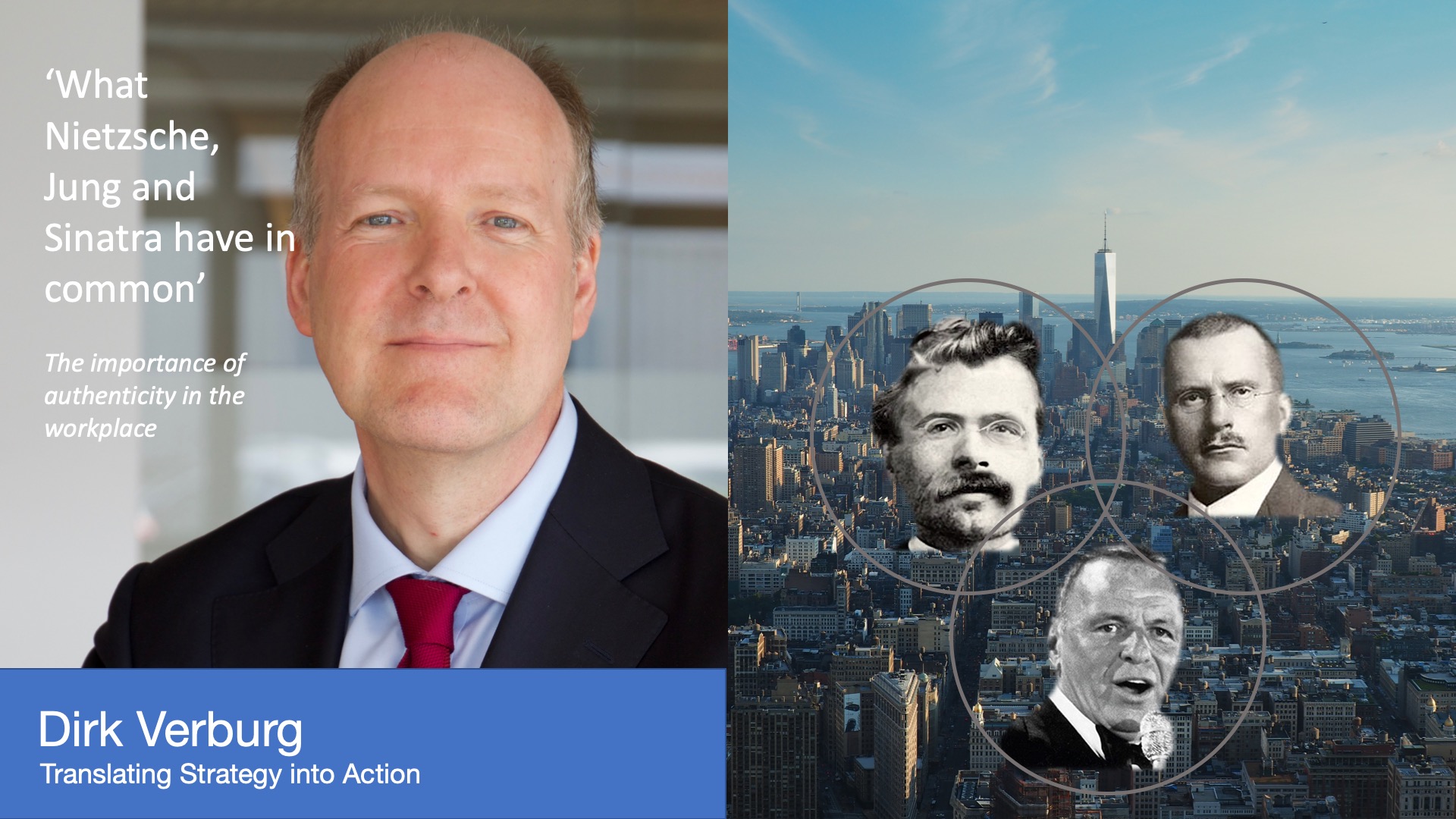
What Nietzsche, Jung and Sinatra have in common

In the 1970s and 1980s, authenticity and self-development in the workplace were considered to be important by many middle and senior managers in the Western world. Perhaps too important: organizations were sometimes seen as narcissistic vehicles for self-development, instead of entities that should serve the interests of their shareholders and/or other stakeholders.

This orientation changed dramatically in the first half of the 1990s. Two popular business books that were published during that time perfectly illustrate this change. The first one was ‘Valuation’ (1990), a book written by Copeland, Koller and Murrin (three McKinsey consultants), the second one ‘Emotional intelligence’ by David Goleman (1995).

Continue reading