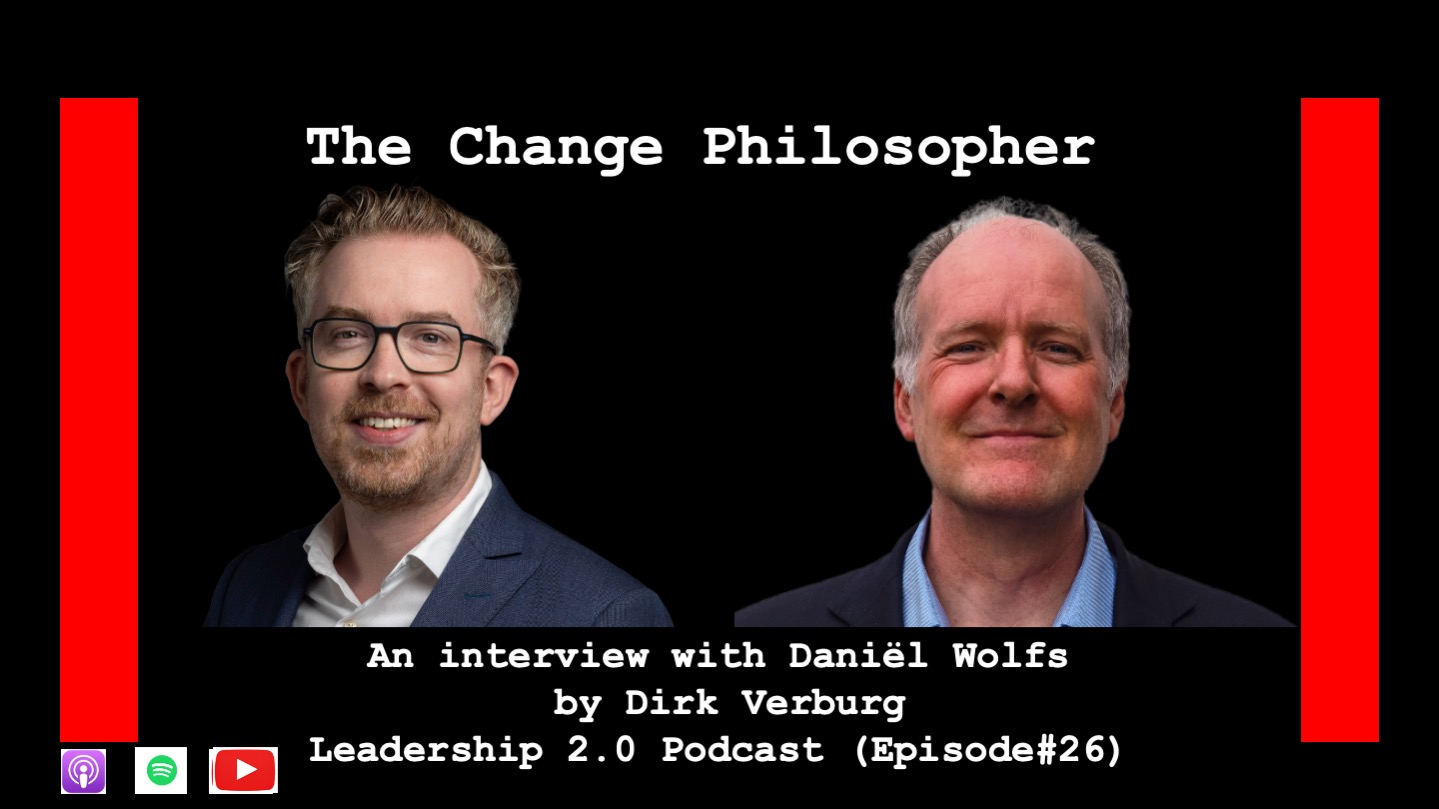
‘The Change Philosopher’ – An interview with Daniël Wolfs

🎙️ Even though we have a vast array of change management theories and methodologies at our disposal (John Kotter, Kurt Lewin, Elisabeth Kübler-Ross, William Bridges, ADKAR, etc.), it still proves to be very hard for us as leaders and consultants to implement real, sustainable change (transformation).

🚫 The harsh reality is that most change projects fail (the famous 70% of McKinsey), or end with a superficial victory declaration, after which the organization often falls back to ‘the way we DID things here’.

⁉️ ‘Why is that?’ That very question drove Daniël Wolfs, experienced change consultant and co-founder of The Change Studio (Netherlands), to write his thought-provoking book ‘De Veranderfilosoof’ (The Change Philosopher) on how we can approach transformation in a deeper, more human, and more sustainable way.’

► In our conversation about this book, we discussed the following topics:
Continue reading

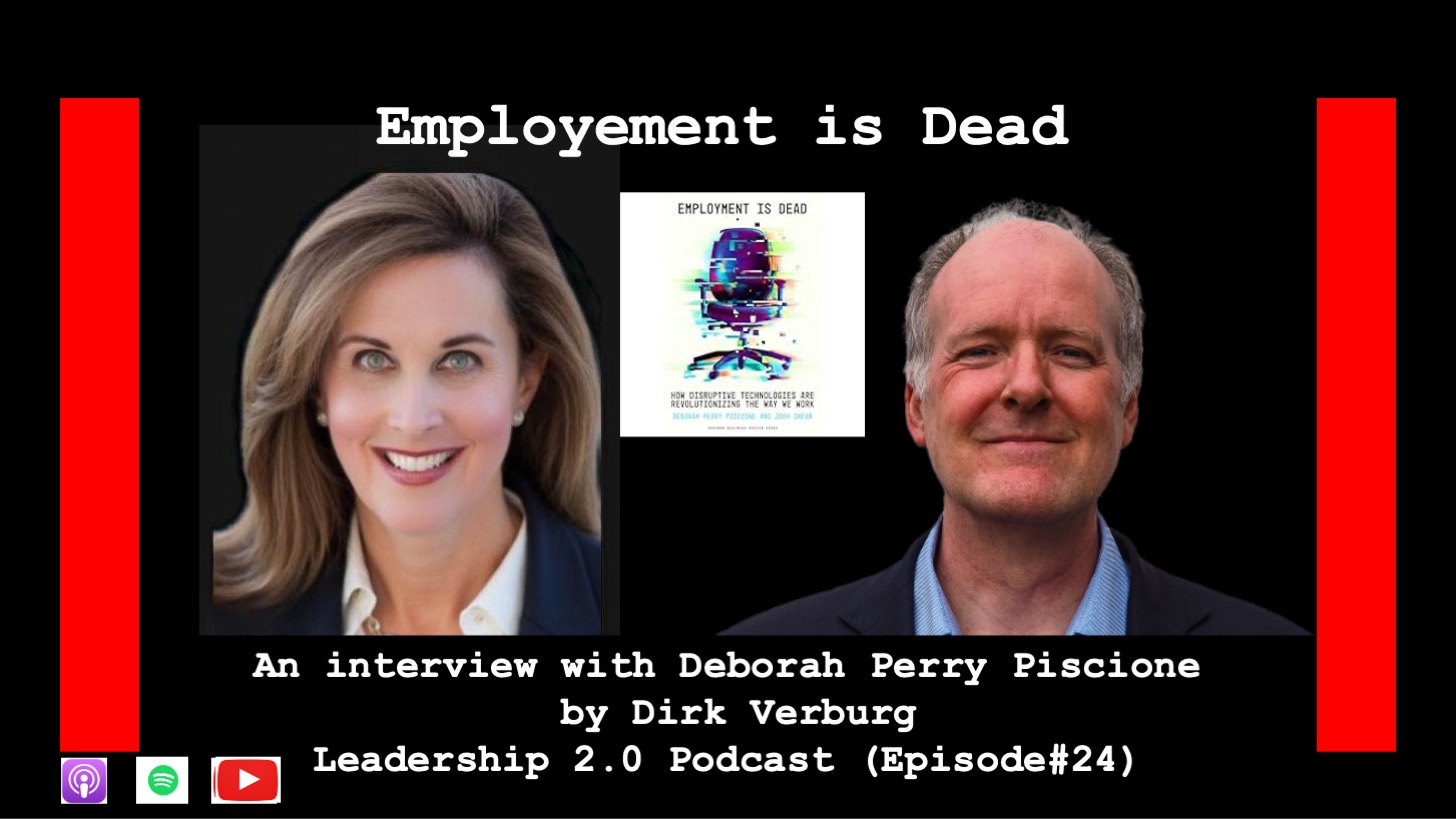
‘Employment is Dead’ – An interview with Deborah Perry Piscione

Earlier this week, one of the most important business books on the Future of Work was published by Harvard Business Review Press: ‘Employment Is Dead: How Disruptive Technologies Are Revolutionizing the Way We Work’ by Deborah Perry Piscione and Josh Drean.

The central theme of this book is that traditional employment models are becoming outdated due to the evolving needs and expectations of the modern workforce, in combination with, and enabled by, disruptive technologies.

This will lead to the end of the traditional employment model, as well as the traditional form of companies, as we know them today.

Monday, just hours before the book was released, I had the chance to interview Deborah Perry Piscione for my Leadership 2.0 Podcast.

► In our conversation, we touched on the following topics:

Continue reading

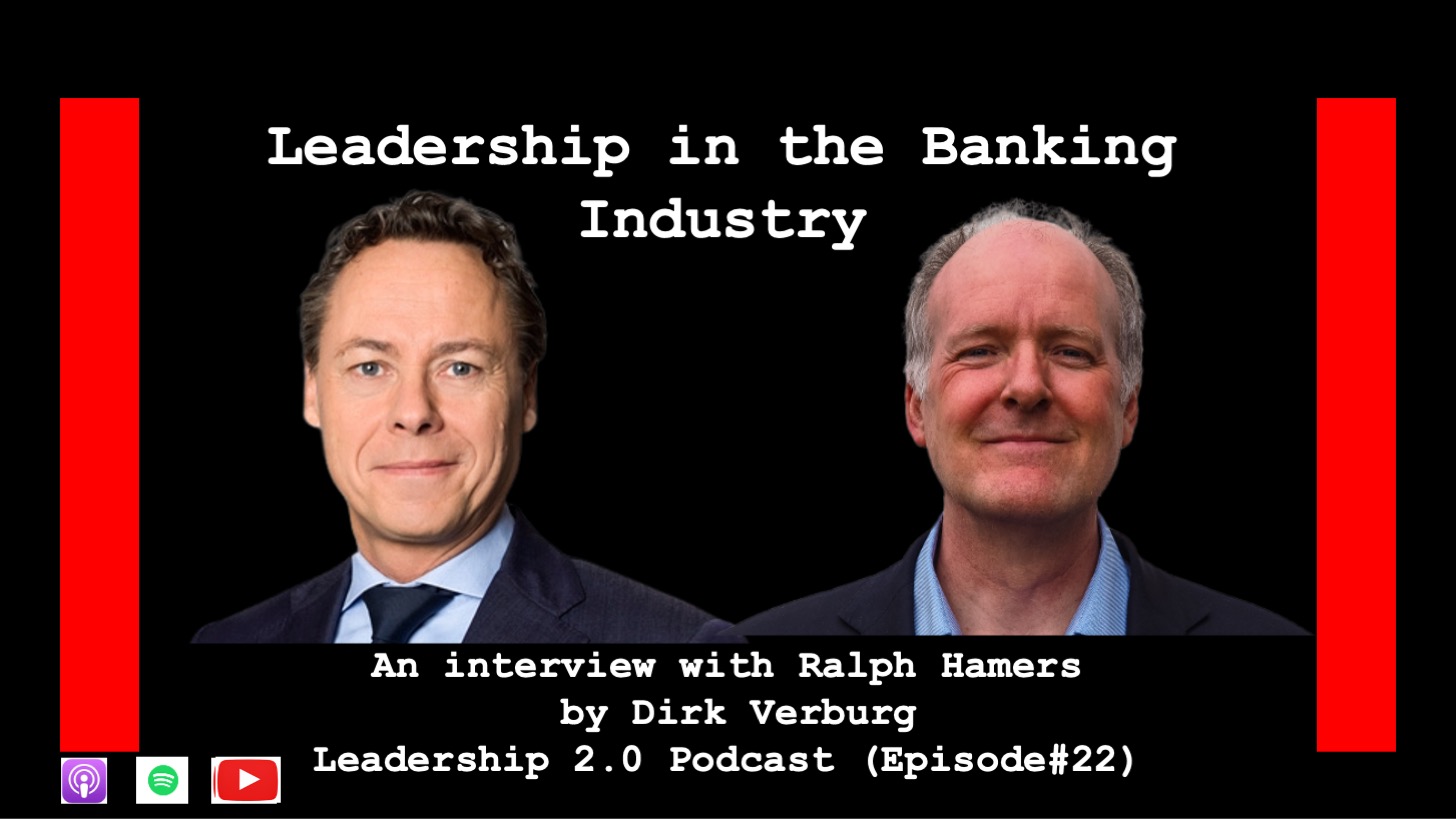
Leadership in the Banking Industry – Interview Ralph Hamers

The image of the banking industry has been severely tarnished by the financial crisis (2007-2008), which led to increasing regulatory and compliance demands. At the same time, the industry is experiencing emerging competition from FinTechs, evolving business models, and disruptive technologies.

In light of these challenges, I recently spoke with Ralph Hamers, to explore his views on what effective leadership in the banking sector entails.

In our conversation, we touched on the following topics:

Continue reading

The Company Culture of On – An interview with Alessandra Del Pino

There are some companies I deeply admire, and On, the Swiss sports and apparel brand is definitely one of them! Not only do they make amazing products and have an extremely powerful brand, they also have a unique company culture.

For this reason, I was thrilled to sit down with Alessandra Del Pino, Head of Engagement & Talent Growth at On, to discuss the company culture of On, or, as Alessandra describes it, their ‘secret sauce’.

During our conversation, we covered the following topics:

Continue reading

Leadership lessons from a CEO – An interview with Jeroen van der Veer (Shell)

Twenty years ago, in 2004, Shell was hit by the reserves scandal. In the midst of this crisis, the board asked Jeroen van der Veer to become CEO and navigate the company out of this crisis. Recently Jeroen wrote a book titled ‘Van A near B – Lessen in leiderschap’ (‘From A to B – Lessons in Leadership’), in which he reflects on these, and other experiences during his long career (which also included for instance being the chairman of the supervisory board of ING during the financial crisis).

In this episode of the Leadership 2.0 podcast, I discuss with Jeroen:

Continue reading

A successful corporate culture change requires leaders to be the change they want to see

Culture change is firmly back on the map! More and more companies are starting to reflect (again) what their culture is and what it should be.

More often than not, such a culture review is initiated by the CEO. The reason is that CEOs have a unique position in organizations: they often see both the current performance of the organization, as well as its unrealized potential. In case CEOs do not see this unrealized potential themselves, their Supervisory Boards, analysts and (activist) shareholders will point it out to them quickly enough.

Unrealized potential

Continue reading