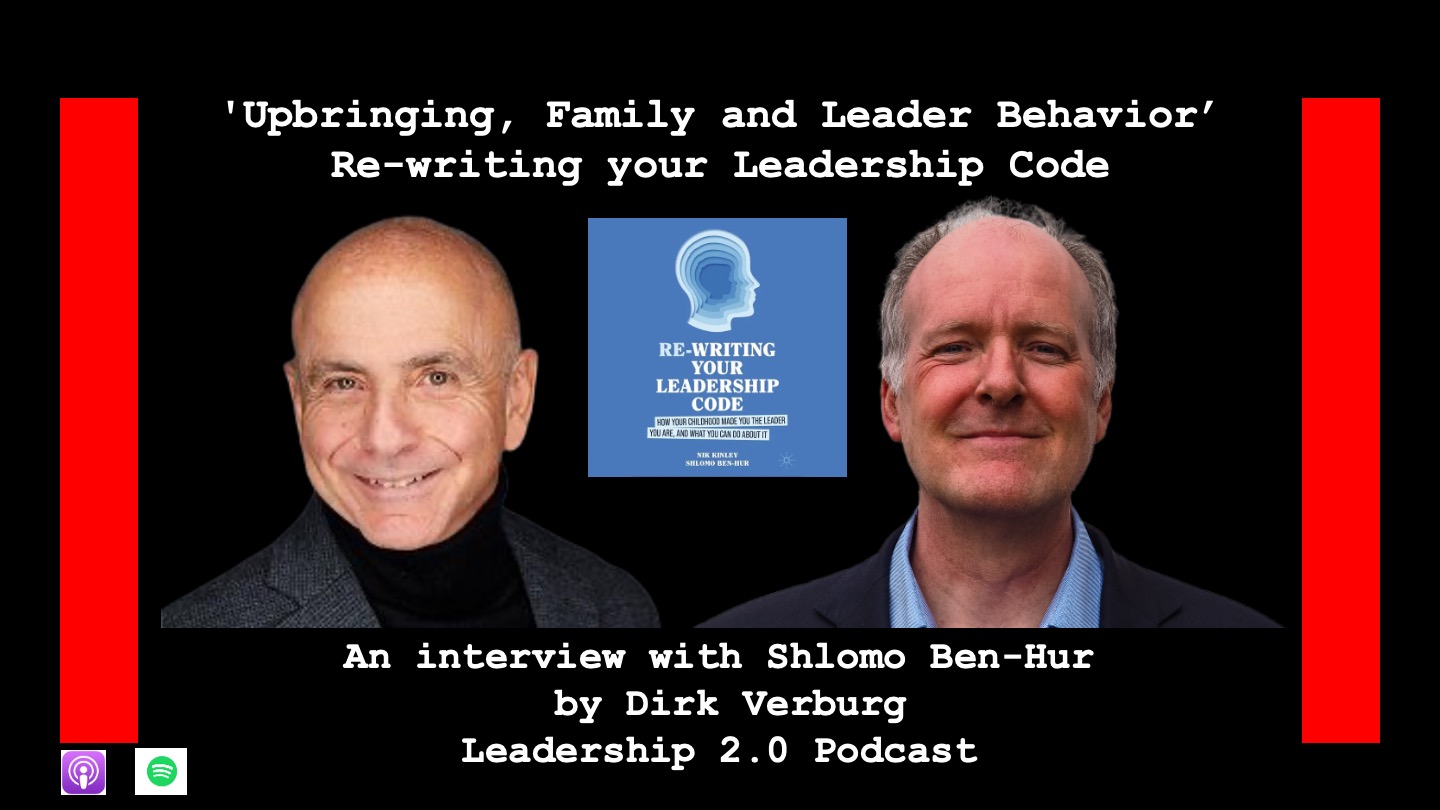
How Your Family & Upbringing Shape Your Leadership Style (Rewriting Your Leadership Code) – Shlomo Ben-Hur

Nature versus Nurture?

The oldest debate in the world is the question if we have free will (my take on this: It is probably useful for yourself and others to pretend you have one), the second oldest about nature (DNA) versus nurture (Upbringing).

In my perception, it is not a question of Nature versus Nurture but of nature and nurture. I am a strong believer in the ‘Big Five’ and a strong believer (as well as an ‘Expert by experience’) in the role that upbringing and family structure play in our development as leaders.

However, given the fact that we cannot change our DNA, that makes our need to analyze the impact our upbringing and family structure played in our development more important than ever.

The best book I ever read about this topic was ‘Rewriting your Leadership Code’ by Shlomo Ben-Hur and Nik Kinley.

This book posits that our core instincts originate in childhood, creating neural pathways that act like the code of our internal operating system (OS). This OS determines how we process events, make choices, interact with others, and influence our teams. While professional composure usually masks these deep-seated traits, high-pressure situations strip away that filter and reveal our true reactions. Ultimately, leading through crisis exposes both the strengths and flaws of our fundamental character.

I recently had the pleasure of having a conversation with Shlomo about this book. In our conversation, we discussed:

  • The Leadership Code
  • The importance of Self-Awareness for Leaders
  • How Leaders can increase their Self-Awareness
  • Three critical capabilities for Leaders
  • The Big Themes: Free Will and Nature versus Nurture
  • Childhood Traumas and Executive Coaching
  • Rewriting our code?

► You can watch or listen to a podcast with our conversation on:

► No time to watch or listen to the podcast now? Here is a short summary of the key points of our conversation:

Continue reading →
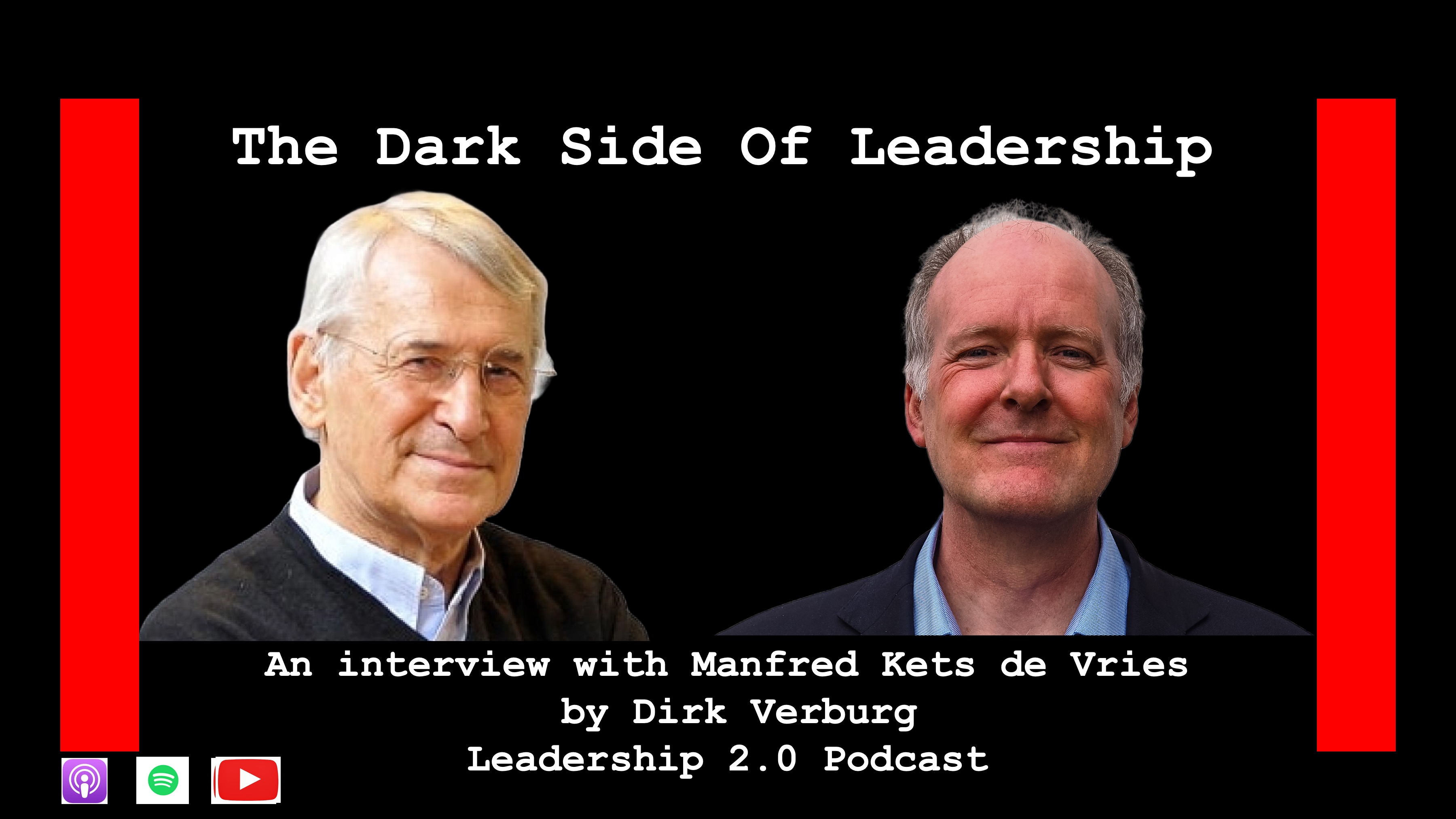
The Dark Side of Leadership – Interview Manfred Kets de Vries

Unfortunately, today, a single television news bulletin, or a glance at the front page of a newspaper, is enough to reveal the dark side of leadership.

However, many people do not need to switch on the TV or read the paper to witness this; instead, they experience the dark side of leadership every day within their own organizations. They happen to work for ‘Psychopath Lights’—or, as Manfred Kets de Vries calls them, ‘Seductive Operational Bullies’ (SOBs).

In the 36th episode of the Leadership 2.0 podcast, I sit down with Manfred to explore his extensive research on this phenomenon. During our conversation, we discussed the following topics:

Continue reading →

‘From Crisis to Innovation: A Mental Health Entrepreneur’s journey’ – An interview with Vlad Gheorghiu

The World Health Organization estimates that 12 billion working days are lost every year due to depression and anxiety. This costs $1 trillion in lost productivity.

McKinsey research showed that ‘60 % of employees have experienced at least one mental-health challenge at some point in their lives’. According to the same study ‘Failing to address the effects of mental health and well-being challenges is a missed opportunity for employers’.

Employees dealing with mental health issues are 4x more likely to say they intend to leave, 3x more likely to report low job satisfaction, 3x more likely to experience toxic workplace behavior, and 2x more likely to report low engagement.

At the same time, classic Employee Assistance Programs do not seem to work…

Vlad Gheorghiu experienced mental health issues firsthand, whilst working for McKinsey. 

This experience inspired him to design solutions. First for McKinsey, and later by co-finding a start-up company called Kyan Health.

In my conversation with Vlad, we covered the following topics:

1️⃣ Vlad’s background

2️⃣ Vlad’s engagement with mental health

3️⃣ The gap in the workplace between the mental health support employees need and receive

4️⃣ The concept of Kyan Health

5️⃣ Measuring impact

6️⃣ Creating a start-up company: Three Dos

7️⃣ Creating a start-up company: Three Dont’s

8️⃣ Vlad’s role models as an entrepreneur

If you are interested, you can watch our conversation on YouTube.


You can also listen to it Apple Podcasts or Spotify

Continue reading →