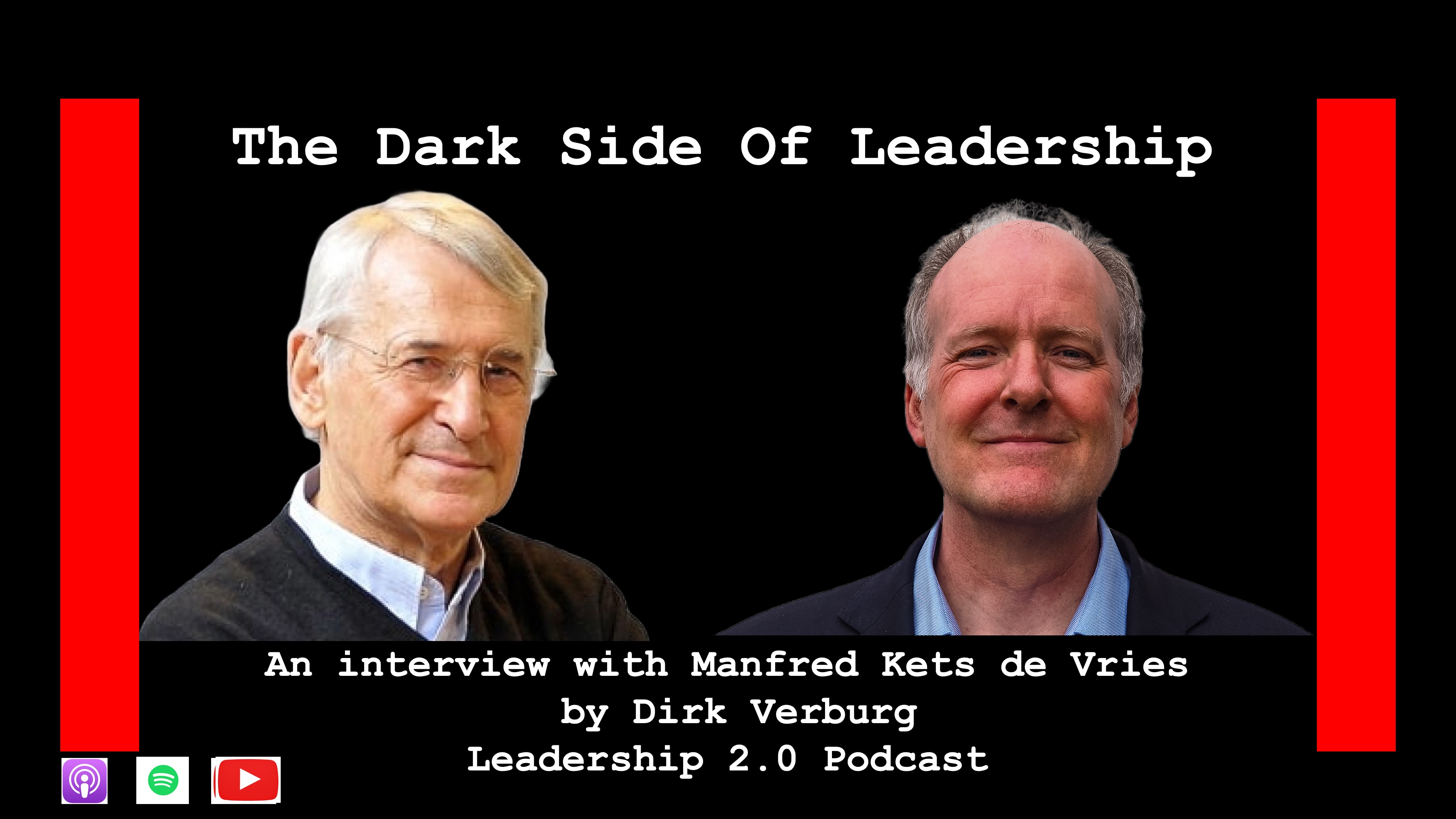
Toxic Leadership – Does Your Leader Have A Dark Triad?

‘Guys, I will always have your back’, she said when she became our leader … until she did not.

We all know the stories about how notorious dictators like Joseph Stalin, Mao Zedong, and Saddam Hussein, not only ruled their countries with an iron fist, but had an inner circle of followers that were on the one hand attracted to them and craving for their approval, and on the other hand continuously on their toes, out of fear of falling out of favor and being ‘purged’ as a result. A contemporary example of such a dictator is Kim Jong Un.

Nowadays, we would say these dictators had a ‘dark triad’. 

Continue reading

Have you ever considered taking a stimuli-rich holiday?

For a number of people, the summer holidays represent the mental equivalent of an oasis in a desert: a perfect opportunity to temporarily escape their daily grind and the stress of their work.

Although holidays are a fairly new invention in the history of mankind, and actually only a privilege for a, largely Western Europe-based, minority of the workforce, we ascribe almost magical powers to them. The most important ‘super’ power is the one that suggests that if we take one or more weeks off and label this ‘a holiday’, we are fully relaxed and ready to face our challenges in the workplace again.

Switching off?

However, many people find it hard to mentally switch off from their work during their holidays. Usually, they spend the first days of the holidays decompressing from their work, and they switch back on a couple of days before their work starts again.

I firmly belonged to this category as well.

Continue reading

From”I Have To” to “I Choose To”: A High-Achiever’s Two-Step Guide to prevent Burnout

Many high performers are inclined to take on too much responsibility. These people are often a dream for the companies they work for: in addition to being dedicated and hardworking, they are always willing to go the extra mile. However, as a result, a number of them experience serious work-life balance issues, and some even suffer from mental and/or physical health problems.

These issues do not stem from the content of their work; they all like their work. Instead, these issues stem from the fact that they assume responsibility for elements in their work that they cannot control.

A Blast from the Past: Stephen Covey

Continue reading

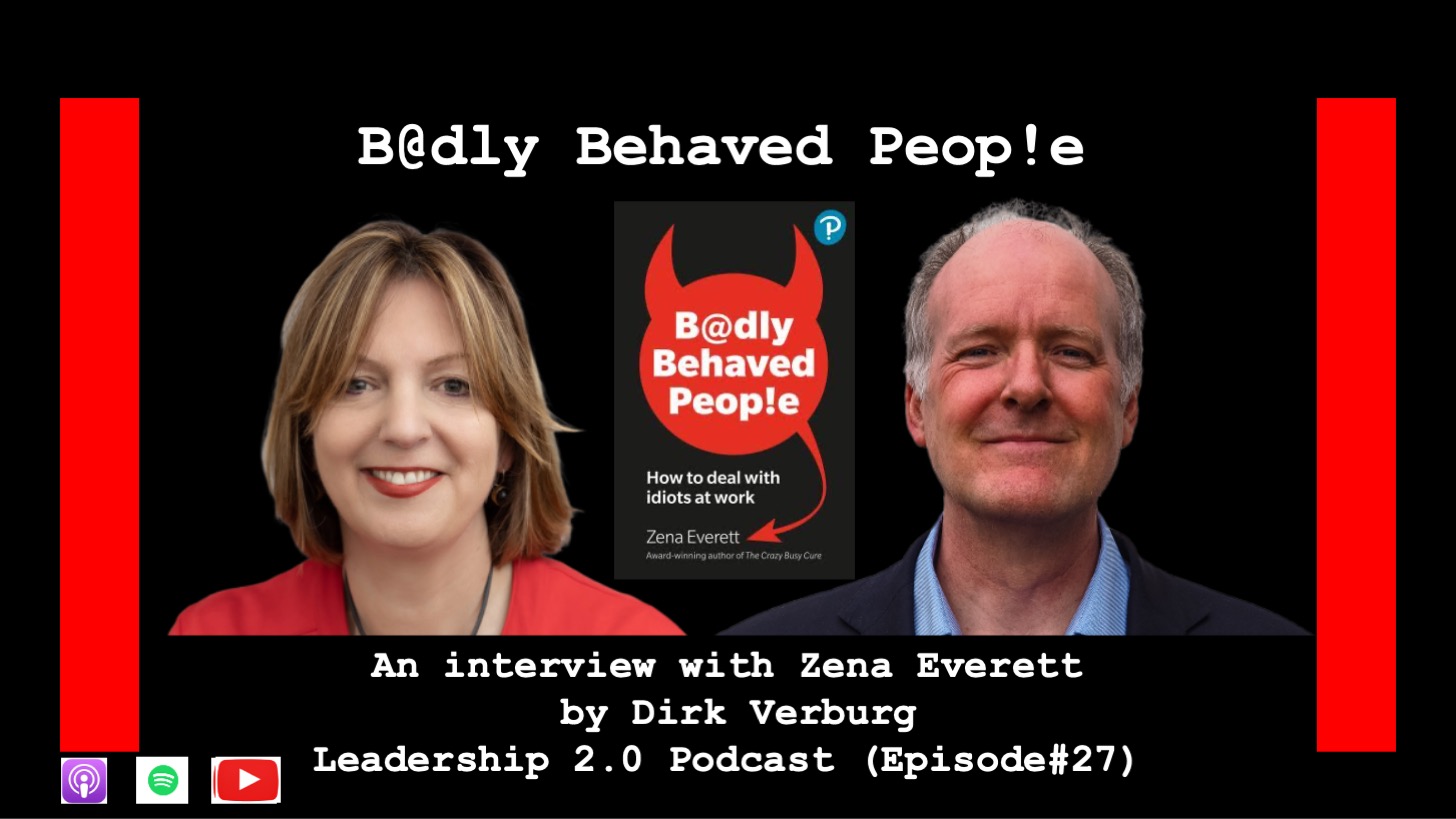
Coaching in the workplace – An interview with Zena Everett

Most of us are acutely aware of the gap between how organizations aspire to operate and the everyday reality of working within them.

This discrepancy often has a negative impact on the motivation and well-being of employees, ranging from a decrease in employee engagement, to mental health issues,

In her book ‘Badly Behaved People’, my fellow executive coach Zena Everett describes a number of real-world cases about how this discrepancy can manifest itself, and, perhaps more importantly, how we can address them

What I particularly like about about this book is how Zena makes complex psychological concepts (for instance, Transactional Analysis) accessible without oversimplifying them, and demonstrates how they can be applied in the workplace.

In our conversation about her book, Zena and I discussed the following topics:

Continue reading

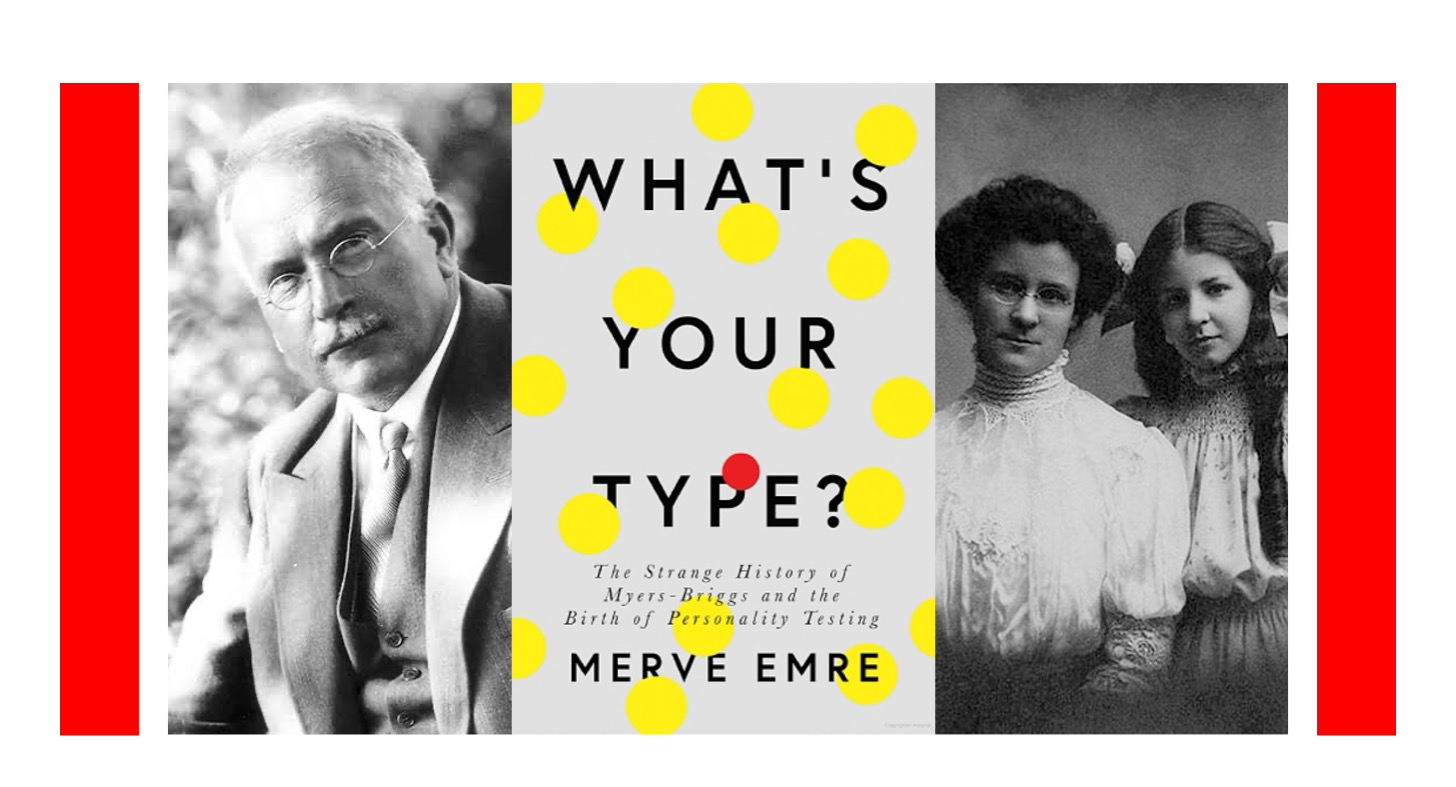
Book Review: ‘What’s Your Type?’ – The history of the MBTI

Because I extensively use the MBTI when coaching executives, and because of my general interest in the work of the Swiss Psychiatrist Carl Gustav Jung (1875-1961), I was looking forward to read ‘What’s Your Type? – The Strange History of Myers-Briggs and the Birth of Personality Testing’ by Merve Emre.

For those not familiar with the Myers-Briggs Type Indicator (MBTI), the MBTI has been developed by Katherine Briggs (1875-1968) and her daughter Isabel Myers (1897-1980) on the basis of Jung’s Personality (‘Type’) Theory. It enables the categorization of individual personalities in 4 dimensions, resulting in the (well-known) 16 different ‘types’ (e.g., ‘ISTJ’ or ‘ENFP’).

Function PreferencePreference
Energy I – Introversion (ideas) E – Extroversion (people)
Perception S – Sensing (data) N – Intuition (intuition)
Judgment T – Thinking F – Feeling
Attitude towards outside world J – Judging P – Perceiving

Until a decade ago, the MBTI was one of the most popular personality assessment instruments, and, although it is far less popular today than it used to be, it is still extensively (ab)used.

For this reason, I was very curious to read the book. Unfortunately, I found it a mixed bag.

What I do not like about this book

Continue reading

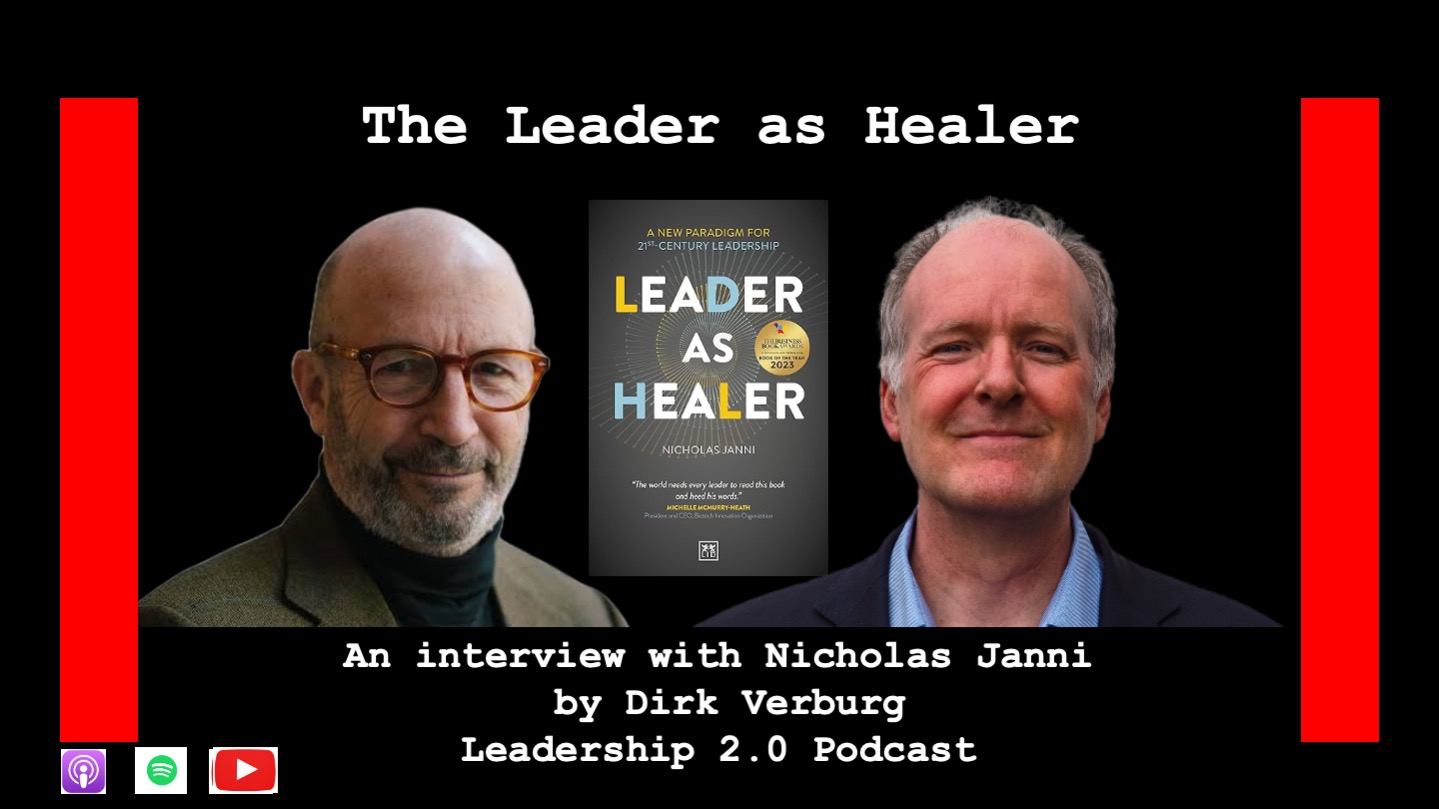
‘The Leader as Healer’ (Business Book of the year 2023) – An interview with Nicolas Janni

‘A transformational read that every leader of today needs’.

These were the words Head Judge, Jacq Burns used when she announced that ‘Leader As Healer’, written by Nicholas Janni was selected as the overall winner for the 2023 Business Book Awards.

In his book, Nicolas Janni argues that we need a new leadership model to address the challenges our society faces.

Our current leadership model is one where we see great leaders as warriors ‘on the battlefield of relentless competition’, who drive action, pursue instrumental (shareholder value related) goals, and maintain transactional relationships.

Instead, Nicholas Janni pleads for leaders who are empathetic, intuitive, present, skilled in mindfulness and deep listening, and who can inspire colleagues to engage and collaborate.

In this episode of the Leadership 2.0 podcast, I discuss with Nicholas:

Continue reading

MBTI practitioners: do not shoehorn your clients into a type — do this one thing instead

In my previous post about MBTI I stressed the importance to review the outcomes of this personality assessment with clients, to make sure they understand the outcomes and recognize themselves in their type. However, often practitioners become stuck in these reviews if clients do not indicate their preferred behaviors. Although it is tempting for practitioners to try to shoehorn clients into a specific type, doing so is likely the least productive and helpful approach.

What was the MBTI again?

Continue reading