
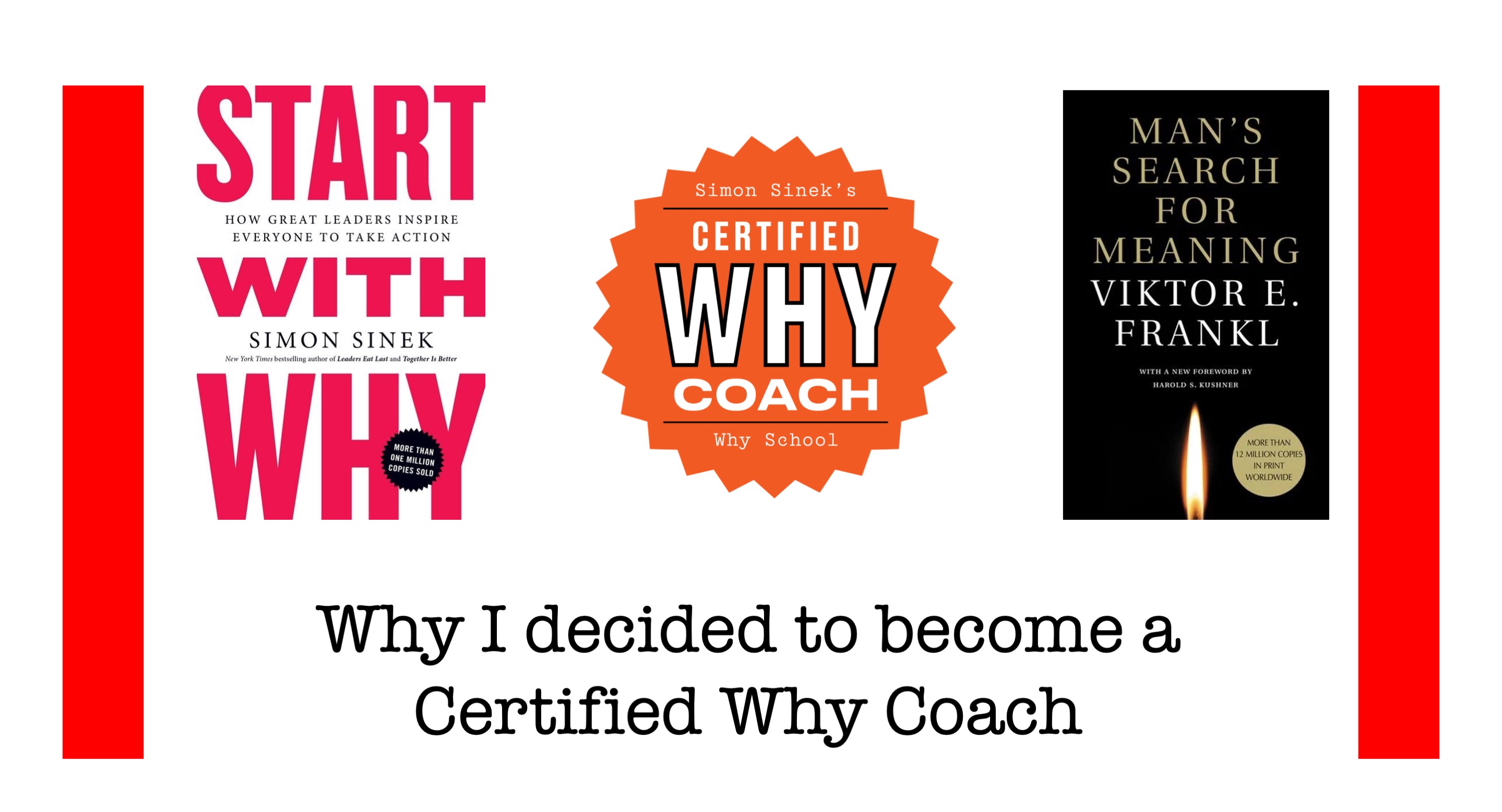
All business leaders I know are able to explain What they do, almost all of them How they do it, but only a minority can explain Why they do what they do, and that is a missed opportunity, both for themselves and their teams.
Man’s Search for Meaning
Most people I know regularly reflect on the meaning and purpose of life. In 1946, Viktor Frankl, an Austrian psychiatrist and psychotherapist, wrote one of the most important and influential books on this topic: ‘Man’s Search for Meaning‘.
It is a short but poignant and profound book that contains Frankl’s reflections on this question during his time in Nazi concentration camps, where he and his family were imprisoned because they were Jewish. In these camps, Viktor Frankl lost his father, mother, and wife.
In ‘Man’s Search for Meaning’., he formulated the thesis that inmates in the camps, who had a sense of meaning in their lives, were more likely to survive.
Therefore, he recommends us to stop asking for “THE” meaning of life, and instead think about: What does life expect of me right now? In order to do this, we need to understand our unique and specific meaning.
“This meaning is unique and specific in that it must and can be fulfilled by him alone; only then does it achieve a significance which will satisfy his own will to meaning.” — Viktor Frankl
According to Frankl, understanding our unique and specific meaning (a.k.a. our “Why”) is important for our happiness and our ability to cope with suffering. This is the same point Friedrich Nietzsche made when he stated that “He who has a why to live for can bear almost any how”.
‘Start with Why’
In 2009, Simon Sinek published “Start with Why“, which introduced the importance of meaning and purpose in the world of business. This book underlined the importance for leaders to understand and express their “Why” in order to inspire others.
A great way to illustrate this is to look at the market for laptops.
Most people buy laptops based on the price-performance ratio. They look at which brand offers the best processor, memory, storage, display, and battery life for the lowest cost at a given moment. If Lenovo has the best deal, they will buy Lenovo; if HP, Acer, or Dell has the best deal, they will buy an HP, Acer, or Dell laptop.
Most Apple consumers completely bypass the brand selection process and confine their choice to the Apple ecosystem. The reason is that they believe in the brand or, to put it differently, the “Why” of Apple. Apple buyers connect to the brand because they identify with, for instance, the Crazy Ones. They are willing to pay a premium for a product that resonates with their identity.
Why is this relevant to me?
Understanding and being able to articulate our “Why” is incredibly important for two reasons.
First of all, it helps us stay true to ourselves when confronted with decisions. Instead of making decisions solely on their own merits and the specific circumstances at the moment in time where we need to make the decision, understanding our “Why” helps us make decisions that are congruent with our values.
Secondly, and here is why it is so important for leaders, it helps us connect with others faster and on a deeper level. Irrespective of whether we are formally in a leadership position or not, we need to give people a reason to follow us.
Why is all this relevant for my organization?
To boil down 100+ years of motivational theory in the crudest way possible: there are three ways to motivate our staff.
At the most basic level, we can ensure our staff delivers the required output (‘WHAT‘) through a combination of sticks and carrots. The issue is, of course, that control is required to ensure compliance, loyalty will be low — staff can easily be tempted by organisations that offer more carrots and fewer sticks — and discretionary effort is likely to be the exception rather than the rule.
At a more advanced level, we can make sure people enjoy the content of their work (‘HOW‘). Many consultants and investment bankers may be cynical about the contribution their companies make to society, but they almost always find the content of their work intellectually challenging. The difficulty is that there will almost always be organisations that can compete on content while also offering more in the sticks and carrots department.
Therefore, the most powerful way to motivate people is to appeal to a shared purpose (‘WHY‘). The reason people wanted to follow the likes of Mahatma Gandhi, Martin Luther King Jr., John F. Kennedy, Nelson Mandela, or business leaders like Steve Jobs, Paul Polman, or nowadays Elon Musk, was not necessarily because they were nice or kind — because they often were not — but because they were able to formulate and communicate an irresistible Why.
Now, not all of us are Nelson Mandelas or Steve Jobses, and not all of us work for organisations that are changing the destinies of nations, dramatically improving human rights situations, or transforming entire industries. However, all of us have the potential to scale this principle to inspire others.
A good example is army regiments. Speaking with military personnel, I was struck by the fact that their loyalty lies not so much at the king-and-country level, but closer to home — with their colleagues and their regiment. That regiment may not have had a visible success in over 100 years, yet that is beside the point. They believe in the narrative — the values — of the regiment.
Just take a minute to imagine what you could achieve if your team consisted of self-motivated members who believed in a collective mission…
Do you know your Why — and does your team?
If you and your team do not know your Why or theirs, you are probably leaving your most powerful motivational lever untouched. I recently became a Certified Why Coach through Simon Sinek’s company, trained to help individuals and teams discover and articulate their purpose — and how to put it to work.
If you’re curious about what purpose-driven leadership could look like for you and your team, reach out to schedule a conversation.


 Dirk Verburg