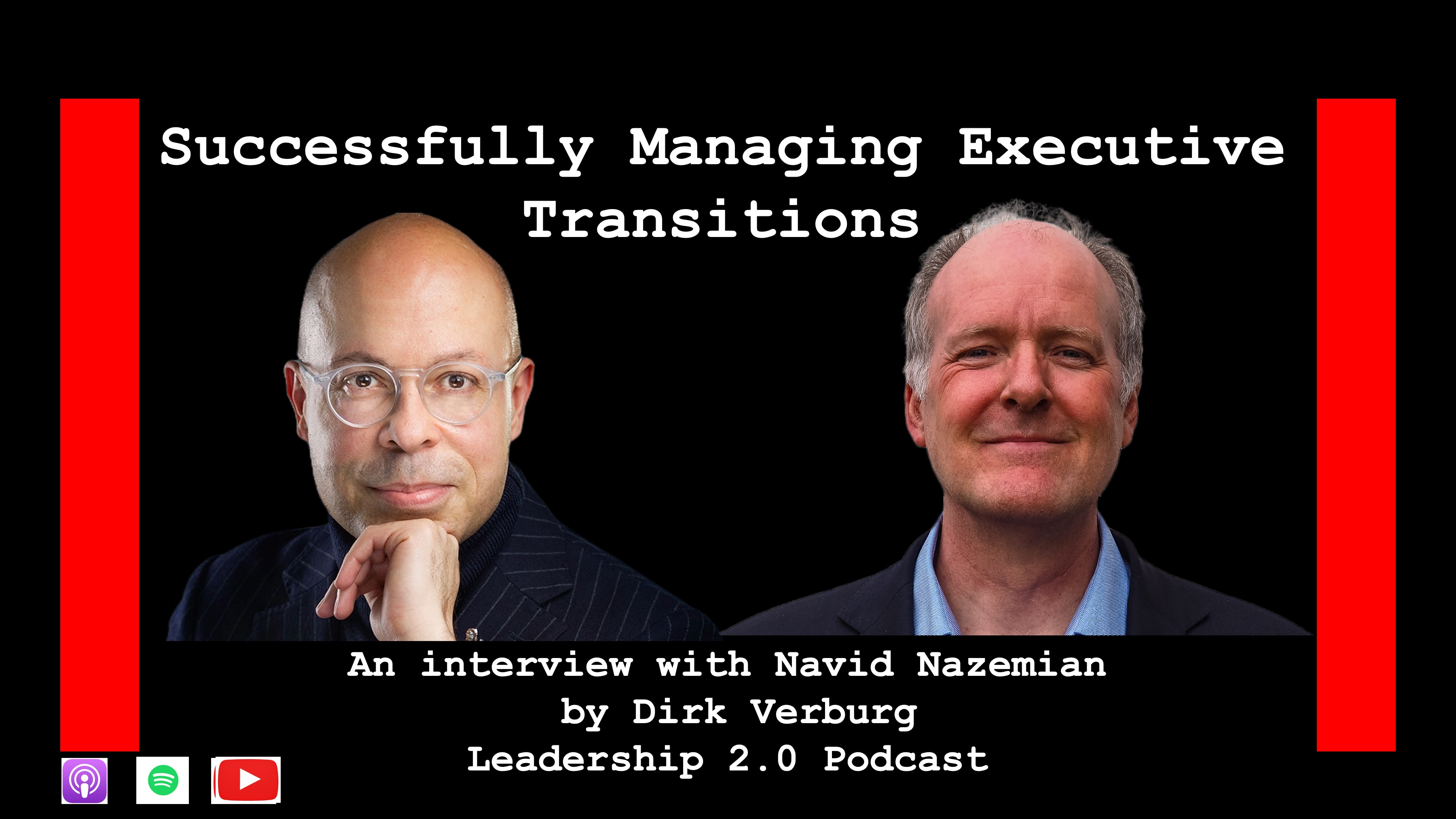
The 70% Failure Rate: Why are most Business Transformations STILL getting ‘Lost’? – Interview Rupert Brown

McKinsey’s infamous stat haunts every executive: 70% of all change management efforts fail. Despite decades of expertise, this number seems frozen in time. Why?

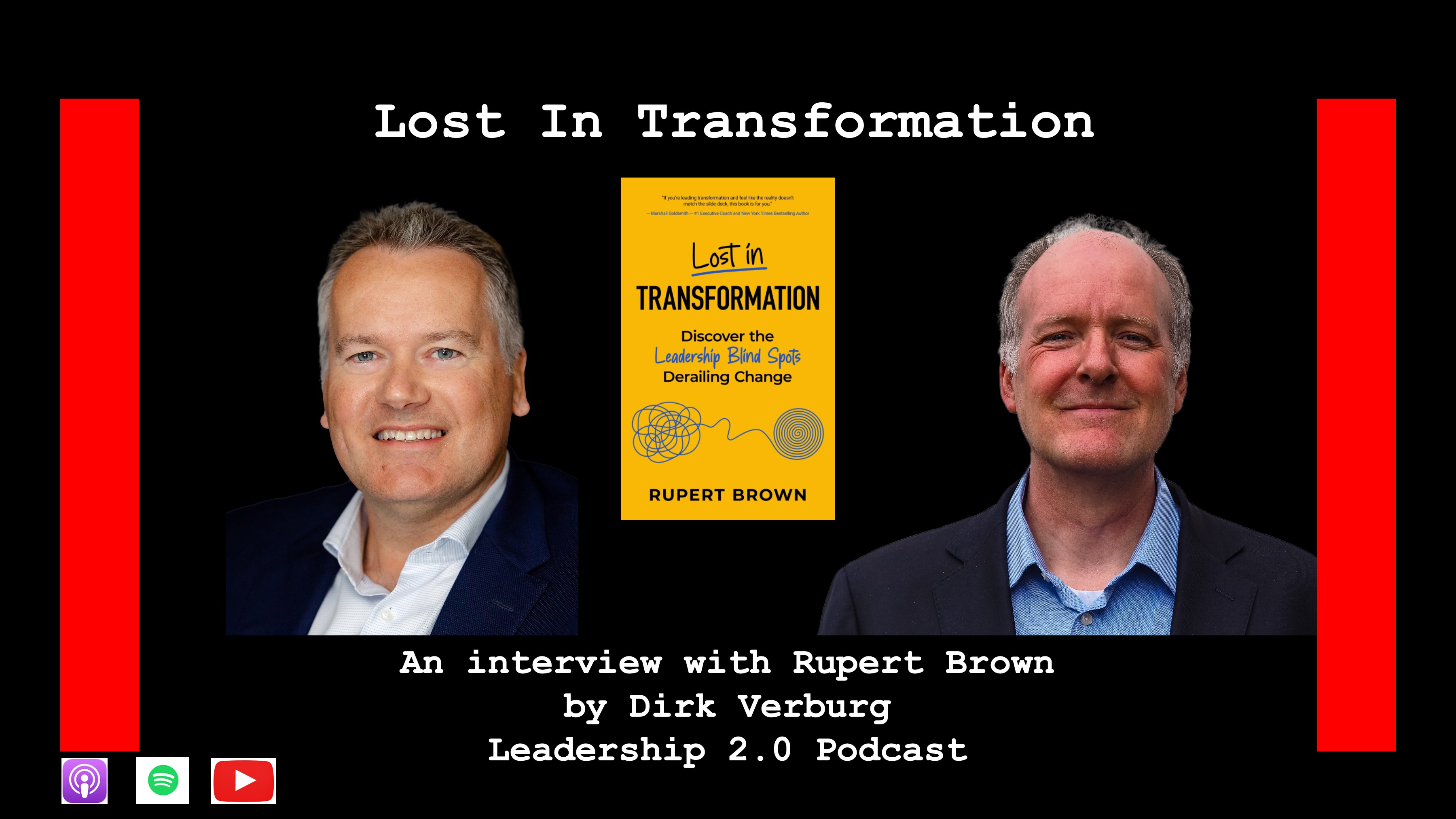
In the 35th episode of the Leadership 2.0 podcast, I sat down with a true transformation veteran, Rupert Brown, author of the eye-opening book, ‘Lost in Transformation’.

Rupert is an experienced Chief People Officer and change management specialist with deep expertise in M&A, digital transformation, and turnarounds, having advised giants like Procter & Gamble and Maersk.

This wasn’t just a discussion of tactics; it was a candid, emotionally intelligent discussion on how Transformations can be handled better.

Tune in to learn about:

  • Why Transformation projects continue to fail
  • The difference between Change and Transformation
  • The Bad Reputation of the word ‘Transformation’
  • Why we still struggle with Change Management  
  • In-Groups and Out-Groups in Change Management Processes  
  • Chief Acceleration Officers
  • Trust is Energy
  • Crises as Catalysts for Change
  • The impact of our Permacrisis on Change Management 
  • Behavioral Skills to cope with the BANI world’
  • Change Management and AI

If you’re leading a transformation—or struggling to survive one—you can’t afford to miss this. Rupert delivers the hard truths and the practical guidance needed to shift from ‘being Lost’ to becoming ‘the Leader of change’.

► You can watch or listen to a podcast with our conversation on:

Continue reading

Coaching in the workplace – An interview with Zena Everett

Most of us are acutely aware of the gap between how organizations aspire to operate and the everyday reality of working within them.

This discrepancy often has a negative impact on the motivation and well-being of employees, ranging from a decrease in employee engagement, to mental health issues,

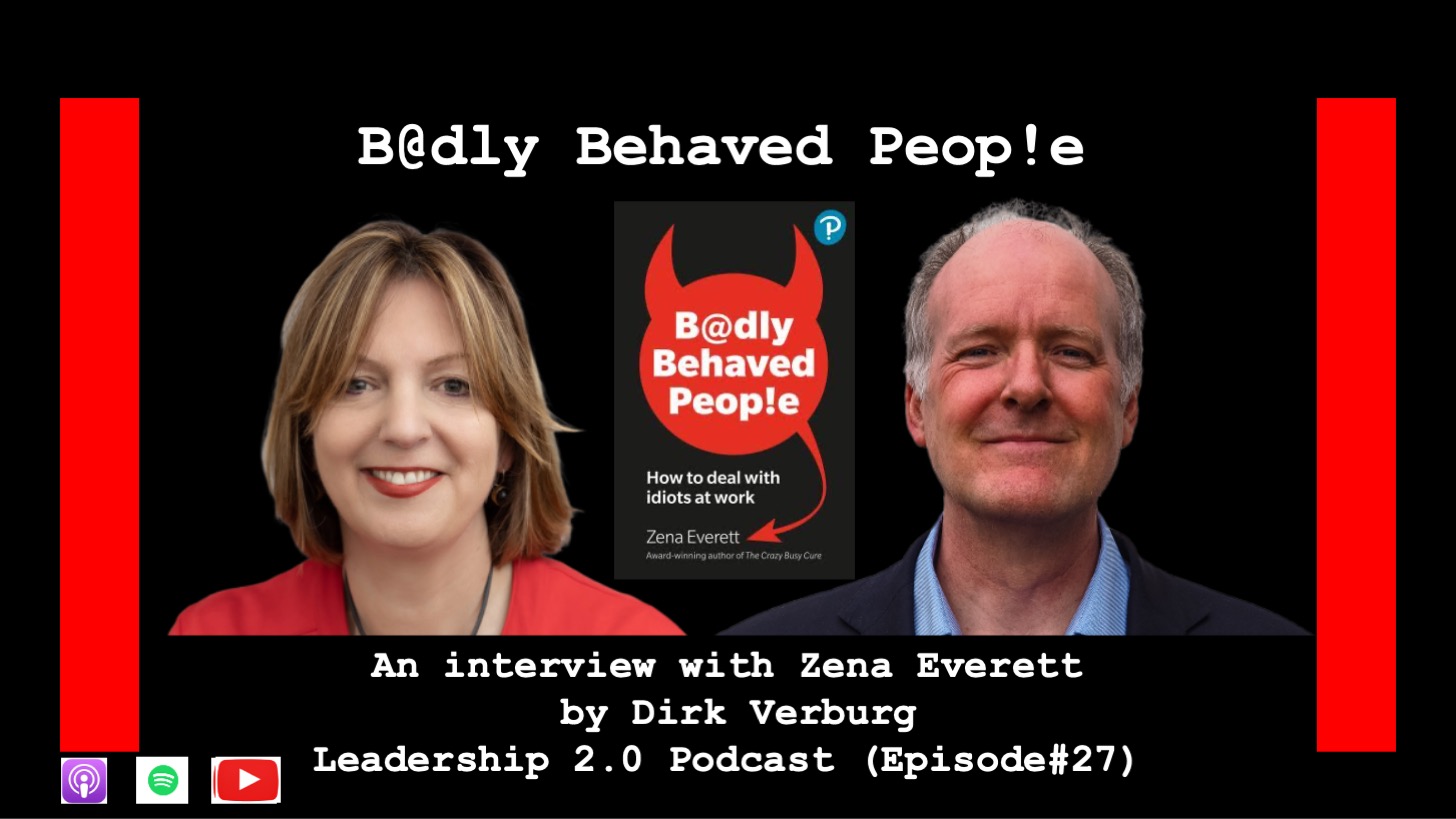
In her book ‘Badly Behaved People’, my fellow executive coach Zena Everett describes a number of real-world cases about how this discrepancy can manifest itself, and, perhaps more importantly, how we can address them

What I particularly like about about this book is how Zena makes complex psychological concepts (for instance, Transactional Analysis) accessible without oversimplifying them, and demonstrates how they can be applied in the workplace.

In our conversation about her book, Zena and I discussed the following topics:

Continue reading

The Company Culture of On – An interview with Alessandra Del Pino

There are some companies I deeply admire, and On, the Swiss sports and apparel brand is definitely one of them! Not only do they make amazing products and have an extremely powerful brand, they also have a unique company culture.

For this reason, I was thrilled to sit down with Alessandra Del Pino, Head of Engagement & Talent Growth at On, to discuss the company culture of On, or, as Alessandra describes it, their ‘secret sauce’.

During our conversation, we covered the following topics:

Continue reading

Why I still use the MBTI for executive coaching in 2024

One of the most important influencers on LinkedIn is Adam Grant. His seminal article about the MBTI (Myers-Briggs Type Indicator) in 2013 initiated the downhill trajectory of the reputation of this instrument.

I think that is a pity, because I consider the MBTI as a valuable personality inventory for personal development. In this post I explain why I think that is the case, and when and how I use it in my executive coaching practice.

Continue reading

Why you are a micro-manager and what you can do about it (Stop adding value)

One of the big temptations we as leaders face is our urge to add value to the work of our staff. Typically, we add this value in the form of change or additional requests.

There are three reasons why adding value is tempting for us:

  • Accountability – We are accountable for the work of our staff. If something goes wrong, we as leaders suffer the consequences (‘It happened on your watch’)
  • Know-how – We know it better than our staff. Seriously. That is most often the reason why we were appointed
  • We like it – As leaders it is often tempting to take a break from the daily grind of budgets and office politics, to dive back into the content we love(d) so much (‘Let me show you how it is done’)

As with every temptation in life, we need to fight this one as well. There are fivereasons for this:

Continue reading

Your wellbeing: why a personal mission is more important than a position

What do the notorious former marketing director of American Apparel, Ryan Holiday, and renowned Dutch reformed theologian Bram van de Beek have in common? They both have written a book about the danger of egocentricity. 

Social media…are not to blame

Social media offers endless possibilities to promote ourselves and serve as outlets for our vanity. It enables us to humble brag about our professional achievements on LinkedIn, share evidence of our successful ‘friends & family’ life on Facebook, and demonstrate our cutting-edge lifestyle on Instagram. 

However, looking at our current society and world history, it seems we as human beings always have been prone to self-centeredness and self-promotion. Social media therefore merely enables us to express something that is already deeply rooted in us.

Continue reading

Improve your decision-making skills: time to get back to the gym!

Something I struggled with for a long time is chronic neck and shoulder pain when working with my computer. For the largest part of my life, I sat behind my computer like the hunchback of Notre Dame.

Well meant ergonomic advice, a standing desk, and using the mouse with my left hand only gave temporary relief.

The only thing that solves the problem structurally is going to the gym.

The problem is that I experienced being in the gym as exciting as watching grass grow. Besides, I always took the words of the apostle Paul “For bodily exercise profiteth little” (1 Tim 4:8) perhaps a little too close to heart. 

If getting back in shape is part of your past summer holiday intentions – here are three things that got me back in the gym earlier this year!

Continue reading

The power of clarity in a very noisy world

Three things to avoid if you want to make sure people understand you

‘This is a very noisy world, so we have to be very clear what we want them to know about us’

Steve Jobs

In 1920 Vladimir Lenin already recognized the power of controlling the printing press. A century later, in today’s social media world, the real battle ground is our everyday language.

Language is the ultimate tool to inspire people to take action. Unfortunately, we frequently squander its impact by making three mistakes:

Continue reading

Why authenticity in the workplace is a requirement for mental health

20190603 Cover NJS Autenticity

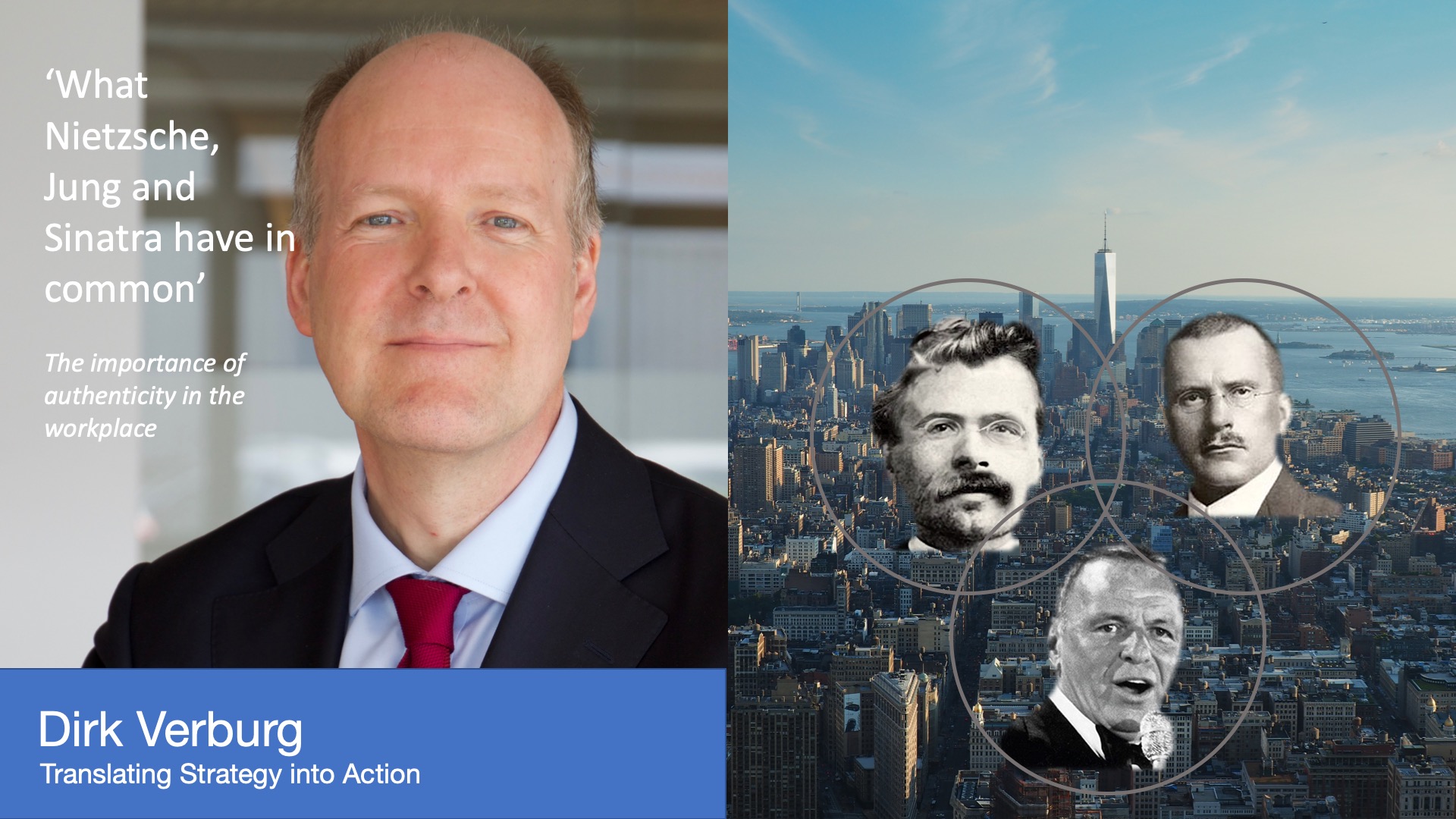
What Nietzsche, Jung and Sinatra have in common

In the 1970s and 1980s, authenticity and self-development in the workplace were considered to be important by many middle and senior managers in the Western world. Perhaps too important: organizations were sometimes seen as narcissistic vehicles for self-development, instead of entities that should serve the interests of their shareholders and/or other stakeholders.

This orientation changed dramatically in the first half of the 1990s. Two popular business books that were published during that time perfectly illustrate this change. The first one was ‘Valuation’ (1990), a book written by Copeland, Koller and Murrin (three McKinsey consultants), the second one ‘Emotional intelligence’ by David Goleman (1995).

Continue reading

Starting your day with this simple habit will exponentially increase your personal effectiveness

Make your responsibilities your priority

For many business leaders, their day in the office resembles drinking from a fire hose. Not only do they need to attend a large number of meetings (often back to back), they are also hit with a continuous stream of ad-hoc questions from their staff, peers, customers, and line managers which require their attention and action.

A couple of years ago I started to get really worried about my personal effectiveness. Despite the outrageous number of hours I spent at work, I found it increasingly difficult to complete my tasks and finish my projects.

In order to address this, I decided to analyze my workload to find out what I could do to change this.

Continue reading