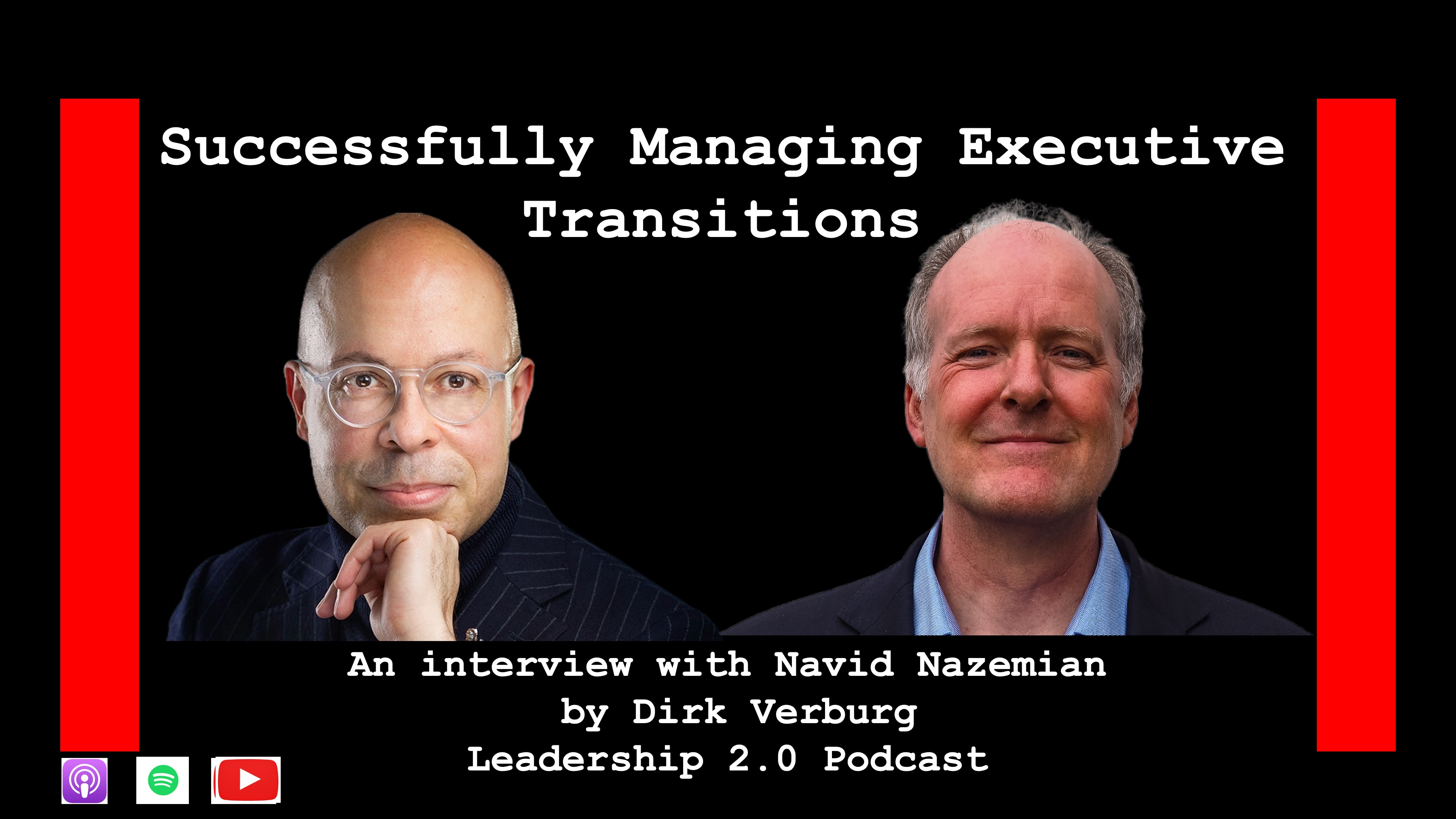
There are some companies I deeply admire, and On, the Swiss sports and apparel brand is definitely one of them! Not only do they make amazing products and have an extremely powerful brand, they also have a unique company culture.
For this reason, I was thrilled to sit down with Alessandra Del Pino, Head of Engagement & Talent Growth at On, to discuss the company culture of On, or, as Alessandra describes it, their ‘secret sauce’.
During our conversation, we covered the following topics:
‘A transformational read that every leader of today needs’.
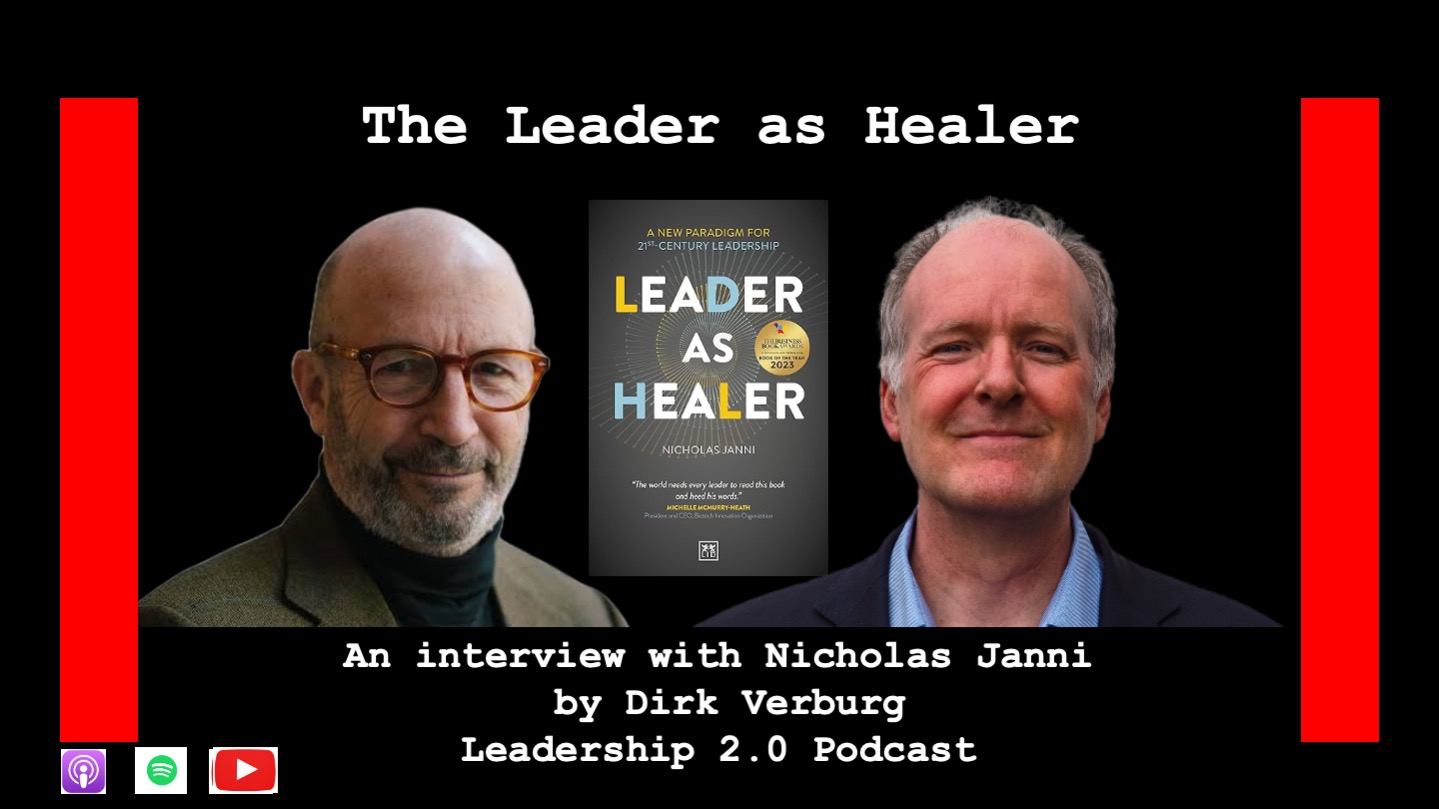
These were the words Head Judge, Jacq Burns used when she announced that ‘Leader As Healer’, written by Nicholas Janni was selected as the overall winner for the 2023 Business Book Awards.
In his book, Nicolas Janni argues that we need a new leadership model to address the challenges our society faces.
Our current leadership model is one where we see great leaders as warriors ‘on the battlefield of relentless competition’, who drive action, pursue instrumental (shareholder value related) goals, and maintain transactional relationships.
Instead, Nicholas Janni pleads for leaders who are empathetic, intuitive, present, skilled in mindfulness and deep listening, and who can inspire colleagues to engage and collaborate.
In this episode of the Leadership 2.0 podcast, I discuss with Nicholas:
Besides the fact that these failures often have a traumatic impact on the individuals involved, the costs for the organisations are huge. Not only in terms of image and hiring costs but, more importantly, in terms of opportunity costs.
To find out why leadership transitions prove to be so hard, and what companies and individuals can do about it, I interviewed Michael Watkins for my Leadership 2.0 podcast.
‘We live in a world of organizations – and we do not understand them’
This is one of the statements Henry Mintzberg, one of the leading thinkers in the field of Management, made when I interviewed him for my Leadership 2.0 Podcast about his latest book ‘Understanding Organizations…Finally’.
During our conversation, we discussed the following topics:
0️⃣1️⃣ The importance for organizations to get their structure ‘right’ 0️⃣2️⃣ The evolvement of Henry’s thinking about organizations 0️⃣3️⃣ ‘Every (organization) form contains the seeds of its own destruction’ 0️⃣4️⃣ ‘Emergent structures’ versus large-scale reorganizations 0️⃣5️⃣ The fit between the leader and the structure of the organization 0️⃣6️⃣ The structures of Apple and Tesla and the personalities of their founders 0️⃣7️⃣ The complementary role of conflict and culture in organizations 0️⃣8️⃣ The relationship between the structure and the culture of an organization 0️⃣9️⃣ The gap between formulators and implementers of corporate strategies 1️⃣0️⃣ The interest in structuring organizations in academia and business
You can watch or listen to this podcast episode on:
Scenario thinking enables organizations to establish possible visions of the future in the form of scenarios.
These scenarios enable decision-makers to think through the different ways in which the environment of their organizations could evolve, based on different sets of assumptions. It enables leaders to ‘think through ‘a wide range of what if questions’: ‘What if the dollar…’, ‘What if China…’, ‘What if scientific developments make it possible in the near future to…’, etc. This enables them to mentally prepare themselves for possible ‘Black Swans’, and review the ability of their organization to cope with, or, iedeally, benefit from these.
One of the companies that is best known for its scenario-thinking activity is Shell. For decades, Shell’s scenarios have supported the decision-making of Shell leaders, academics, governments, and businesses.
Jeremy Bentham led this activity in Shell between 2006 and his retirement in 2022 as Shell Scenarios & strategy Leader and VP Global Business Environment. In this episode of the Leadership 2.0 podcast, I am interviewing Jeremy Bentham about scenario thinking and leadership.
During our conversation, Jeremy and I discussed the following topics:
The World Health Organization estimates that 12 billion working days are lost every year due to depression and anxiety. This costs $1 trillion in lost productivity.
McKinsey research showed that ‘60 % of employees have experienced at least one mental-health challenge at some point in their lives’. According to the same study ‘Failing to address the effects of mental health and well-being challenges is a missed opportunity for employers’.
Employees dealing with mental health issues are 4x more likely to say they intend to leave, 3x more likely to report low job satisfaction, 3x more likely to experience toxic workplace behavior, and 2x more likely to report low engagement.
At the same time, classic Employee Assistance Programs do not seem to work…
Vlad Gheorghiu experienced mental health issues firsthand, whilst working for McKinsey.
This experience inspired him to design solutions. First for McKinsey, and later by co-finding a start-up company called Kyan Health.
In my conversation with Vlad, we covered the following topics:
1️⃣ Vlad’s background
2️⃣ Vlad’s engagement with mental health
3️⃣ The gap in the workplace between the mental health support employees need and receive
4️⃣ The concept of Kyan Health
5️⃣ Measuring impact
6️⃣ Creating a start-up company: Three Dos
7️⃣ Creating a start-up company: Three Dont’s
8️⃣ Vlad’s role models as an entrepreneur
If you are interested, you can watch our conversation on YouTube.
Everyone is an expert in Leadership Development, or at least has an opinion about it.
However, if that is the case, why do global organizations spend more than $60 billion every year on leadership development programs, but is it so hard to ensure the ROI of these programs?
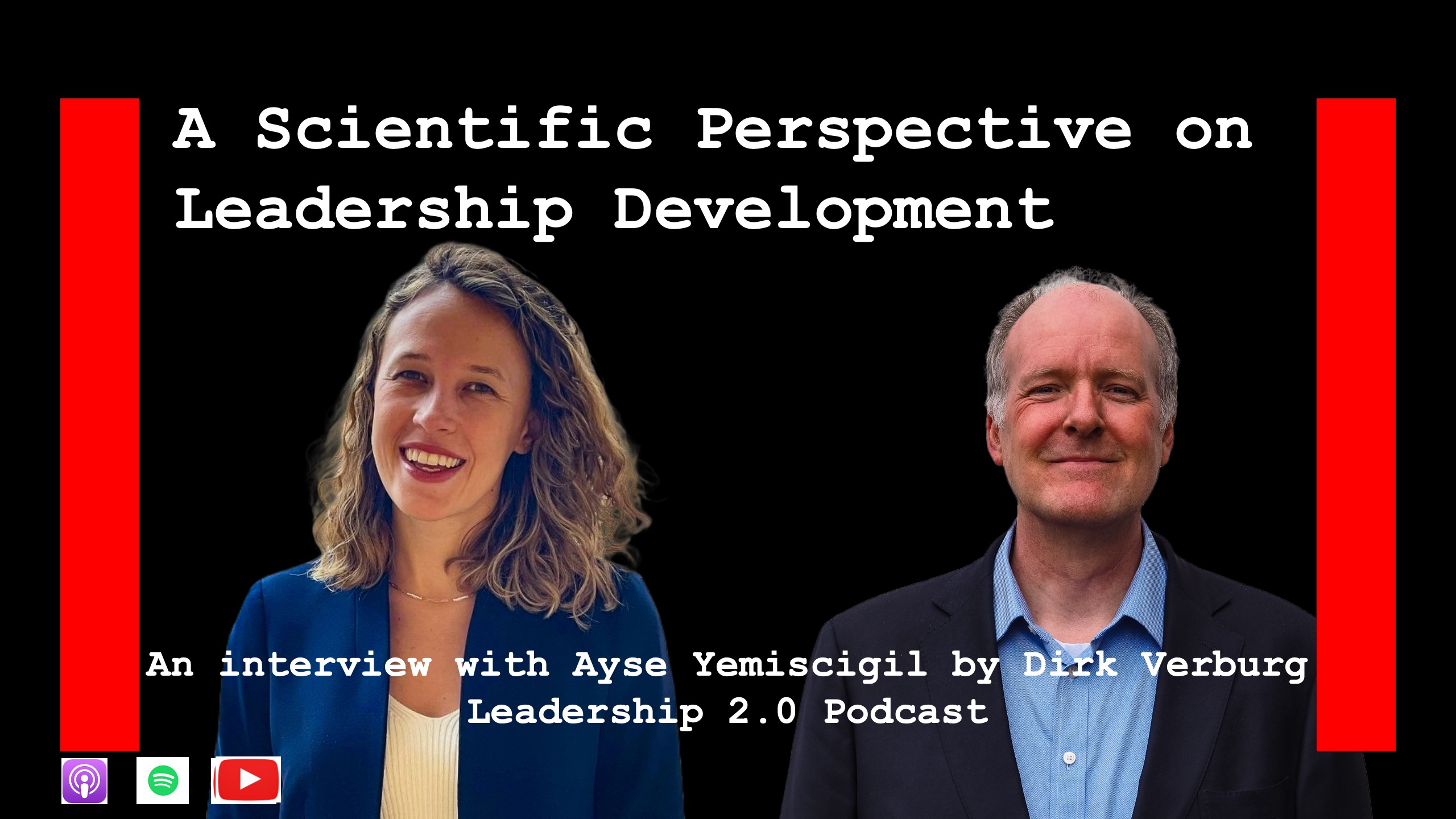
To find the answer to this question, I decided to interview Ayse Yemiscigil for my Podcast Leadership 2.0.
Ayse Yemiscigil is an Assistant Professor of Organizational Behavior at Fordham University’s Gabelli School of Business and a Research Affiliate with the Human Flourishing Program at Harvard University.
In February 2023, she, Dana Born, and Horace Ling, published an article for HBR.org of the Harvard Business Review titled: ‘What Makes Leadership Development Programs Succeed?’
During our conversation, we discussed the following topics:
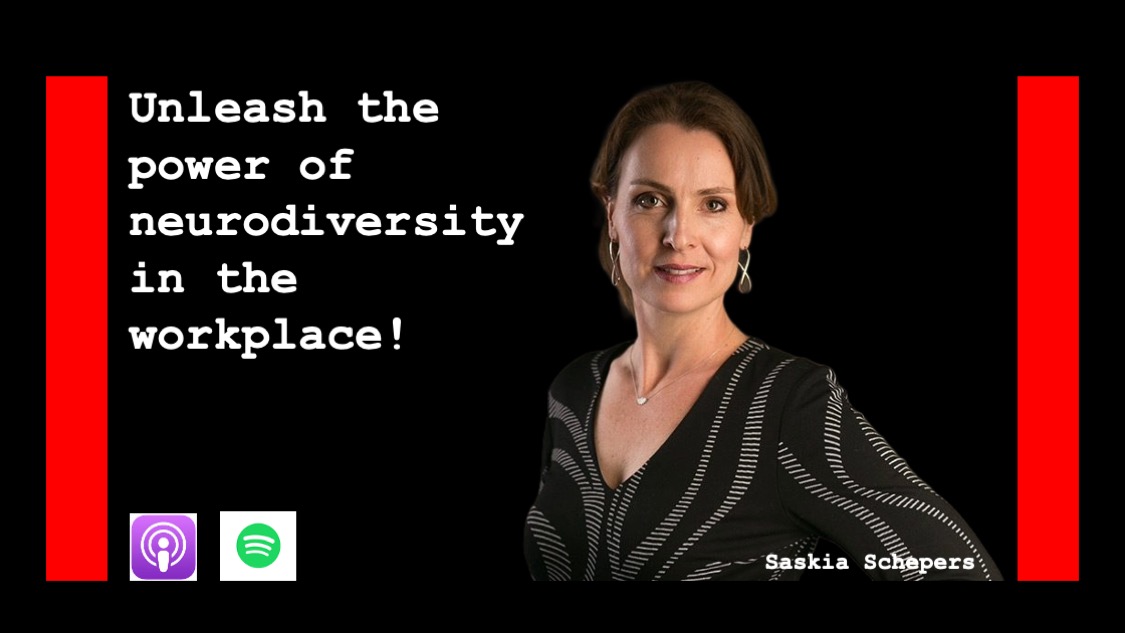
Recently I had a conversation with Saskia Schepers about her book on Neurodiversity in the workplace with the title ‘Als alle breinen werken – Waarom ruimte voor neurodiversiteit op het werk goed is voor iedereen’ (‘When all brains are switched on – Why space for neurodiversity in the workplace benefits everyone’).
Around 80% of mankind is neurotypical, and 20% is neurodivergent. We tend to ‘equip’ people in the latter category with labels like ADD, DHD, bipolar, autistic, etc.
Most leaders find it hard to integrate neurodivergent people in their teams.
The reason is that most of us have preconceived ideas about the way people in the workplace should behave. For instance, we expect people to like attending and participating in meetings, do their work in teams, be productive in open-plan offices, and socialize with their colleagues after work.
People who do not fit this mold are seen as bad ‘team players’, and are often criticized for this behavior, e.g. during annual performance review meetings.
The book almost immediately reached the number 1 position in the Dutch bestseller list of management books, was quickly sold out, and is now in its third printed edition.
An English translation is in the making and will be published in 2024.
During our conversation, we discussed the following topics:
Our society is more complex than ever. For the first time since WWII two nations find themselves at war on the European continent. At the same time our economy is slowing down, inflation is on the rise, whilst technological developments in the AI space are more unpredictable than ever, and we are still trying to find out if these will be our friend or foe…
In times like these ethics, and a sense of purpose are more important than ever. Therefore I was glad to have the opportunity to have a conversation on these topics with John Hollwitz.
John Hollwitz is a University Professor of psychology and rhetoric. Before coming to Fordham, he was the A.F. Jacobson Professor of Communications at Creighton University and dean of arts and sciences at Loyola College in Maryland. He also has been the vice president of academic affairs at Fordham.
Our interview was focused on the why and how of corporate ethics. During our conversation, we discussed, amongst others, the following topics:
Our expectations of leaders and ideas about leadership have changed dramatically in the last couple of years.
Recently I was introduced to Sophia Town, Ph.D. , an assistant professor of organizational behavior at the Gabelli School of Business of Fordham University, who is at the forefront of academic research in this area.
In the classroom, Professor Town’s curriculum is guided by the question: “How can we develop compassionate leaders in service of a flourishing world?”
SophiaTown leads Fordham’s Human Flourishing Project (FHFP), a mixed-methods, interdisciplinary research lab that explores behavioral, psychological, communicative, and spiritual development in business education. Related to this project, Dr. Town serves as a Research Affiliate and Advisory Board Member for the Human Flourishing Program at Harvard University.
During our conversation, we discussed, amongst others, the following topics:
One of the big temptations we as leaders face is our urge to add value to the work of our staff. Typically, we add this value in the form of change or additional requests.
There are three reasons why adding value is tempting for us:
Accountability – We are accountable for the work of our staff. If something goes wrong, we as leaders suffer the consequences (‘It happened on your watch’)
Know-how – We know it better than our staff. Seriously. That is most often the reason why we were appointed
We like it – As leaders it is often tempting to take a break from the daily grind of budgets and office politics, to dive back into the content we love(d) so much (‘Let me show you how it is done’)
As with every temptation in life, we need to fight this one as well. There are fivereasons for this:
Something I struggled with for a long time is chronic neck and shoulder pain when working with my computer. For the largest part of my life, I sat behind my computer like the hunchback of Notre Dame.
Well meant ergonomic advice, a standing desk, and using the mouse with my left hand only gave temporary relief.
The only thing that solves the problem structurally is going to the gym.
The problem is that I experienced being in the gym as exciting as watching grass grow. Besides, I always took the words of the apostle Paul “For bodily exercise profiteth little” (1 Tim 4:8) perhaps a little too close to heart.
If getting back in shape is part of your past summer holiday intentions – here are three things that got me back in the gym earlier this year!
In the last three decades, the business world has become more complex than ever before. This complexity is mainly driven by two factors:
Globalization – Never before in the history of mankind have materials, capital and people moved faster and more freely across our planet
Technology – The amount of data we have at our disposal for decision-making is dramatically increasing each year, and AI is providing us with the tools to do this faster and more effective than ever.
As a result, our world has become more interconnected and interdependent than ever. A case in point are the supply chain issues businesses experienced in the initial stage of the COVID-19 pandemic.
This interconnectedness and interdependence has huge implications for the way organizations need to operate, both externally as well as internally.
I spent a significant part of my working life developing leaders in organizations. What strikes me is that during COVID-19 the demand for this type of work has not decreased; if anything, the demand for leadership development has increased. That is remarkable. During the financial crisis in 2007-2008, for instance, most companies tried to save money, and one of the first things they considered was decreasing the out-of-pocket costs associated with these, and other kind of developmental activities.
Recently I was asked why companies continue to invest in the quality of their leadership at all levels of the organizations, despite the economic uncertainty they are facing.
In my opinion, the reason is that companies have come to realize the growing importance of the quality of leadership at all levels of the organization. I believe that this is a good thing, especially because leadership roles have become more demanding in the last couple of decades, not only for senior leaders, but also for first, and second-level leaders in organizations.
Every year millions of people around the world make New Year’s resolutions. Given that we are currently starting the 2020’s, we have the exciting opportunity to make resolutions for a whole new decade!
One of the key notions in this book is that the world has become much more interconnected and therefore more complex. Unfortunately, our decision-making skills are ‘brilliantly designed – for an older, less connected, and more predictable version of the world’. In this context, Jennifer Garvey Berger mentions five mind traps we can find ourselves in, one of them being trapped in ‘Simple stories.
Critical self-reflection is difficult to acquire, but extremely important for leaders
By Dirk Verburg
For several reasons I love reading autobiographies of leaders in business and politics. The first reason is plain curiosity: the possibility to take a look behind the stage of well-known events. The second reason is because these autobiographies provide a unique opportunity to understand decision making processes from the perspective of the decision makers. Why did they take certain decisions in specific situations? Were they aware of certain developments? From whom did they obtain advice? What was the role of important stakeholders? etc. Continue reading →