All business leaders I know are able to explain What they do, almost all of them How they do it, but only a minority can explain Why they do what they do, and that is a missed opportunity, both for themselves and their teams.
Man’s Search for Meaning
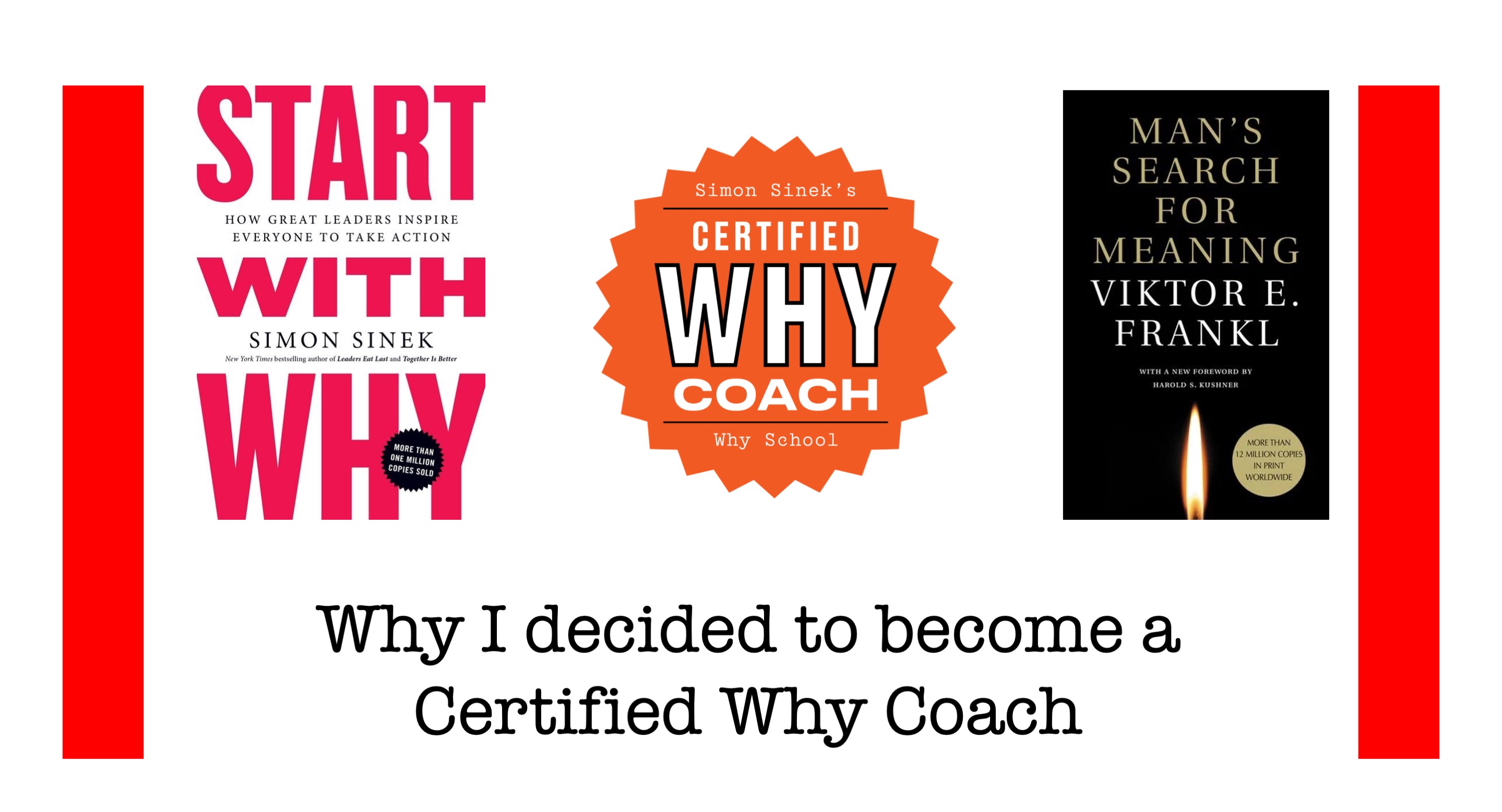
Most people I know regularly reflect on the meaning and purpose of life. In 1946, Viktor Frankl, an Austrian psychiatrist and psychotherapist, wrote one of the most important and influential books on this topic: ‘Man’s Search for Meaning‘.
It is a short but poignant and profound book that contains Frankl’s reflections on this question during his time in Nazi concentration camps, where he and his family were imprisoned because they were Jewish. In these camps, Viktor Frankl lost his father, mother, and wife.
In ‘Man’s Search for Meaning’., he formulated the thesis that inmates in the camps, who had a sense of meaning in their lives, were more likely to survive.
Therefore, he recommends us to stop asking for “THE” meaning of life, and instead think about: What does life expect of me right now? In order to do this, we need to understand our unique and specific meaning.
“This meaning is unique and specific in that it must and can be fulfilled by him alone; only then does it achieve a significance which will satisfy his own will to meaning.” — Viktor Frankl
According to Frankl, understanding our unique and specific meaning (a.k.a. our “Why”) is important for our happiness and our ability to cope with suffering. This is the same point Friedrich Nietzsche made when he stated that “He who has a why to live for can bear almost any how”.
‘Start with Why’
In 2009, Simon Sinek published “Start with Why“, which introduced the importance of meaning and purpose in the world of business. This book underlined the importance for leaders to understand and express their “Why” in order to inspire others.
A great way to illustrate this is to look at the market for laptops.
Most people buy laptops based on the price-performance ratio. They look at which brand offers the best processor, memory, storage, display, and battery life for the lowest cost at a given moment. If Lenovo has the best deal, they will buy Lenovo; if HP, Acer, or Dell has the best deal, they will buy an HP, Acer, or Dell laptop.
Most Apple consumers completely bypass the brand selection process and confine their choice to the Apple ecosystem. The reason is that they believe in the brand or, to put it differently, the “Why” of Apple. Apple buyers connect to the brand because they identify with, for instance, the Crazy Ones. They are willing to pay a premium for a product that resonates with their identity.
Why is this relevant to me?
Understanding and being able to articulate our “Why” is incredibly important for two reasons.
First of all, it helps us stay true to ourselves when confronted with decisions. Instead of making decisions solely on their own merits and the specific circumstances at the moment in time where we need to make the decision, understanding our “Why” helps us make decisions that are congruent with our values.
Secondly, and here is why it is so important for leaders, it helps us connect with others faster and on a deeper level. Irrespective of whether we are formally in a leadership position or not, we need to give people a reason to follow us.
Why is all this relevant for my organization?
To boil down 100+ years of motivational theory in the crudest way possible: there are three ways to motivate our staff.
At the most basic level, we can ensure our staff delivers the required output (‘WHAT‘) through a combination of sticks and carrots. The issue is, of course, that control is required to ensure compliance, loyalty will be low — staff can easily be tempted by organisations that offer more carrots and fewer sticks — and discretionary effort is likely to be the exception rather than the rule.
At a more advanced level, we can make sure people enjoy the content of their work (‘HOW‘). Many consultants and investment bankers may be cynical about the contribution their companies make to society, but they almost always find the content of their work intellectually challenging. The difficulty is that there will almost always be organisations that can compete on content while also offering more in the sticks and carrots department.
Therefore, the most powerful way to motivate people is to appeal to a shared purpose (‘WHY‘). The reason people wanted to follow the likes of Mahatma Gandhi, Martin Luther King Jr., John F. Kennedy, Nelson Mandela, or business leaders like Steve Jobs, Paul Polman, or nowadays Elon Musk, was not necessarily because they were nice or kind — because they often were not — but because they were able to formulate and communicate an irresistible Why.
Now, not all of us are Nelson Mandelas or Steve Jobses, and not all of us work for organisations that are changing the destinies of nations, dramatically improving human rights situations, or transforming entire industries. However, all of us have the potential to scale this principle to inspire others.
A good example is army regiments. Speaking with military personnel, I was struck by the fact that their loyalty lies not so much at the king-and-country level, but closer to home — with their colleagues and their regiment. That regiment may not have had a visible success in over 100 years, yet that is beside the point. They believe in the narrative — the values — of the regiment.
Just take a minute to imagine what you could achieve if your team consisted of self-motivated members who believed in a collective mission…
Do you know your Why — and does your team?
If you and your team do not know your Why or theirs, you are probably leaving your most powerful motivational lever untouched. I recently became a Certified Why Coach through Simon Sinek’s company, trained to help individuals and teams discover and articulate their purpose — and how to put it to work.
If you’re curious about what purpose-driven leadership could look like for you and your team, reach out to schedule a conversation.
Almost 90% of senior HR leaders agree that transitions into new roles are the most challenging periods in a leader’s professional life. However, organizational appetite to invest in these transitions remains minimal.
As business leaders, we seem to accept a 40% failure rate among newly appointed executives as an unavoidable risk.
The consequences of these failures are significant for both the individual and their organization.
For the individual, a failed transition damages their professional reputation and potentially their livelihood. For their organization, it results in direct financial costs (recruitment), opportunity costs, diminished employee engagement, and a degraded Employer Value Proposition (EVP).
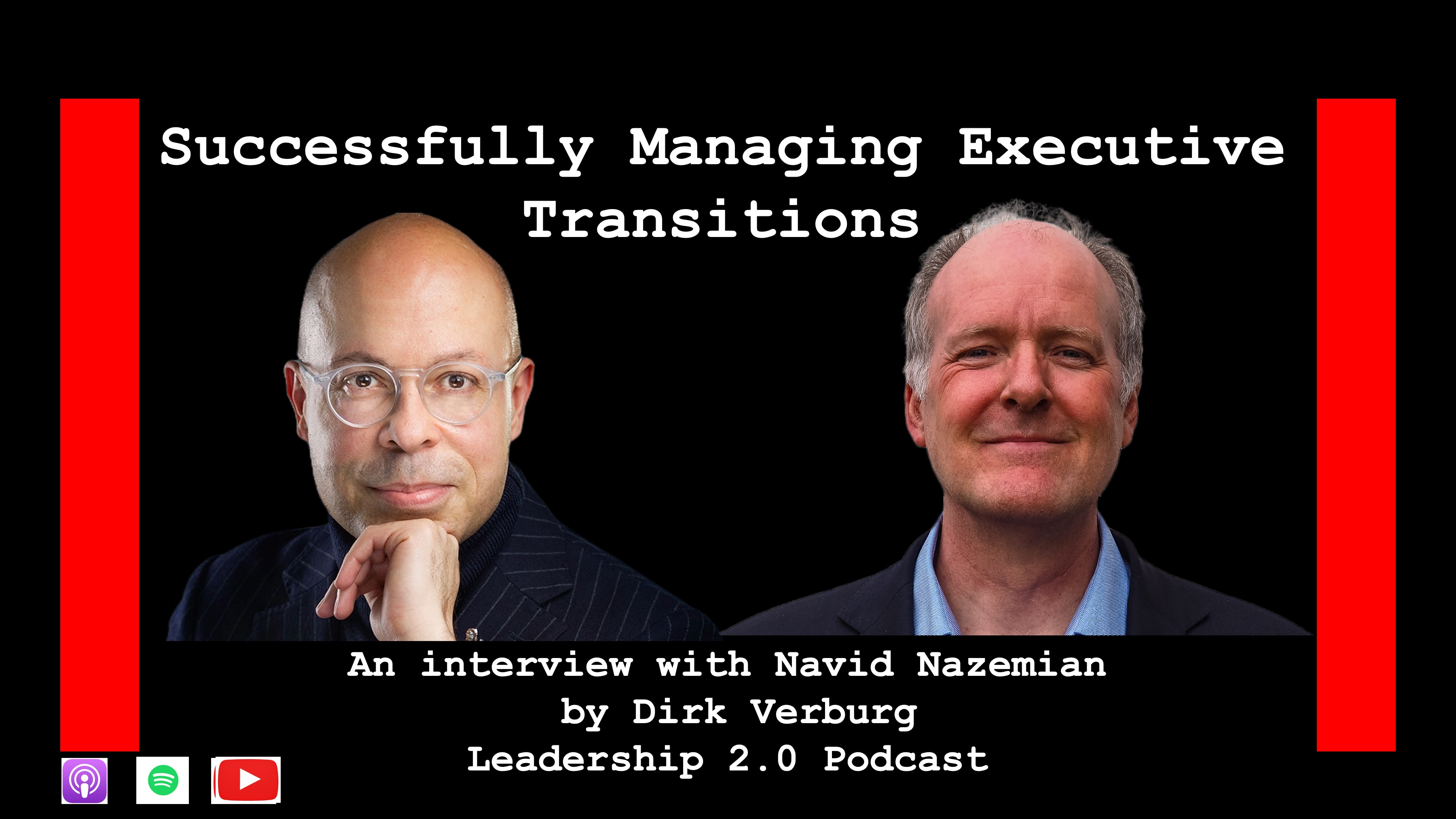
In the 37th episode of the Leadership 2.0 podcast, I speak with Navid Nazemian—my brother-in-arms in the Executive Transition Coaching space—about how organizations can mitigate the risks of executive appointments by engaging an executive coach.
The statistics around executive transition failure rates of newly appointed executives are staggering:
Nearly half of all leadership transitions fail (McKinsey)
Not only external hires fail: research from DDI shows that 35% of all executives promoted internally are considered failures
The costs of C-level failures are, in the vast majority of cases, higher than USD 2 million, but can be as high as USD 30 million. In their Harvard Business Review article, Claudio Fernández-Aráoz, Gregory Nagel, and Carrie Green estimate that the costs of mismanaged CEO transitions in the S&P 1500 alone already result in nearly USD1 trillion in market value loss on a yearly basis.
Unfortunately, the number of leaders and organizations that actually invest in addressing this problem is relatively small. And that is an issue for both the individuals concerned and their organizations.
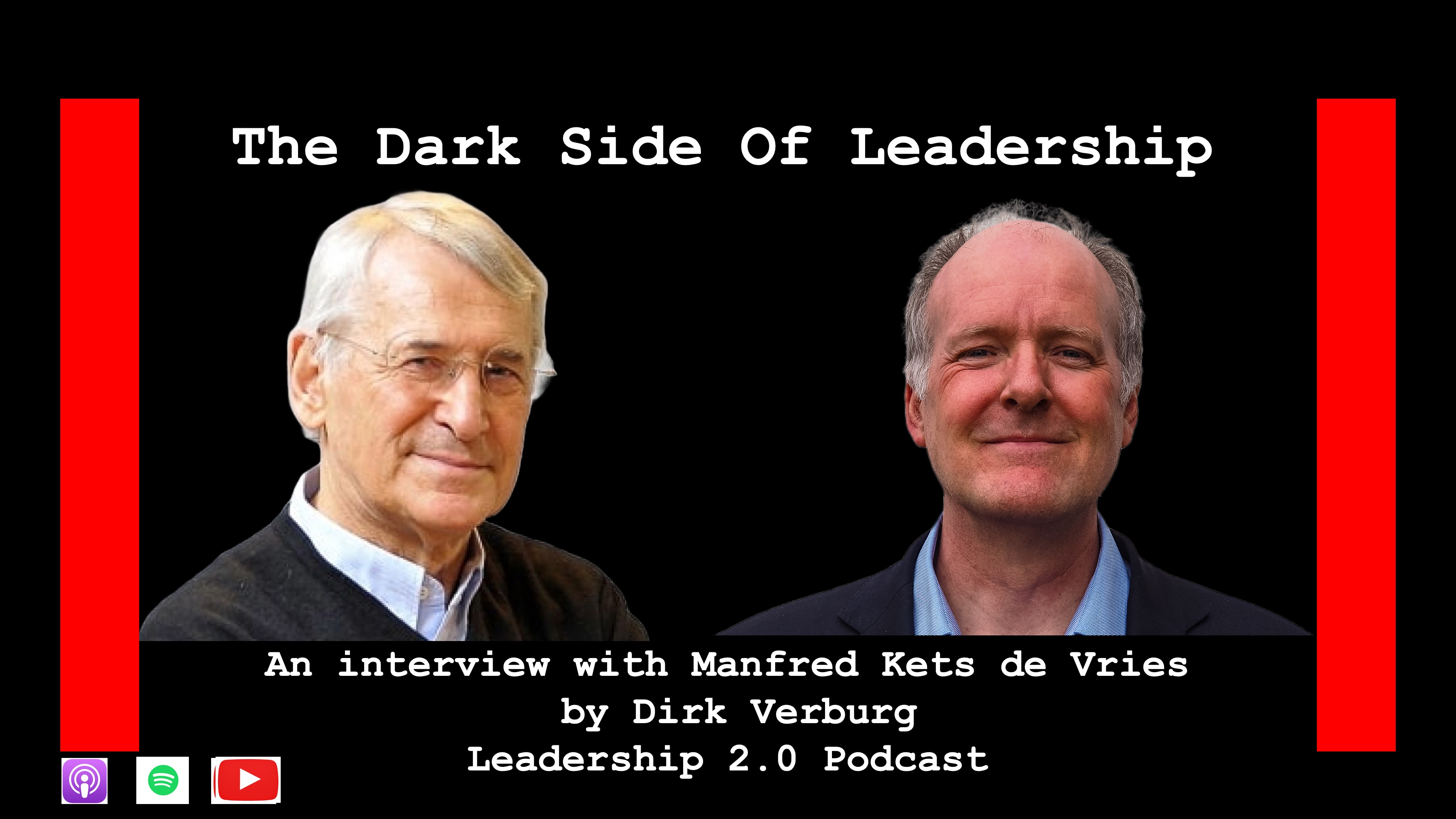
Unfortunately, today, a single television news bulletin, or a glance at the front page of a newspaper, is enough to reveal the dark side of leadership.
However, many people do not need to switch on the TV or read the paper to witness this; instead, they experience the dark side of leadership every day within their own organizations. They happen to work for ‘Psychopath Lights’—or, as Manfred Kets de Vries calls them, ‘Seductive Operational Bullies’ (SOBs).
In the 36th episode of the Leadership 2.0 podcast, I sit down with Manfred to explore his extensive research on this phenomenon. During our conversation, we discussed the following topics:
Over the years, I made multiple attempts to start journaling. All failed…until I radically changed my approach.
The benefits of journaling
It is well known that journaling can have a positive impact on multiple levels. According to Karen A. Baikie & Kay Wilhelm, ‘expressive writing’ has a number of positive mental and physical health outcomes, ranging from a better-functioning immune system, reduced blood pressure, and improved liver function, to improved working memory, better sporting performance, and a feeling of greater psychological well-being.
Some scientists even claim that the development of a drug that would result in medium effect sizes comparable to that of expressive writing ‘would be regarded as a major medical advance’.
The reasons why I wanted to start journaling were that I believe in the concept of solving issues and processing experiences through writing about them, and the fact that I enjoy writing.
Failed attempts
Despite periods of several months in my life where I consistently journaled, I did not stick with it. The reasons were twofold.
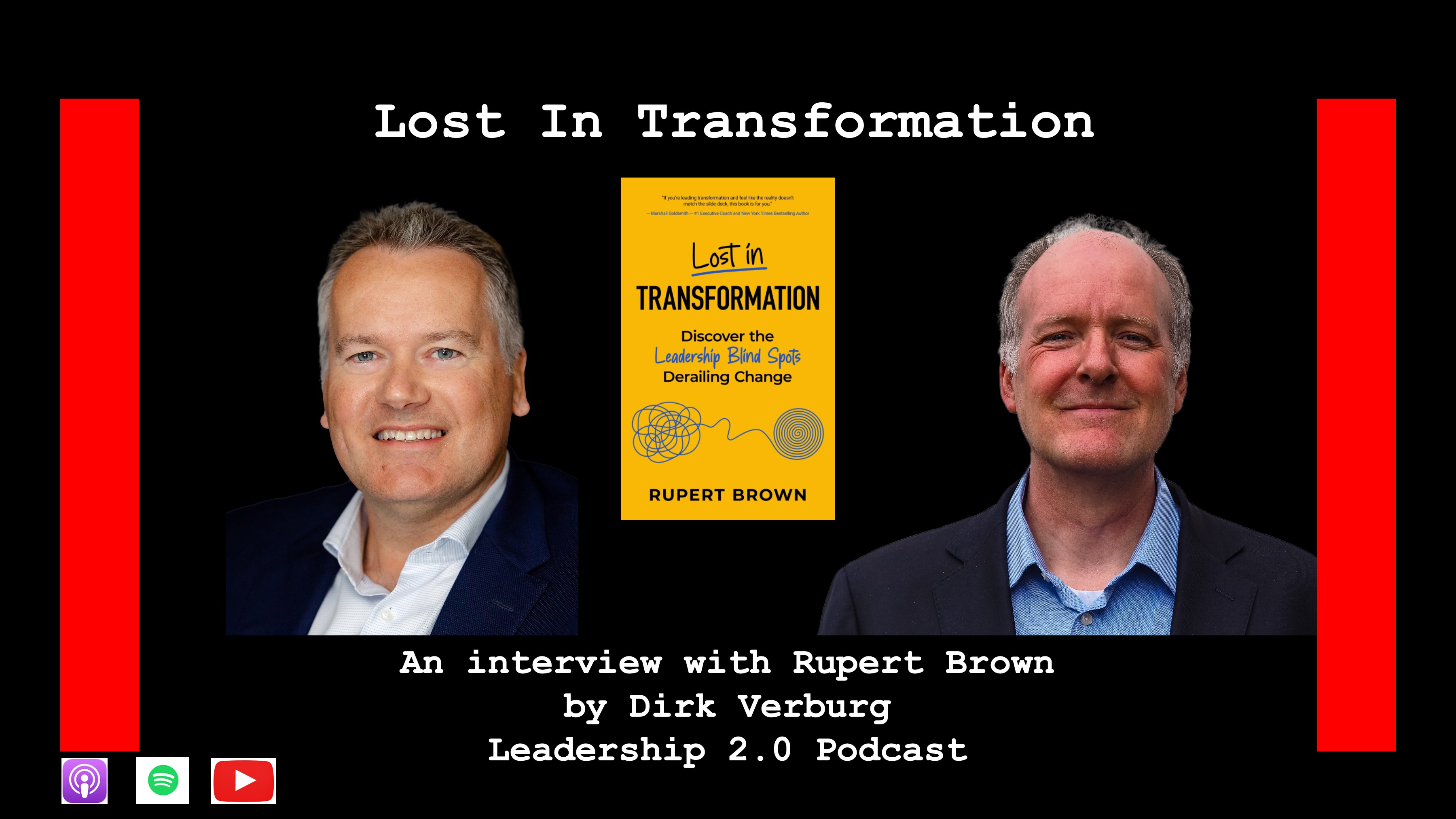
McKinsey’s infamous stat haunts every executive: 70% of all change management efforts fail. Despite decades of expertise, this number seems frozen in time. Why?
In the 35th episode of the Leadership 2.0 podcast, I sat down with a true transformation veteran, Rupert Brown, author of the eye-opening book, ‘Lost in Transformation’.
Rupert is an experienced Chief People Officer and change management specialist with deep expertise in M&A, digital transformation, and turnarounds, having advised giants like Procter & Gamble and Maersk.
This wasn’t just a discussion of tactics; it was a candid, emotionally intelligent discussion on how Transformations can be handled better.
Tune in to learn about:
Why Transformation projects continue to fail
The difference between Change and Transformation
The Bad Reputation of the word ‘Transformation’
Why we still struggle with Change Management
In-Groups and Out-Groups in Change Management Processes
Chief Acceleration Officers
Trust is Energy
Crises as Catalysts for Change
The impact of our Permacrisis on Change Management
Behavioral Skills to cope with the BANI world’
Change Management and AI
If you’re leading a transformation—or struggling to survive one—you can’t afford to miss this. Rupert delivers the hard truths and the practical guidance needed to shift from ‘being Lost’ to becoming ‘the Leader of change’.
► You can watch or listen to a podcast with our conversation on:
We have all been programmed to associate innovation and problem solving with phrases like ‘Thinking Out of the Box’, ‘There are no bad Ideas’, ‘Celebrate Failures’, and ‘Throw Against the Wall and See What Sticks’.
According to Thomas Wedell-Wedellsborg, this leads to ‘Kindergarten innovation’. No one takes these phrases (and the processes they are supposed to guide) seriously, and yet we all pay lip service to them, especially in brainstorm sessions. As Thomas said during the conversation I had with him, this approach might work for people working on a dating app in Silicon Valley, but is not suitable for the vast majority of people and problems in the corporate world.
Therefore, Thomas advocates a focused method and approach to innovation.
► Thomas Wedell-Wedellsborg is the author of What’s Your Problem? (Harvard Business Press, 2020), a book on how to solve the right problems. He is also the co-author (with Paddy Miller) of Innovation as Usual, a Harvard Business Review Press book on the art of driving innovation in regular organizations.
In the 34th episode of the Leadership 2.0 podcast, I interviewed Thomas Wedell-Wedellsborg about innovation, both at an individual, as well as on an organizational level.
► You can watch or listen to a podcast with our conversation on:
➡️ No time to watch or listen to the podcast now? Here is a short summary of our conversation ⤵
Dirk Verburg: Could you explain, using the slow elevator problem, how reframing is a higher-level activity than analysis, and why it is about finding a better problem to solve?
Thomas Wedell-Wedellsborg: The slow elevator problem captures the essence of the method. Tenants complain the elevator is too slow. Many take the problem for granted and jump to solutions, like buying a new elevator or updating the software. They miss that they may be trapped in the wrong problem. The experienced landlord knows it is not about the speed of the elevator; it is about the fact that people hate waiting. To remedy this, they might put up a mirror next to the elevator. When people see a mirror, they forget time. The example shows you should not jump into action immediately or analyze why the elevator is slow. Start by reframing and asking, “Is the speed of the elevator really the problem, or is there something else going on?”. That is the difference between analyzing issues and framing them differently.
Dirk Verburg: Can you give an example of how a frame can be weaponized, and how can we detect if that is the case?
Thomas Wedell-Wedellsborg: The classical illustration is calling an armed group ‘terrorists’ versus ‘freedom fighters’. A corporate example is Uber, which, when criticized for safety incidents, shifted the frame to say, “Uber is the safest place you could be at night,” comparing it to walking or driving yourself. My favorite example is the carbon footprint concept, which a reporter states was developed by the petroleum industry (British Petroleum). This frames the climate problem as one of individual choice rather than systemic solutions, moving the focus from production to usage. This is “ninja-level” framing that gently nudges people away from thinking about corporate responsibility. You detect it by simply noticing the frame—once you understand what framing is, you start to become attuned to it.
Dirk Verburg: You mentioned we often fall in love with problem framings, which prevents us from changing. Could you explain that notion and give an example?
Thomas Wedell-Wedellsborg: We fall in love with problem framings to avoid conflict or fear. For example, if you have a team member not performing, but you are conflict-averse, you might frame the issue as, “They are never going to change anyway,” because your mind wants to avoid the uncomfortable discussion. A closer example is a writer who wants to write a book but secretly fears the result. Instead of confronting the fear, the brain invents obstacles: “I need a new computer, I need a specific editing program before I can get started.” Your brain invents this framing to hold you back from the thing it fears, even though you also want it. The illustrative version is when you get the new computer, and you are still not writing.
Dirk Verburg: Can you explain the importance of examining bright spots by looking at where the problem is not, and perhaps provide an example?
Thomas Wedell-Wedellsborg: It is one of my favorite strategies because it shifts the mood of the conversation. We often focus on the negative, but this strategy reveals we may have already solved the problem once before. The essence of the bright spot strategy is to ask: “Has there ever been a time when this problem was less bad or didn’t happen?”. For example, in retention issues, instead of only focusing on why talented people leave, we should focus on the bright spot: Why do talented people stay? Understanding the culture or specific factors that retain them allows you to double down on those efforts. On a personal level, I write about a couple who fought over their budget. The wife noticed their morning discussions were kind. Their insight was that the fights always happened after 10 PM. They made a rule to only discuss the budget the next morning, when they were better prepared and kinder towards each other.
Dirk Verburg: Why is testing the problem framing with a hard ask, like a down payment, more reliable than simply asking stakeholders if they would like the proposed solution?
Thomas Wedell-Wedellsborg: There are multiple factors. Often, people are polite and will tell you what they think you want to hear or what they genuinely believe to be true. However, the true test comes when they have to pull money out of their wallets. We know from lean startup practice that you must test your price point to ensure people genuinely value the solution. In the book, I share a story of entrepreneurs who pitched their service to co-op boards. The boards were positive until the entrepreneurs asked for a small down payment. Very few paid, and the entrepreneurs knew the project was not viable. They redesigned it for offices, and 18 out of 25 customers signed up immediately. That hard ask confirmed they had found the right problem that people were serious about solving.
Dirk Verburg: Before moving on, do you have any final advice or recommendations for people who want to address problems according to the methodology set out in your book?
Thomas Wedell-Wedellsborg: I have two pieces of advice. First, get into the habit of discussing your problems with other people. Very often we think about our problems alone and only discuss solutions later. The best shortcut to spotting your own blind spots and having your thinking challenged is discussing the issue with at least one other person and asking them to challenge your framing. The second is to try that with AI. AI is powerful if you know to ask it to reframe. If you ask the AI to specifically “challenge and reframe the way you see the problem,” it can act as a very positive problem coach for an emotionally difficult issue.
Dirk Verburg: Why do you believe most ideas are bad ideas, and why shouldn’t leaders celebrate failure when trying to build an innovative culture?
Thomas Wedell-Wedellsborg: We must move past the “kindergarten version of innovation” where we pretend every idea is lovely. Innovation is risky because, as a fact from research, most ideas don’t work out. They may not fit, or they may just be plain bad. If you pretend all ideas are good, you are lying to people, and they know you are playing a game. There is room for “adult innovation,” which means treating people like the intelligent individuals they are and saying, “We know not all ideas are good. We need your help to find the good ones.” The same applies to celebrating failure. When I saw it, it never felt genuine; it felt like leaders were pressed to do it. We should focus on what works and not play these games.
Dirk Verburg: Why is focus so important for innovation when it sounds counterintuitive to the common advice of “think outside the box” and throwing everything at the wall?
Thomas Wedell-Wedellsborg: It is not about mindset; it is about understanding what innovation looks like. The “brainstorm island” approach, where employees are told “all ideas are good,” doesn’t work when time and resources are constrained. The leaders we saw succeeding deliberately pointed their employees in the direction of an important problem. Leaders have the vantage point to understand which issues cost the business money or which customers dislike. Simply telling your people, “Here is an issue, here is how much it matters to the business—now get creative about that,” makes a tremendous difference. The opposite is the suggestion box, which is an “idea graveyard.” Leaders are well-positioned to focus their people’s efforts, providing a massive return on motivation. Creativity is best put in service of something that matters, moving away from blue-sky brainstorming.
Dirk Verburg: Successful innovation is as much about politics as it is about having a great idea. Why is this so, and how can leaders support staff in bringing their ideas safely over the organizational line?
Thomas Wedell-Wedellsborg: Many creative people hate politics, thinking, “I don’t want to play that game.” This is a mistake. If you work in a big organization, politics is part of the context. It can hinder you if you ignore it, or help you if you know how to harness it. Successful innovators understand and embrace this. An example is Jordan Cohen at Pfizer, who focused on the politics to succeed. He had a senior person informally help him navigate the organizational waters, offering simple guidance like: “Don’t take this to procurement; they won’t understand it. Take it to commercial operations; they will see the potential.” Simple guidance from someone who understands the politics can make a huge difference. As a leader, you should do this for your people yourself, or connect them to someone who can help. Ignoring politics does not work.
Dirk Verburg: Do you have any final recommendations for leaders in supporting company-wide innovation that we have not yet discussed?
Thomas Wedell-Wedellsborg: Your first job is to diagnose what is going on. Before jumping into action, study what has and hasn’t happened in the past to understand what is holding you back from delivering better results. Like a doctor, you need to diagnose the patient first: is the issue about funding, politics, or lack of focus? Once you have diagnosed the problem, the second component is to understand what behaviors need to change, not just mindsets. What do leaders, including yourself, need to do differently? The prominent guidelines we discussed are the things that will help you make progress when you know what you actually have to do Monday morning.
► About Thomas Wedell-Wedellsborg
Thomas has worked with managers in nearly all parts of the globe, including China, India, Russia, Singapore, Britain, France and his native country, Denmark. His research has been featured in Harvard Business Review, The Economist, The Sunday Times, The Telegraph, BBC Radio, Bloomberg Businessweek and the Financial Times. His work on innovation led HR Magazine to recognize him as a “Top 20 International Thinker”.
As an executive advisor and keynote speaker, Thomas has addressed organizations such as Cisco, Microsoft, Citigroup, Time Warner, AbbVie, Caterpillar, Amgen, Prudential, Union Pacific, Credit Suisse, Deloitte, the Wall Street Journal, and the United Nations. Thomas holds an MA in Media Science from the University of Copenhagen and an MBA from IESE Business School. Prior to his business career, Thomas served for four years as an officer with the Danish Royal Guards.
► Five nested strategies to reframe your thinking of a problem to make sure you’re solving for the right things:
1. Look outside the frame. What are we missing?
2. Rethink the goal. Is there a better objective to pursue?
3. Examine bright spots. Where is the problem not?
4. Look in the mirror. What is my/our role in creating this problem?
5. Take their perspective. What is their problem?
► 5+1 Key actions leaders who want others to act as innovation architects should take
1. Focus: Direct people to look only for ideas that matter to the business. (Focus beats freedom)
2. Connect: Urge people to connect to new worlds (customers, colleagues, external experts). (Insight comes from the outside)
3. Tweak: Challenge people to test, challenge, and reframe their initial ideas repeatedly. (First ideas are flawed)
4. Select: Guide people to filter and select the best ideas and discard the rest. (Most ideas are bad ideas)
5. Stealthstorm: Help people navigate the internal organizational politics of innovation. (Stealthstorming rules)
6. Persist: Motivate everyone to continue pursuing the other five keystone behaviors. (Creativity is a choice)
‘Guys, I will always have your back’, she said when she became our leader … until she did not.
We all know the stories about how notorious dictators like Joseph Stalin, Mao Zedong, and Saddam Hussein, not only ruled their countries with an iron fist, but had an inner circle of followers that were on the one hand attracted to them and craving for their approval, and on the other hand continuously on their toes, out of fear of falling out of favor and being ‘purged’ as a result. A contemporary example of such a dictator is Kim Jong Un.
Nowadays, we would say these dictators had a ‘dark triad’.
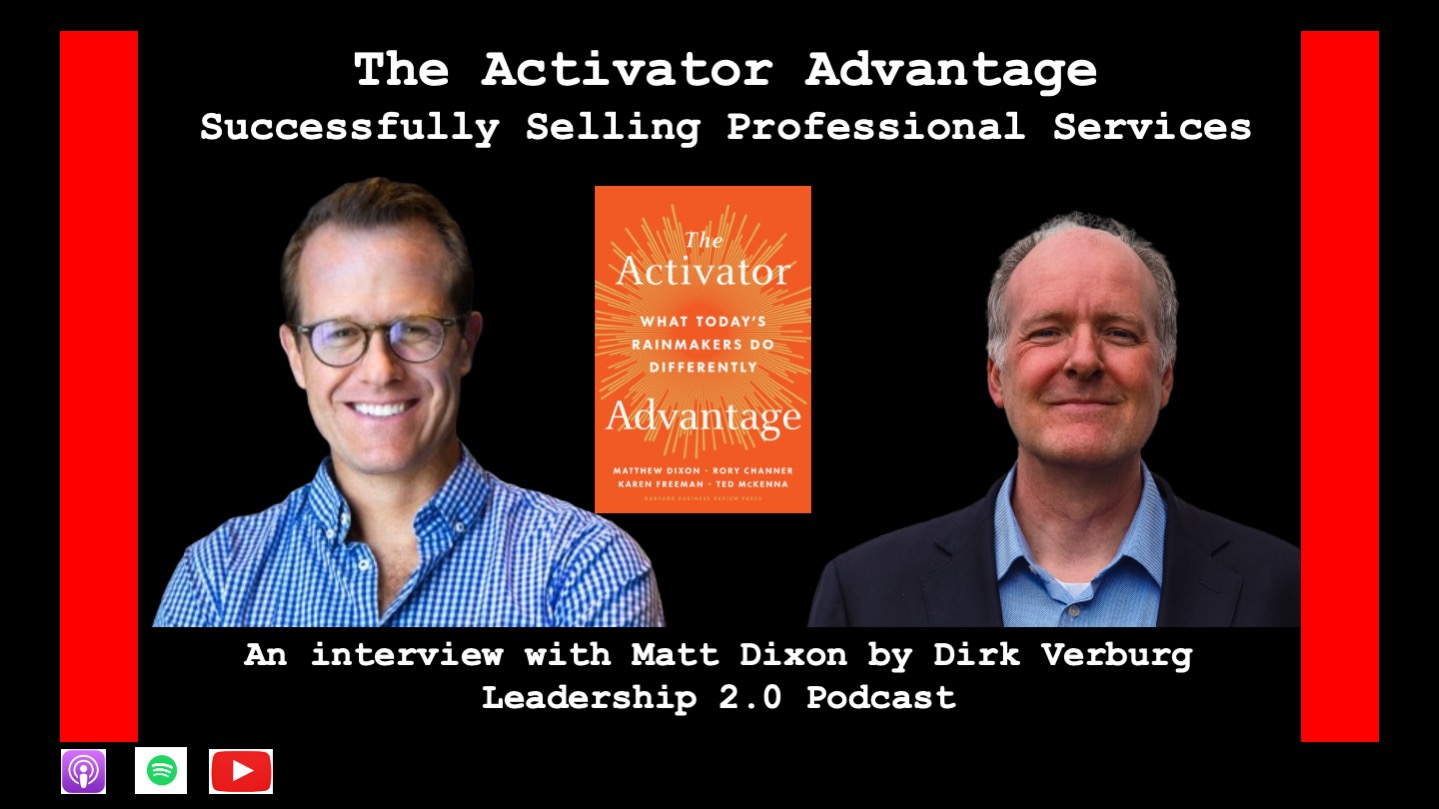
That is how, according to Matt Dixon, many ‘doer-sellers’ experience selling their services.
People do not become management consultants, executive coaches, accountants, lawyers, or engineers to sell. However, for those working in professional service firms or independently, selling is an integral part of their role.
At the same time, professional sales processes are changing. More and more professional services are sourced through RFPs, and buying committees are replacing traditional client relationships. This means that doer-sellers need to change their approach to sales in order to stay relevant.
Based on an extensive quantitative study of nearly three thousand partners across industries such as law, accounting, consulting, investment banking, executive search, and public relations, five distinct seller types within professional service industries were identified; however only one of them, the Activator, consistently drives growth.
For a number of people, the summer holidays represent the mental equivalent of an oasis in a desert: a perfect opportunity to temporarily escape their daily grind and the stress of their work.
Although holidays are a fairly new invention in the history of mankind, and actually only a privilege for a, largely Western Europe-based, minority of the workforce, we ascribe almost magical powers to them. The most important ‘super’ power is the one that suggests that if we take one or more weeks off and label this ‘a holiday’, we are fully relaxed and ready to face our challenges in the workplace again.
Switching off?
However, many people find it hard to mentally switch off from their work during their holidays. Usually, they spend the first days of the holidays decompressing from their work, and they switch back on a couple of days before their work starts again.
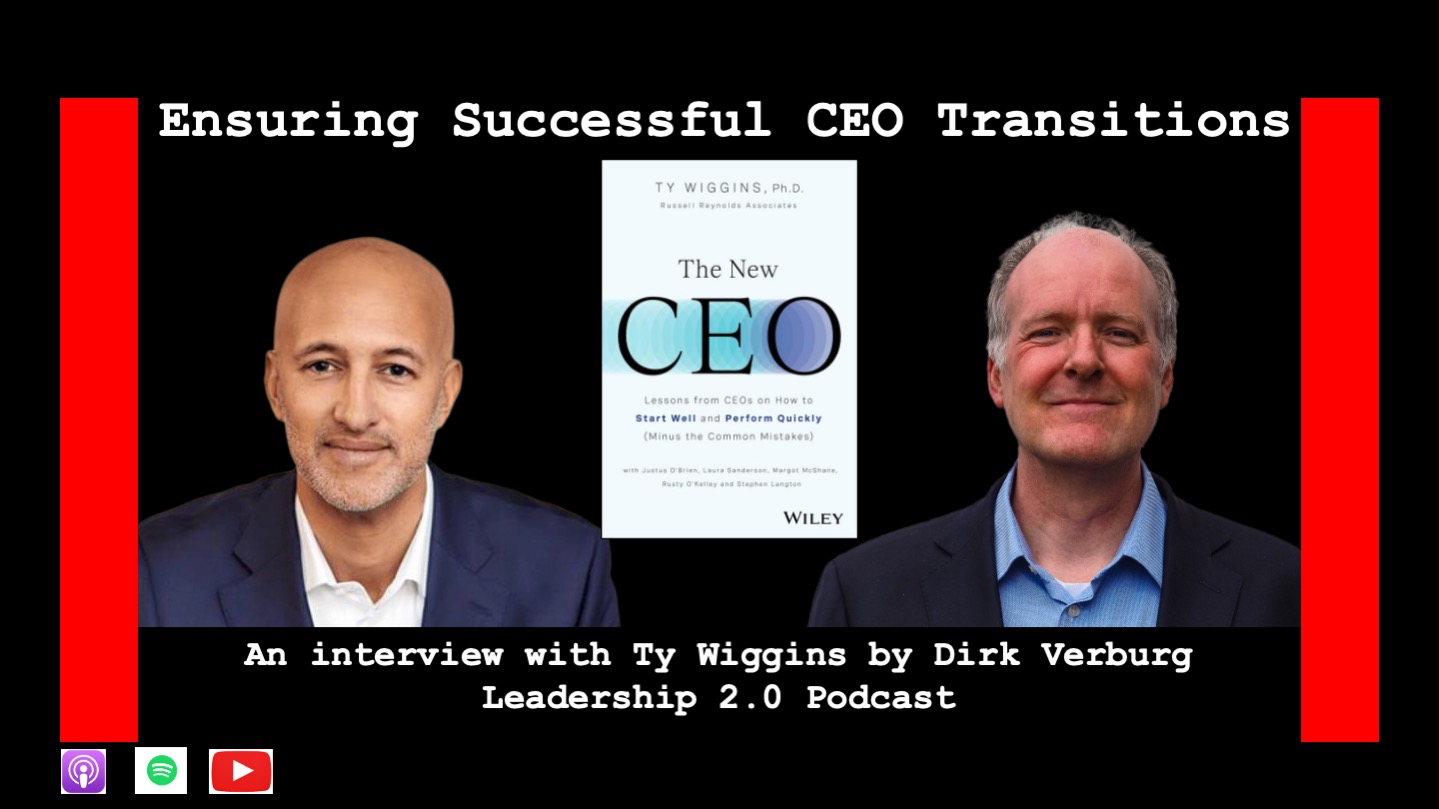
Why do people want to become CEO in the first place?” That was one of the first questions I posed to Ty Wiggins during our interview for the Leadership 2.0 Podcast.
Being a CEO comes with immense responsibility because the CEO is ultimately accountable for the company’s entire trajectory, from strategic wins like M&As to major setbacks like corporate scandals.
Every day, CEOs must make tough decisions on issues that can’t be resolved at lower levels. More often than not, these choices are a matter of picking the ‘least unattractive’ option. These decisions have a significant influence on the lives and financial well-being of all stakeholders. This broad group includes employees, investors (e.g., pension funds), consumers, suppliers, and government bodies.
In the 32nd episode of the Leadership 2.0 podcast, I interview Ty Wiggins of Russell Reynolds about his book ‘The New CEO – Lessons from CEOs on How to Start Well and Perform Quickly (Minus the Common Mistakes)’.
During our conversation, we discussed the following topics:
‘You need to provide recyclable note paper to demonstrate the commitment of our company to sustainability’, I was told when I co-organized a meeting where the vast majority of participants arrived by airplane, most of them on intercontinental flights…
I have always been quite cynical about ESG (Environmental, Social, and Governance) and CSR (Corporate Social Responsibility) initiatives from public companies.
Some of my favorite examples include:
A “Big Oil” company using the “greenness” of suppliers as a selection criterion in the purchasing process
A Financial Services company that directly contributed to the Euro crisis but gave its employees an afternoon off to paint schools in derelict areas to “give back to society”
ESG leaders flying en masse to conferences in New York to discuss how to make the world a more sustainable place
Companies that started “recalibrating” their DEI efforts in the aftermath of the last US presidential election.
The behavior of most pubic companies in the ESG and CSR space always strikes me as ‘Do as I say, not what I do’. Not because the leaders of these companies are inherently ‘evil’ or ‘immoral’, but simply because, when push comes to shove (most often under pressure from their supervisory boards, or activist shareholders), they do not seem to have an alternative but to let Shareholder Value prevail in their decision-making process.
‘People, Planet, and Profit. But the greatest of these is Profit…’
🎙️ ‘A big conversation with big questions’, that is how Sander Tideman characterized the conversation I had with him about ESG and CSR.
Sander is a researcher, author, entrepreneur and executive coach in sustainable leadership. He works with leaders to build flourishing organizations equipped to address the unprecedented challenges of today. He has worked for and consulted with leading organizations on three continents, and is publicly known for his work with top leaders in, for instance, Unilever.
In the 31th episode of the Leadership 2.0 podcast, I interview Sander about the question if and how pubic companies and our society should adopt ESG and CSR concepts.
During our conversation, we discussed the following topics:
Many high performers are inclined to take on too much responsibility. These people are often a dream for the companies they work for: in addition to being dedicated and hardworking, they are always willing to go the extra mile. However, as a result, a number of them experience serious work-life balance issues, and some even suffer from mental and/or physical health problems.
These issues do not stem from the content of their work; they all like their work. Instead, these issues stem from the fact that they assume responsibility for elements in their work that they cannot control.
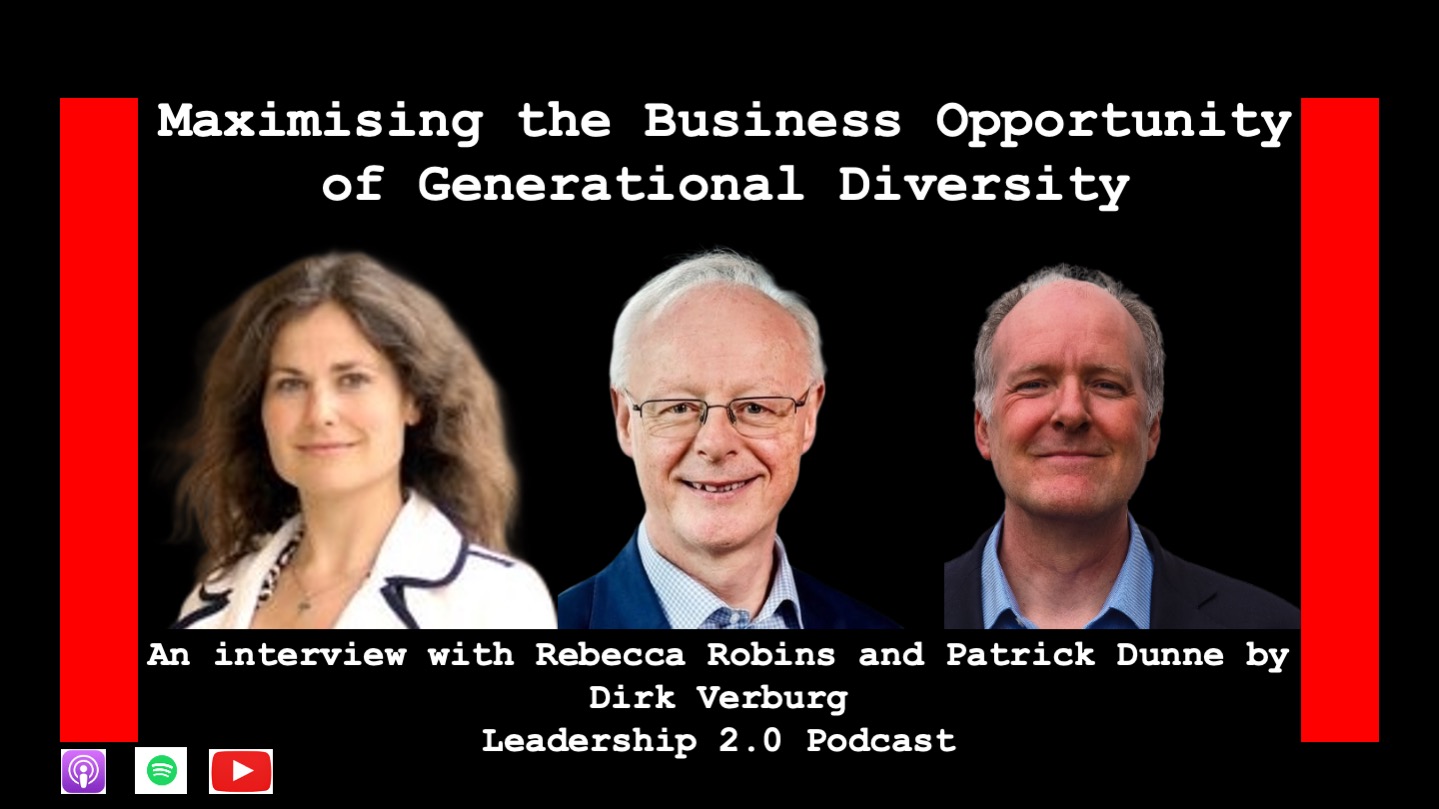
🎙️ In the 30th episode of the Leadership 2.0 podcast, I interview Rebecca Robins CMgr CCMI and Patrick Dunne about ‘Maximising the business opportunity of generational diversity’
During our conversation, we discussed the following topics:
🚫 Many organizations mistakenly relegate Learning & Development (L&D) to a “nice-to-have” status. It’s seen as something every HR organization needs to have (if only for the optics), but often the prevailing attitude is that, while great L&D is a pleasant surprise, if it falls short, there’s no serious harm done to the organization.
❗This is often reflected in bland L&D offerings, which, more often than not, are so generic, that they fail to address the strategic issues organizations need to address
⁉️ However, what would happen if organizations truly would treat Learning & Development as a strategic instrument?
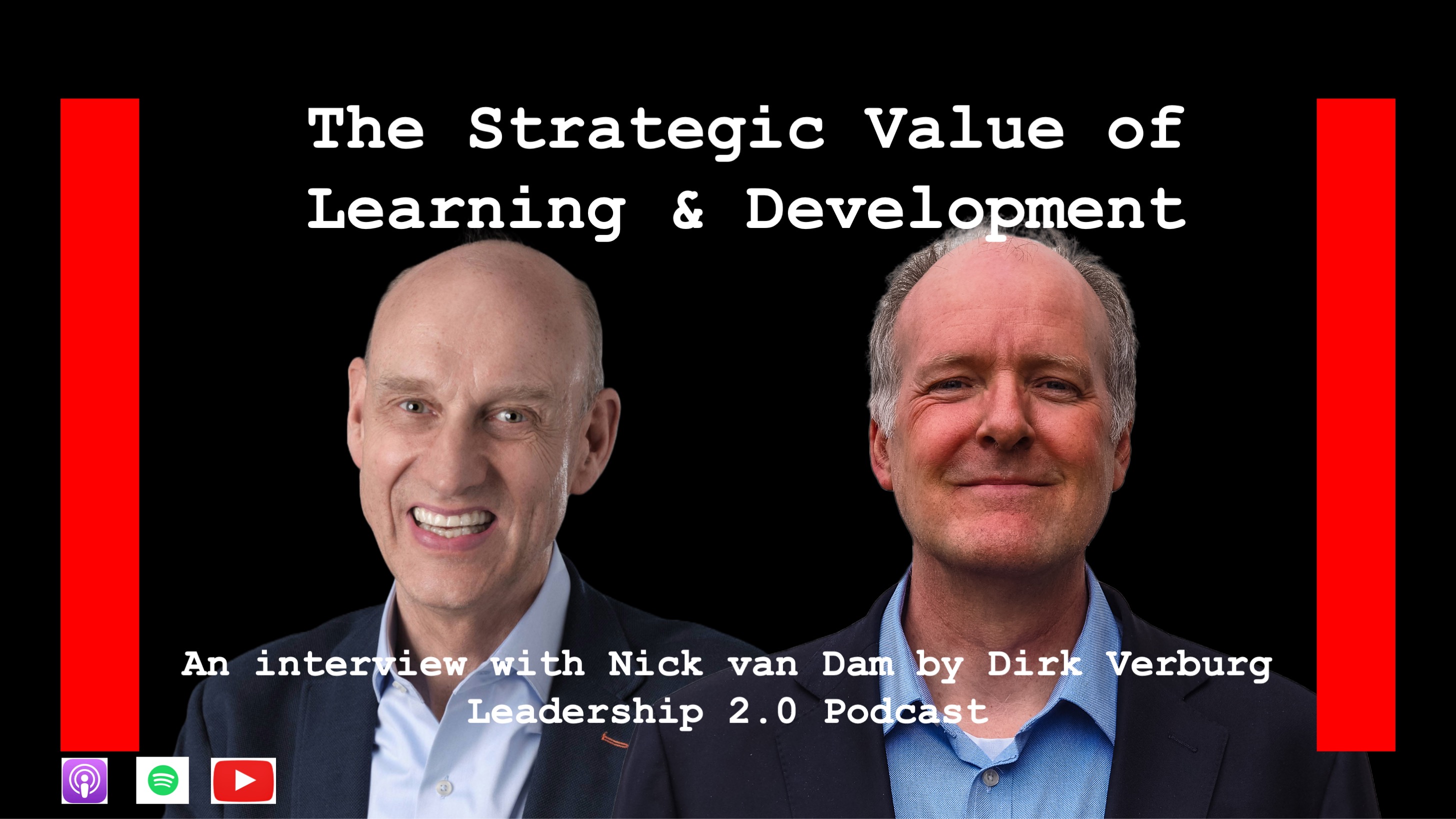
🎙️ In the 29th episode of the Leadership 2.0 podcast, I interview Nick van Dam about ‘The Strategic Value of Learning & Development’. Nick van Dam is an internationally recognized thought leader, advisor, executive coach, researcher, facilitator, and best-selling (co-) author of more than 29 books on Leadership, Organizational Behavior, and Corporate Learning & Talent Management.
► During our conversation, we discussed the following topics:
We are always informed by our intuition when it comes to making decisions. More often than not our intuition is ‘right’, but there are also situations when we should definitely not rely on our intuition.
Being able to determine when to use our intuition and when not, often means the difference between our success and failure.
In my second interview with Professor Eugene Sadler-Smith for the Leadership 2.0 Podcast, we discussed the role of intuition in decision-making processes.
During our conversation, we touched on the following topics:
Many people in the workplace wrestle with combining their ethical and spiritual convictions on the one hand, with what they feel is required of them to progress their careers, or simply to stay in their roles, on the other.
For people who want to address this tension, ‘Heroic Leadership – Best Practices from a 450-Year-Old Company That Changed the World’ by Chris Lowney. ‘ will be a great read!
Chris Lowney, is a one-time Jesuit seminarian, who currently chairs the board of CommonSpirit Health, America’s largest not-for-profit healthcare system with 140 hospitals and more than 150,000 employees. Previously, he served as a Managing Director of J.P. Morgan & Co. in Tokyo, Singapore, London and New York.
In the 28th episode of the Leadership 2.0 podcast, I interview Chris Lowney about Heroic Leadership. During our conversation, we discussed the following topics:
Most of us are acutely aware of the gap between how organizations aspire to operate and the everyday reality of working within them.
This discrepancy often has a negative impact on the motivation and well-being of employees, ranging from a decrease in employee engagement, to mental health issues,
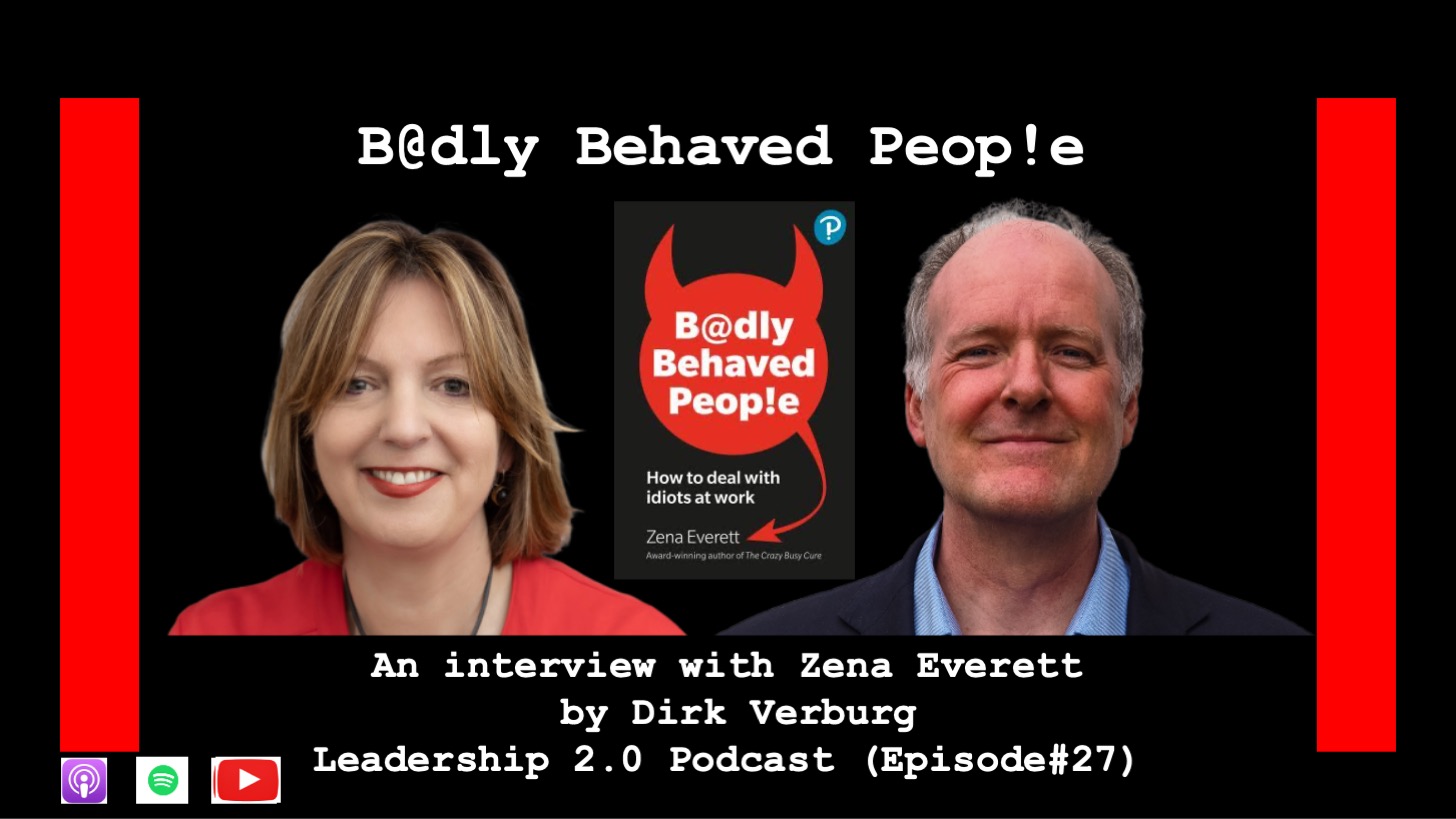
In her book ‘Badly Behaved People’, my fellow executive coach Zena Everett describes a number of real-world cases about how this discrepancy can manifest itself, and, perhaps more importantly, how we can address them
What I particularly like about about this book is how Zena makes complex psychological concepts (for instance, Transactional Analysis) accessible without oversimplifying them, and demonstrates how they can be applied in the workplace.
In our conversation about her book, Zena and I discussed the following topics:
For those not familiar with the Myers-Briggs Type Indicator (MBTI), the MBTI has been developed by Katherine Briggs (1875-1968) and her daughter Isabel Myers (1897-1980) on the basis of Jung’s Personality (‘Type’) Theory. It enables the categorization of individual personalities in 4 dimensions, resulting in the (well-known) 16 different ‘types’ (e.g., ‘ISTJ’ or ‘ENFP’).
Function
Preference
Preference
Energy
I – Introversion (ideas)
E – Extroversion (people)
Perception
S – Sensing (data)
N – Intuition (intuition)
Judgment
T – Thinking
F – Feeling
Attitude towards outside world
J – Judging
P – Perceiving
Until a decade ago, the MBTI was one of the most popular personality assessment instruments, and, although it is far less popular today than it used to be, it is still extensively (ab)used.
For this reason, I was very curious to read the book. Unfortunately, I found it a mixed bag.
🎙️ Even though we have a vast array of change management theories and methodologies at our disposal (John Kotter, Kurt Lewin, Elisabeth Kübler-Ross, William Bridges, ADKAR, etc.), it still proves to be very hard for us as leaders and consultants to implement real, sustainable change (transformation).
🚫 The harsh reality is that most change projects fail (the famous 70% of McKinsey), or end with a superficial victory declaration, after which the organization often falls back to ‘the way we DID things here’.
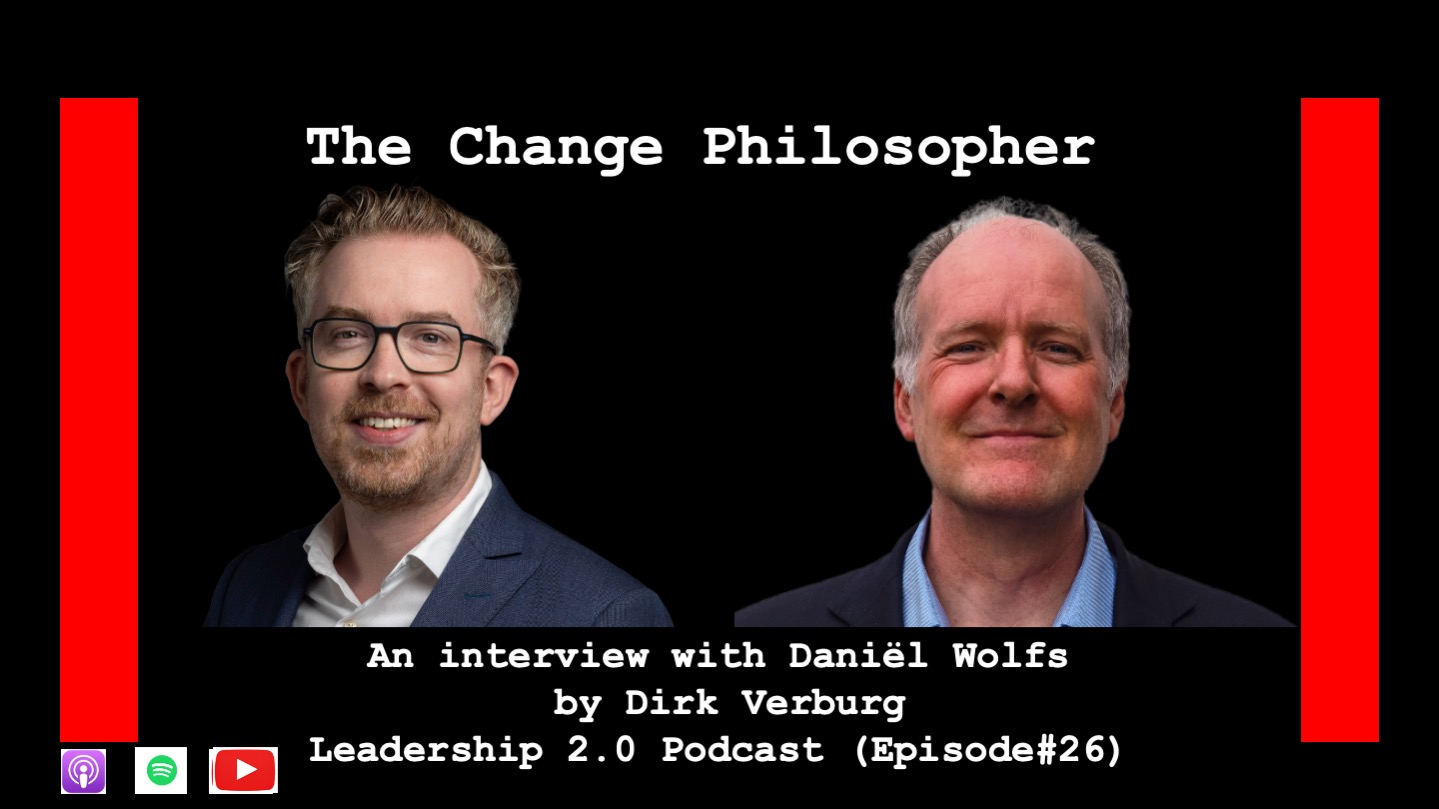
⁉️ ‘Why is that?’ That very question drove Daniël Wolfs, experienced change consultant and co-founder of The Change Studio (Netherlands), to write his thought-provoking book ‘De Veranderfilosoof’ (The Change Philosopher) on how we can approach transformation in a deeper, more human, and more sustainable way.’
► In our conversation about this book, we discussed the following topics:
Most leaders leave the composition and agendas of their leadership teams to chance. This is a waste of time, energy, and focus.
Almost all senior leaders choose the members of their leadership teams almost by default: all their direct reports, as well as a selection of participants from staffing and back-office roles ‘in the matrix’ (Finance, HR, IT, Regulatory, Affairs, Communications, Quality Assurance, etc.).
The advantages of composing leadership teams in this way are that:
✅ Representatives of all functions are aware of every topic that is discussed (information and awareness)
✅ Participants from staffing and back-office functions feel they (and their functions) are taken seriously as true ‘business partners’
✅ The leader avoids difficult discussions about the composition of their leadership team
Although this sounds great, this typically results in:
Most organizations rely on complex tools, processes, and external consultants to analyze and reshape their culture.
When I heard Manuela Staub on a seminar describing the pragmatic, inclusive, and effective way the leadership team at Zurich Airport Ltd approached their culture change program in a DYI mode (in the midst of the COVID19 pandemic!), using megatrends as a driver, I immediately knew I wanted to interview her for my Leadership 2.0 podcast…
In our conversation, we discussed the following topics:
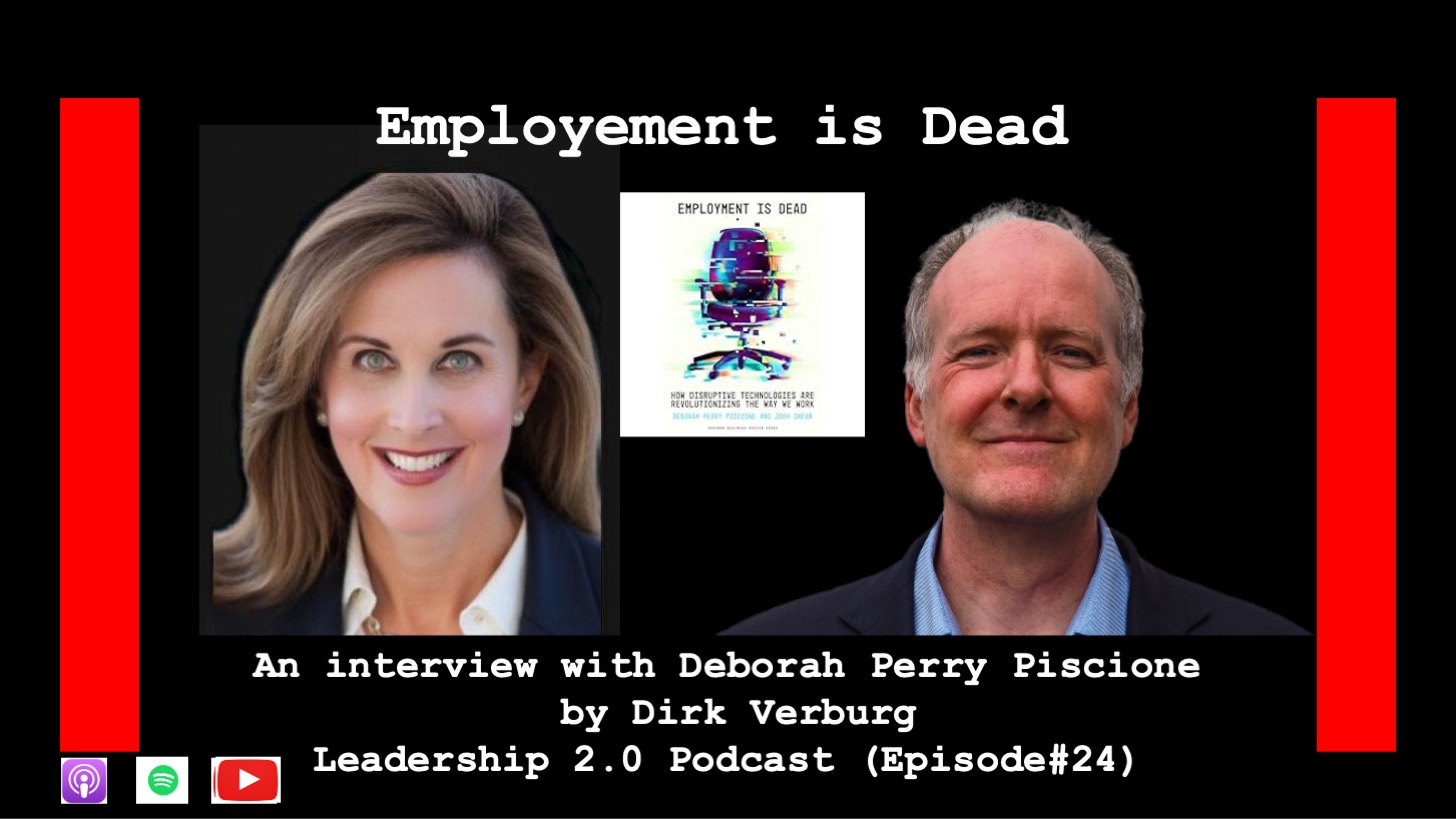
Earlier this week, one of the most important business books on the Future of Work was published by Harvard Business Review Press: ‘Employment Is Dead: How Disruptive Technologies Are Revolutionizing the Way We Work’ by Deborah Perry Piscione and Josh Drean.
The central theme of this book is that traditional employment models are becoming outdated due to the evolving needs and expectations of the modern workforce, in combination with, and enabled by, disruptive technologies.
This will lead to the end of the traditional employment model, as well as the traditional form of companies, as we know them today.
Monday, just hours before the book was released, I had the chance to interview Deborah Perry Piscione for my Leadership 2.0 Podcast.
► In our conversation, we touched on the following topics:
Ralph Schonenbach is a serial entrepreneur whose work centers around developing and nurturing relationships. www.trymeerkat.ai is his latest start-up, and in this episode of the Leadership 2.0 podcast, I talk with Ralph about this venture, as well as his book ‘Relationships matter’, which was recently published.
In our conversation, we touched on the following topics:
The image of the banking industry has been severely tarnished by the financial crisis (2007-2008), which led to increasing regulatory and compliance demands. At the same time, the industry is experiencing emerging competition from FinTechs, evolving business models, and disruptive technologies.
In light of these challenges, I recently spoke with Ralph Hamers, to explore his views on what effective leadership in the banking sector entails.
In our conversation, we touched on the following topics:
In many recruitment processes, human beings are reduced to commodities, and human dignity has become an afterthought.
More often than not, recruitment has become a volume-driven exercise, where metrics like ‘time to fill’ have replaced the craftsmanship essential for identifying the best candidate for the role. As a result, candidates often find these processes unsatisfactory, as their potential unique contributions and value to organizations are not adequately recognized.
FOUND, a Swiss-based start-up company, wants to disrupt this traditional approach to recruitment. I recently interviewed Victor Akwunwa, the Chief Sales Officer of FOUND for my Leadership 2.0 podcast.
During our conversation, we discussed the following topics:
It is tempting for CEOs to try to appease their shareholders by reducing corporate overhead costs. It seems to be the corporate equivalent of a ‘Get Out of Jail Free card’ in Monopoly: it is free and can get a CEO out of a tricky situation.
The reason is that everyone loves the notion of lowering corporate overhead costs, and especially reducing the number of people in corporate roles.
Whereas the supervisory board occasionally might call for caution, you will never hear shareholders or analysts complain and Business Unit leaders usually love the perspective of lower corporate charges and more independence. Most often, corporate functions cannot count on a lot of sympathy from the rest of the workforce either. They are seen as overpaid ‘bureaucrats’, ‘paper pushers’, and ‘PowerPoint wizards’ in ‘back-office’ roles.
Reducing overhead is also not very difficult. Usually, there are plenty of young runners-up in large organizations dying to prove themselves to corporate leaders. If not, consulting firms are happy to line up for beauty parades to show off their capabilities in this area.
It is also not that hard – at least, I have never seen a corporate cost savings initiative not achieving its short-term financial objectives.
So eliminating or reducing these corporate functions is a great idea, right?
Unfortunately, it depends…
Eliminating or reducing corporate functions poses risks for CEOs in three areas:
There are some companies I deeply admire, and On, the Swiss sports and apparel brand is definitely one of them! Not only do they make amazing products and have an extremely powerful brand, they also have a unique company culture.
For this reason, I was thrilled to sit down with Alessandra Del Pino, Head of Engagement & Talent Growth at On, to discuss the company culture of On, or, as Alessandra describes it, their ‘secret sauce’.
During our conversation, we covered the following topics:
I coach several people who are looking for another role, and it seems that the user satisfaction with the average recruitment process is even worse than in 2018, when I wrote a blog post with the title: ‘Recruiters should stop spraying and praying’.
In this post I wrote ‘We should therefore not be surprised if, in the near future, recruitment will become an AI-fuelled war between recruiting bots used by corporate recruiters, and application bots used by candidates.’
Today it looks like my predictions have become reality.
A ’sub-optimal’ candidate experience
What are the frustrations on the supply side of the market i.e. from the candidates? Here are the things I hear from my coachees:
‘Everyone who wins nowadays is challenging the Shareholder Value Maximization doctrine’
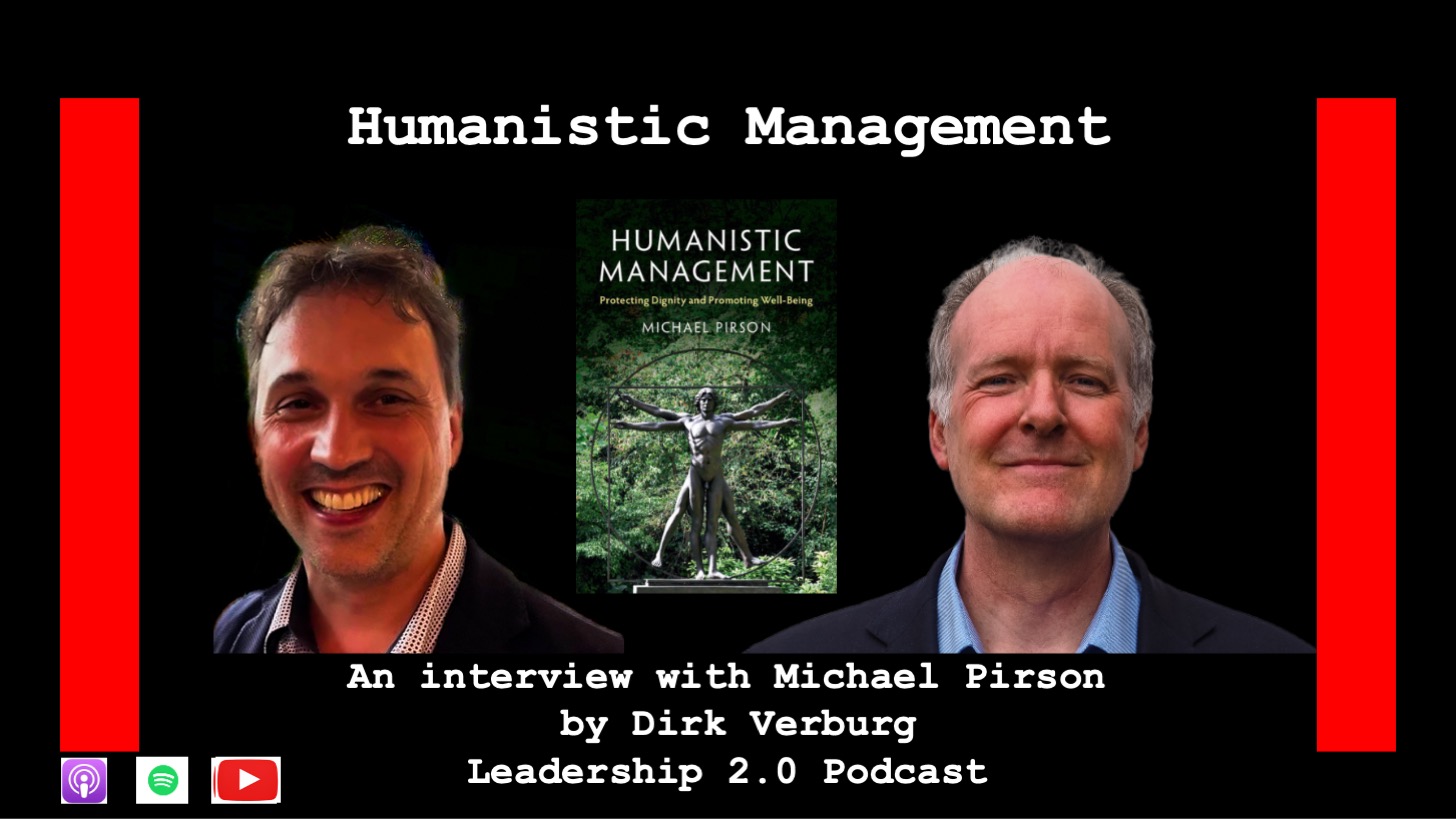
This is just one of the powerful and thought-provoking statements Professor Michael Pirson (Fordham University – Gabelli School of Business) made when I interviewed him about ‘Humanistic Management’.
In the last decades, the shortcomings of the neo-liberal economic order in our society have become clearer than ever (e.g. the credit crunch, climate change, and wars). An increasing number of people want to move away from a system that commoditizes human beings, and the natural environment in which they live.
They seek, amongst others, dignity, a sense of purpose, and attention to well-being, instead of material prosperity only.
Humanistic Management is a relatively young academic movement that seeks to create a more balanced relationship between those things that can be exchanged on markets and those that are not but make life worthwhile.
Michael Pirson is an active member of this movement, and in this episode of the Leadership 2.0 podcast, I discuss with him
1️⃣ What Humanistic Management is 2️⃣ How Michael discovered Humanistic Management 3️⃣ What we as mankind can learn from the Covid 19 Pandemic 4️⃣ Measuring Wealth versus Wellbeing 5️⃣ Will Shareholder Value (Economistic Management) not always prevail? 6️⃣ Is Humanistic Management industry agnostic? 7️⃣ Resources on Humanistic Management 8️⃣ Final Thoughts
👇 You can watch or listen to this podcast episode on
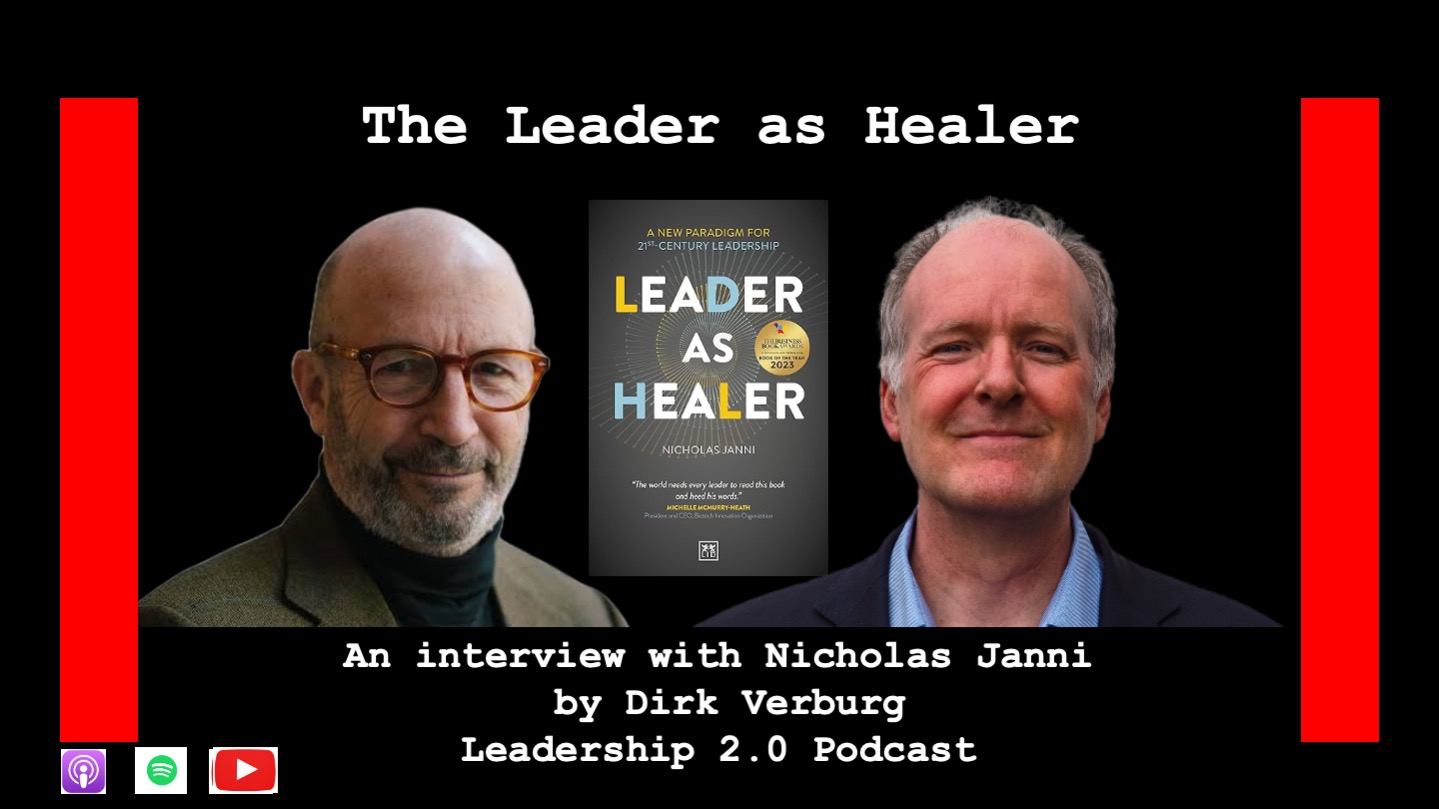
‘A transformational read that every leader of today needs’.
These were the words Head Judge, Jacq Burns used when she announced that ‘Leader As Healer’, written by Nicholas Janni was selected as the overall winner for the 2023 Business Book Awards.
In his book, Nicolas Janni argues that we need a new leadership model to address the challenges our society faces.
Our current leadership model is one where we see great leaders as warriors ‘on the battlefield of relentless competition’, who drive action, pursue instrumental (shareholder value related) goals, and maintain transactional relationships.
Instead, Nicholas Janni pleads for leaders who are empathetic, intuitive, present, skilled in mindfulness and deep listening, and who can inspire colleagues to engage and collaborate.
In this episode of the Leadership 2.0 podcast, I discuss with Nicholas:
I recently heard an HR leader proudly explain her rigorous selection process for a basic leadership program aimed at newly appointed people leaders. She first pre-selected potential participants based on their performance ratings, then personally interviewed all the top performers. Those who passed were sent by her for a final interview with a senior business leader, and only the successful candidates were allowed to attend the training.
While I appreciated her personal involvement and the engagement of the business leader in the selection process, I do not think this is the right approach.
Twenty years ago, in 2004, Shell was hit by the reserves scandal. In the midst of this crisis, the board asked Jeroen van der Veer to become CEO and navigate the company out of this crisis. Recently Jeroen wrote a book titled ‘Van A near B – Lessen in leiderschap’ (‘From A to B – Lessons in Leadership’), in which he reflects on these, and other experiences during his long career (which also included for instance being the chairman of the supervisory board of ING during the financial crisis).
In this episode of the Leadership 2.0 podcast, I discuss with Jeroen:
In my previous post about MBTI I stressed the importance to review the outcomes of this personality assessment with clients, to make sure they understand the outcomes and recognize themselves in their type. However, often practitioners become stuck in these reviews if clients do not indicate their preferred behaviors. Although it is tempting for practitioners to try to shoehorn clients into a specific type, doing so is likely the least productive and helpful approach.
With the publication of his bestseller ‘HR Champions’ in 1997, Dave Ulrich signaled the potential for HR functions to develop themselves from ‘administrative support functions’ into strategic and mission-critical ones (my words—not Dave’s!).
The book served as a catalyst for a vast number of HR organizations to critically review their roles, activity portfolios and structures. As a result, many organizations defined HR strategies, and initiated HR transformation projects to realize these.
All in all, Dave published over 200 articles and book chapters and over 30 books. He edited Human Resource Management 1990-1999, served on the editorial board of 4 other journals and on the Board of Directors for Herman Miller (16 years), has spoken to large audiences in 90 countries; performed workshops for over half of the Fortune 200; coached successful business leaders, and is a Distinguished Fellow in the National Academy of Human Resources.
During our conversation, Dave and I discussed the following topics:
I am an avid consumer of business books and love books about corporate history (e.g. ‘The Smartest Guys in the Room’ about ENRON by Bethany McLean and Peter Elkind or ‘Losing the Signal’ about Blackberry by Jacquie McNish and Sean Silcoff – to mention two of my favorites!).
Last week I read ‘Battle for the Bird’ by Kurt Wagner about the takeover of Twitter by Elon Musk.
If you want to know
Why Twitter has always been struggling with sufficiently monetizing its business model and why it might be hard for Elon Musk to change this,
Why content moderation is incredibly difficult for social media companies (defining and interpreting criteria), why they can never get it right for everyone all the time, which massive and contradictory pressures they face from all kinds of different interest groups, and
How ‘casual’ billion-dollar business decisions are sometimes taken in the investment community,
then I can highly recommend this book to you!
Kurt Wagner’s writing style is quick-paced and witty (but not too!). Cherry on the cake are some new personal anecdotes about Elon Musk (e.g. taking his mother with him to business meetings, and taking his son ‘X’ with a nanny in tow during the time he stayed in Twitter’s offices during the first period after the takeover).
So, if you have not packed your books for the holidays yet – consider taking this one with you! If you have been on holiday already, I hope you enjoyed it, and don’t worry: this books remains a great read!
Culture change is firmly back on the map! More and more companies are starting to reflect (again) what their culture is and what it should be.
More often than not, such a culture review is initiated by the CEO. The reason is that CEOs have a unique position in organizations: they often see both the current performance of the organization, as well as its unrealized potential. In case CEOs do not see this unrealized potential themselves, their Supervisory Boards, analysts and (activist) shareholders will point it out to them quickly enough.
‘I defy anybody to be energized by most appraisal systems I have seen in my career’ – Sally Bibb
As HR professionals and line managers (present company included!), we tend to take the strengths of our staff for granted and focus most of our attention on their ‘development areas’ (a euphemism for weaknesses).
The question is, however, how effective this is, and which business opportunities we miss, by following this approach.
Sally Bibb, partner at PA Consulting, leader and author in the field of strengths-based approaches to people and organisations, proposes a radically different approach and advocates focusing on strengths instead of weaknesses.
To find out what Strength Management is, and how we can implement it, I interviewed her for my Leadership 2.0 podcast.
During our conversation, Sally and I discussed the following topics:
0️⃣1️⃣ What Strength Management is
0️⃣2️⃣ How Sally became interested in the topic
0️⃣3️⃣ Is Strength Management incompatible with a Growth Mindset?
0️⃣4️⃣ Why most HR professionals remain focused on Development Areas
0️⃣5️⃣ Implementing Strength Management in HR Processes
0️⃣6️⃣ How can appraisals be improved?
0️⃣7️⃣ Is strength management a generational phenomenon?
0️⃣8️⃣ Will AI support Strength Management?
0️⃣9️⃣ Issues Sally is asked to address by her clients
➡️ No time to watch or listen to podcast now? Here is a short summary of our conversation ⤵
Dirk Verburg: I was classically trained as a line manager to focus on development areas to create “all-round” people. What are the advantages of focusing on a person’s strengths instead?
Sally Bibb: A strength is something you are naturally drawn to, that energizes you, and that you’re good at. Twenty years of neurobiological evidence shows that when people use their strengths, they are happier, more resilient, and perform better. Football managers, for example, know each player’s strengths and don’t try to make them all-rounders. While a team can be good at everything, an individual cannot. Focusing on strengths is not about ignoring weaknesses, but about intentionally using what you’re great at. Spending too much time on things you’re not good at will cause your motivation to drop, and your performance will be good at best—not great.
Dirk Verburg: Where does your personal interest in strengths come from? Did you have an experience that inspired you to focus on this topic?
Sally Bibb: My interest stems from an early experience in my career. I was promoted from a job I loved, which involved crewing ships, to one that required doing research for trade union negotiations. I was good at the first job because it leveraged my strengths in connecting with people and problem-solving. The second job, however, was a poor fit. I felt a loss of confidence and didn’t understand why until years later at a conference. A Harvard professor spoke about the emerging field of positive psychology and focusing on what’s right with people. That was a lightbulb moment for me. I realized there was nothing wrong with me; I was just a square peg in a round hole. This experience inspired me to study what makes great salespeople so successful, which was my first foray into applying strengths to the workplace.
Dirk Verburg: How do you see the relationship between strengths management and the desire to adopt a “growth mindset”? Are they contradictory, or do they strengthen each other?
Sally Bibb: I think they are highly complementary. A growth mindset—the belief that you can learn and grow—is important whether you are playing to your strengths or working on something you’re not good at. The growth mindset is not about being good at everything, but about being open to learning. For example, I worked with an executive who had never been in an innovative environment before. By having a growth mindset, he discovered a new strength in “joining the dots” and making connections. Had he not been open to this, he might have boxed himself in, assuming he wasn’t an innovative person. A growth mindset helps you discover new strengths and apply existing ones to new challenges.
Dirk Verburg: Why do you think many people in HR and talent management still focus so much on areas of development, even though the thinking has moved on?
Sally Bibb: I think a lot of it is organizational inertia. Organizations tend to do what they’ve always done, like using traditional competency frameworks and appraisal systems, even when they know these systems don’t energize people or get the best results. The organizations I work with that adopt a strengths-based approach do so because they want different outcomes, like improved performance and morale. Adopting this approach is a gradual process that requires a leader with a clear focus and determination to change things. I hope that in the next ten years, a strengths-based approach will be the norm, with new generations of leaders recognizing the benefits of this way of thinking.
Dirk Verburg: How would you practically conduct a strengths-based interview?
Sally Bibb: First, you have to know what strengths are needed for the role. For example, we studied the strengths of exemplary midwives in charge of labor wards. We found that the best ones share certain strengths beyond their clinical competencies, like a strong sense of doing the right thing. In a strengths-based interview, you ask candidates about those specific strengths. For example, “Tell me about a time when you had to ensure the right thing was done.” If it is a genuine strength, you can see their face light up and they can easily provide examples. In contrast, if you don’t know what “great” looks like for that role, a strengths interview is difficult to do effectively. The key is to match the candidate’s natural inclinations with the specific strengths that you know are critical for success in that job.
Dirk Verburg: What can we do to make classic performance interviews more meaningful by applying a strengths-based approach?
Sally Bibb: A strengths-based performance discussion should be an ongoing conversation throughout the year, not just a one-off event. It should focus on three things: the strengths you’re using regularly, the strengths you have that you might not be using, and the “weaknesses that matter”—the ones that are really getting in your way. Instead of criticizing, you can have a collaborative conversation about how to mitigate those weaknesses. This could involve using your strengths to compensate, getting help from colleagues, or finding ways to avoid the task altogether. This approach makes people feel relaxed and authentic because they don’t have to pretend to be perfect. The conversation becomes focused on potential and how to make the person even better at what they already do well.
Dirk Verburg: I have the impression that focusing on strengths comes more naturally to younger generations than to baby boomers or millennials. Would you agree with that observation?
Sally Bibb: That’s an interesting observation, and I’m not aware of any specific research on it. However, people in their 20s and 30s were raised in an era of “positive parenting” and a greater focus on self-esteem. They are often less modest and more willing to talk about their strengths. In contrast, older generations can be more modest. This is also culturally influenced. In the United States, people are generally more comfortable discussing their strengths, whereas in the UK and Switzerland, modesty can be a national sport. I see modesty as being a bit overrated, as not talking about your strengths can inhibit your ability to serve others and be overlooked for opportunities.
Dirk Verburg: You work with very big clients. What are the starting points for you in those conversations when a client wants to think about a strengths-based approach?
Sally Bibb: Clients rarely ask for a strengths-based approach directly. They come with business problems like: “We need to improve our performance,” “We need to improve our safety,” or “We need to improve staff morale and engagement.” These are the real-world problems that a strengths-based approach can solve. When clients see the impact of this approach, they like it because it connects with people and makes common sense. It’s not just a psychometric tool; it translates into hard returns and measurable outcomes. The private equity sector, for example, has been a leader in this thinking because they know that having the right combination of strengths in a leadership team is critical to a successful investment.
Dirk Verburg: We’ve discussed a lot of elements around strengths. Is there anything we haven’t touched on that you would like to mention?
Sally Bibb: There’s just one thing that’s very dear to my heart. From women in prison to senior executives, people often don’t really know their strengths or their value. The strengths-based approach makes people feel good about themselves and the contribution they make. This is the best starting point for helping people realize their potential. If we could bring this thinking into the public and political arena, there would be less burnout, less imposter syndrome, and more satisfaction and engagement at work. It’s a win-win-win for individuals, employers, and society as a whole.
▶ About Sally Bibb
She started her career working for BT International and then moved into an international role at The Economist Group before founding the strengths consultancy Engaging Minds in 2012. In 2021, she joined PA Consulting as a partner to advance her vision of bringing strengths to many more employers worldwide.
In this role, she leads strengths-based organizational change work in Europe, the USA, and Asia, and has built a track record of achieving transformational results for a number of high-profile clients in both the private, as well as in the public sector.
Sally has an MSc in organizational change from the University of Surrey and has (co-)authored eight books. A full list can be found here: https://sallybibb.com/my-books/
She is a fellow of the RSA (Royal Society of Arts) and a member of the steering committee of The Daedalus Trust, a charity founded by Lord David Owen to promote research into hubris syndrome in business.
Although his research and examples largely originate from organizations in the private and public sector, in his latest book he also describes a special kind of organization that does not fit into one of these categories: ‘The Community Ship’.
According to Mintzberg, Community Ships have the following characteristics:
Their culture forces the community to pull together
Members of the community are considered to be more than employees
The community is tightly knit and operates differently from other organizations in their environment (like a ship at sea).
The community closes ranks to protect itself from influences from the outside world, or use its position for evangelism (‘to launch missives at whatever they want to change on shore’.)
Congregational church communities as Community Ships
In this post I apply Mintzberg’s concept of ‘Community Ships’ to congregational church communities.
Besides the fact that these failures often have a traumatic impact on the individuals involved, the costs for the organisations are huge. Not only in terms of image and hiring costs but, more importantly, in terms of opportunity costs.
To find out why leadership transitions prove to be so hard, and what companies and individuals can do about it, I interviewed Michael Watkins for my Leadership 2.0 podcast.
‘We live in a world of organizations – and we do not understand them’
This is one of the statements Henry Mintzberg, one of the leading thinkers in the field of Management, made when I interviewed him for my Leadership 2.0 Podcast about his latest book ‘Understanding Organizations…Finally’.
During our conversation, we discussed the following topics:
0️⃣1️⃣ The importance for organizations to get their structure ‘right’ 0️⃣2️⃣ The evolvement of Henry’s thinking about organizations 0️⃣3️⃣ ‘Every (organization) form contains the seeds of its own destruction’ 0️⃣4️⃣ ‘Emergent structures’ versus large-scale reorganizations 0️⃣5️⃣ The fit between the leader and the structure of the organization 0️⃣6️⃣ The structures of Apple and Tesla and the personalities of their founders 0️⃣7️⃣ The complementary role of conflict and culture in organizations 0️⃣8️⃣ The relationship between the structure and the culture of an organization 0️⃣9️⃣ The gap between formulators and implementers of corporate strategies 1️⃣0️⃣ The interest in structuring organizations in academia and business
You can watch or listen to this podcast episode on:
We are always informed by our intuition when it comes to making decisions. More often than not our intuition is ‘right’, but there are also situations when we should definitely not rely on our intuition.
Being able to determine when to use our intuition and when not, often means the difference between our success and failure.
In my second interview with Professor Eugene Sadler-Smith for the Leadership 2.0 Podcast, we discussed the role of intuition in decision-making processes.
During our conversation, we touched on the following topics:
0️⃣1️⃣ What intuition is and what it is not 0️⃣2️⃣ The two types of intuition 0️⃣3️⃣ Adopting an Ambidextrous Mindset 0️⃣4️⃣ How to take important decisions in business 0️⃣5️⃣ Carl Jung and Intuition 0️⃣6️⃣ Why the intuitive mind is a slow learner 0️⃣7️⃣ Values and ethics in decision-making processes 0️⃣8️⃣ Final Thoughts – AI and intuition
You can watch or listen to this podcast episode on:
One of the most important influencers on LinkedIn is Adam Grant. His seminal article about the MBTI (Myers-Briggs Type Indicator) in 2013 initiated the downhill trajectory of the reputation of this instrument.
I think that is a pity, because I consider the MBTI as a valuable personality inventory for personal development. In this post I explain why I think that is the case, and when and how I use it in my executive coaching practice.
Scenario thinking enables organizations to establish possible visions of the future in the form of scenarios.
These scenarios enable decision-makers to think through the different ways in which the environment of their organizations could evolve, based on different sets of assumptions. It enables leaders to ‘think through ‘a wide range of what if questions’: ‘What if the dollar…’, ‘What if China…’, ‘What if scientific developments make it possible in the near future to…’, etc. This enables them to mentally prepare themselves for possible ‘Black Swans’, and review the ability of their organization to cope with, or, iedeally, benefit from these.
One of the companies that is best known for its scenario-thinking activity is Shell. For decades, Shell’s scenarios have supported the decision-making of Shell leaders, academics, governments, and businesses.
Jeremy Bentham led this activity in Shell between 2006 and his retirement in 2022 as Shell Scenarios & strategy Leader and VP Global Business Environment. In this episode of the Leadership 2.0 podcast, I am interviewing Jeremy Bentham about scenario thinking and leadership.
During our conversation, Jeremy and I discussed the following topics:
Karl Marx famously said, ‘A specter is haunting Europe—the specter of Communism’. Nowadays we can say ‘A specter is haunting the business world – the specter of AI’.
Everyone seems to be riding on the AI bandwagon nowadays, and, as a result, many business leaders are suffering from corporate FOMO.
One thing is clear though, all business leaders need to reflect on the impact AI will have on their organizations. Too many organizations have disappeared because of technological disruptions, including the likes of Kodak, Polaroid, DEC, Motorola, Blackberry, SUN Microsystems, and Blockbuster, to name a few.
Of course, it is tempting to have an intellectual debate about which technologies are disruptive and which ones are not. This is especially the case if technologies are built on other technologies (which is almost often the case). Without the transistor, the modern computer would not have existed, does that mean that microchips are not disruptive?
For this reason, I like this definition in Investopedia:
A disruptive technology is an innovation that significantly alters the way that consumers, industries, or businesses operate. A disruptive technology sweeps away the systems or habits it replaces because it has attributes that are recognizably superior.
Based on this definition, I think AI definitely qualifies as a disruptive technology.
When it comes to dealing with disruptive technologies, business leaders need to ask themselves four questions:
The World Health Organization estimates that 12 billion working days are lost every year due to depression and anxiety. This costs $1 trillion in lost productivity.
McKinsey research showed that ‘60 % of employees have experienced at least one mental-health challenge at some point in their lives’. According to the same study ‘Failing to address the effects of mental health and well-being challenges is a missed opportunity for employers’.
Employees dealing with mental health issues are 4x more likely to say they intend to leave, 3x more likely to report low job satisfaction, 3x more likely to experience toxic workplace behavior, and 2x more likely to report low engagement.
At the same time, classic Employee Assistance Programs do not seem to work…
Vlad Gheorghiu experienced mental health issues firsthand, whilst working for McKinsey.
This experience inspired him to design solutions. First for McKinsey, and later by co-finding a start-up company called Kyan Health.
In my conversation with Vlad, we covered the following topics:
1️⃣ Vlad’s background
2️⃣ Vlad’s engagement with mental health
3️⃣ The gap in the workplace between the mental health support employees need and receive
4️⃣ The concept of Kyan Health
5️⃣ Measuring impact
6️⃣ Creating a start-up company: Three Dos
7️⃣ Creating a start-up company: Three Dont’s
8️⃣ Vlad’s role models as an entrepreneur
If you are interested, you can watch our conversation on YouTube.
The vast majority of global companies have regional leadership teams. These teams are often uncomfortably situated between the corporate executive team, and their own national (sales) organizations(s).
They usually have a tough job.
Typical challenges for regional leadership teams
Regional leadership teams often find themselves being caught in a sandwich.
On the one hand, they are being kept responsible for realizing the revenue and profit targets for their geographic area (’their’ business), whilst also ensuring ‘compliance’ in all relevant areas.
Everyone is an expert in Leadership Development, or at least has an opinion about it.
However, if that is the case, why do global organizations spend more than $60 billion every year on leadership development programs, but is it so hard to ensure the ROI of these programs?
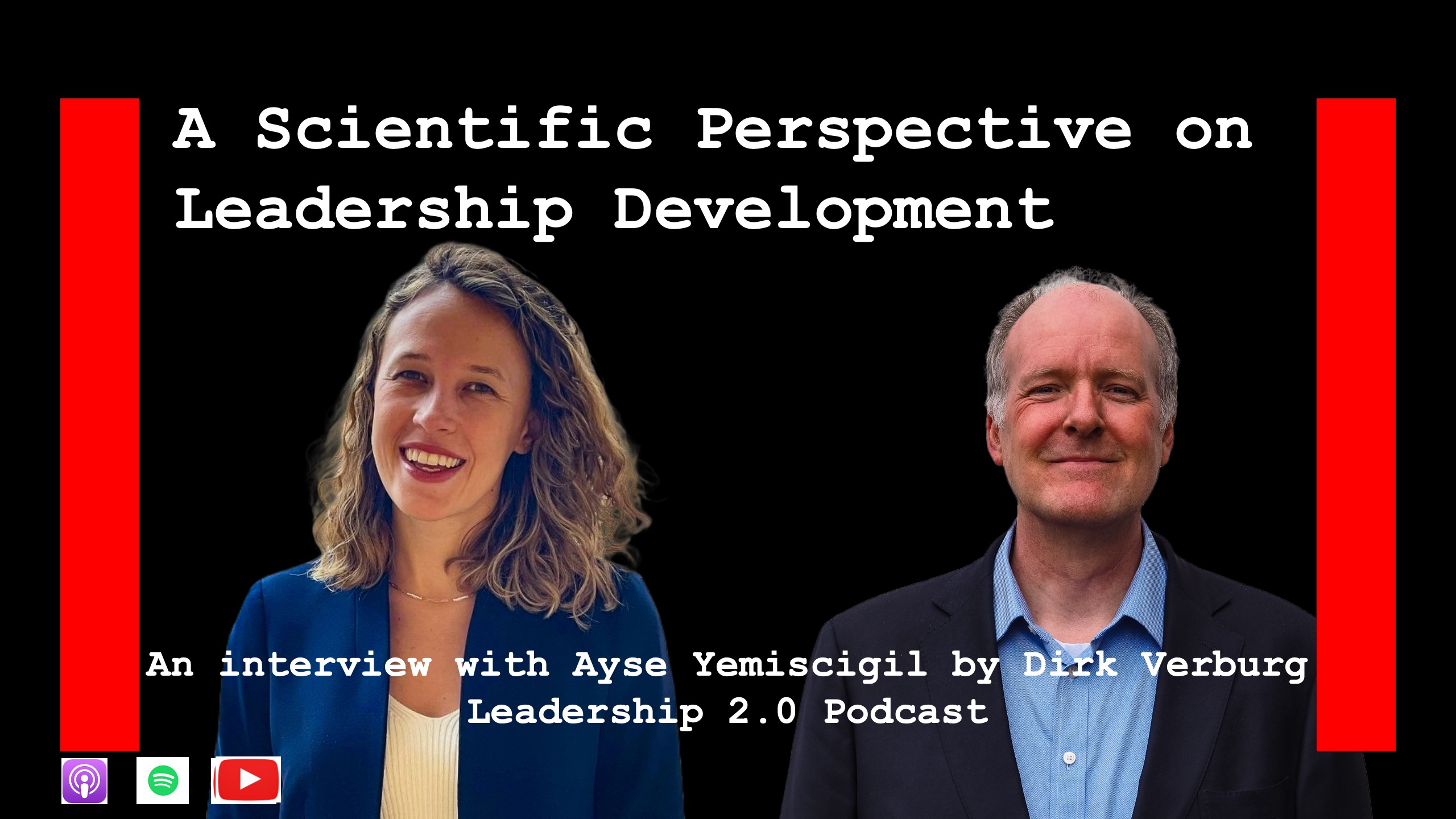
To find the answer to this question, I decided to interview Ayse Yemiscigil for my Podcast Leadership 2.0.
Ayse Yemiscigil is an Assistant Professor of Organizational Behavior at Fordham University’s Gabelli School of Business and a Research Affiliate with the Human Flourishing Program at Harvard University.
In February 2023, she, Dana Born, and Horace Ling, published an article for HBR.org of the Harvard Business Review titled: ‘What Makes Leadership Development Programs Succeed?’
During our conversation, we discussed the following topics:
Steve Jobs sagte einmal: “Fokusieren bedeutet nicht, zu der Sache Ja zu sagen, auf die du dich konzentrierst. Es bedeutet, Nein zu den hundert anderen guten Ideen zu sagen, die es gibt.”
Fokusieren ist nichts, was mir von Natur aus in die Wiege gelegt wurde. Ich persönlich sehe überall um mich herum Chancen, habe ein besseres Auge für die Vorteile als für die Nachteile dieser Gelegenheiten und bin mit einem gesunden Mass an FOMO gesegnet (oder verflucht?).
Deshalb habe ich beschlossen, Fokusieren zu meinem Neujahrsvorsatz für 2023 zu machen. Für den Anfang habe ich fünf beliebte Bücher von Experten im Bereich der persönlichen Produktivität im Allgemeinen und speziell zum Thema Fokusieren bestellt.
In diesem Post werde ich meine Erkenntnisse aus ihren Büchern mit dir teilen. Ein Wort der Warnung: Dies sind meine persönlichen Takeaways – keine Mini-Rezensionen! Wenn du nach solchen suchst, empfehle ich dir dringend, sie auf goodreads.com nachzuschlagen.
Steve Jobs said focusing “means saying no to the hundred other good ideas.”
Focusing is not something that comes naturally to me. Personally, I see opportunities everywhere around me, have a better eye for the upsides than for the downsides of these opportunities, and am blessed (cursed?) with a healthy degree of FOMO…
Therefore, I decided to make focusing my new-year resolution for 2023.
For starters, I ordered five popular books of experts in the area of personal productivity in general, and more specifically on focusing.
In this post, I will share my takeaways from their books. One word of warning: these are my personal takeaways – no mini-reviews! If you are looking for these, I highly recommend you to look them up on goodreads.com.





















 Dirk Verburg